Climbing in the rain

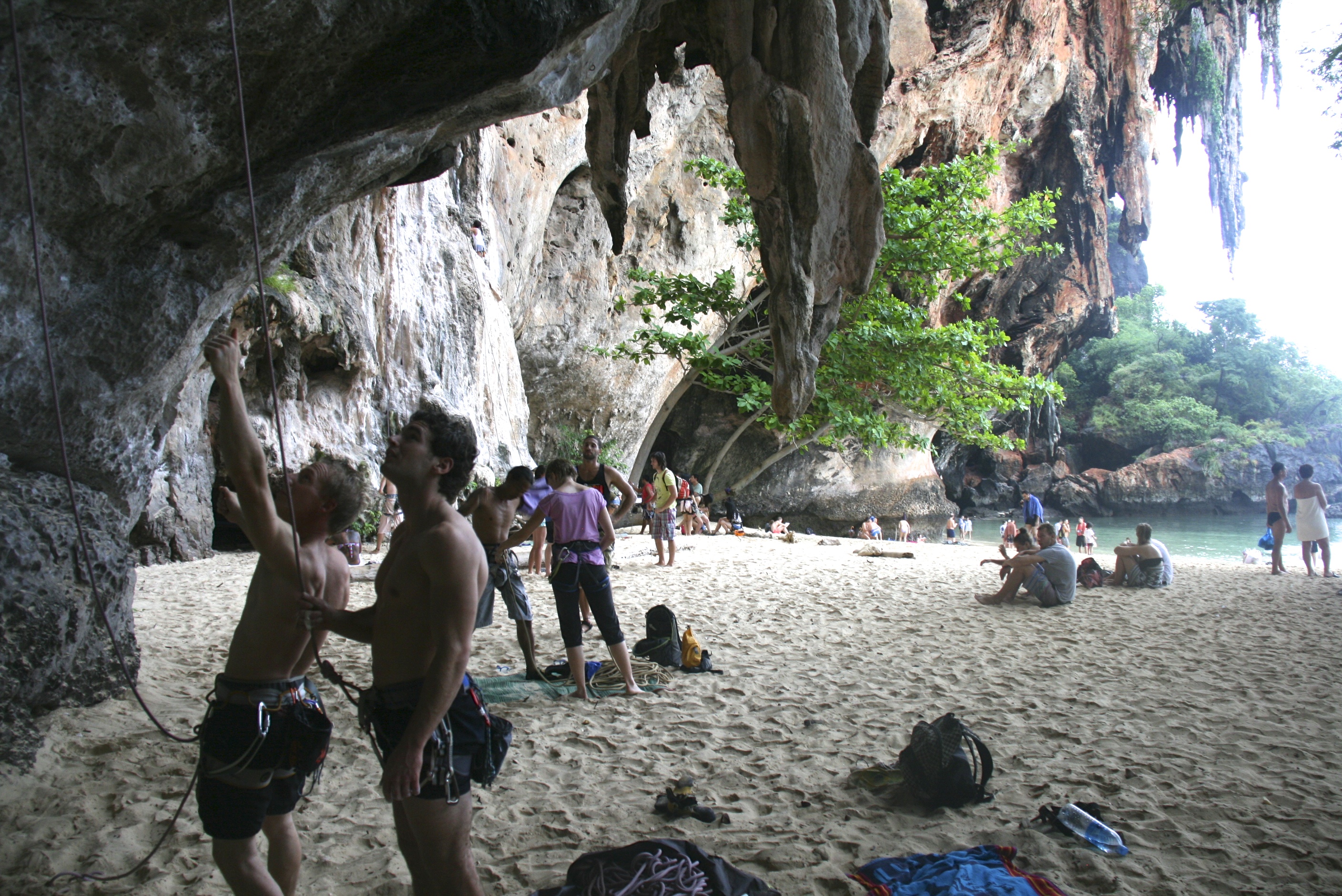
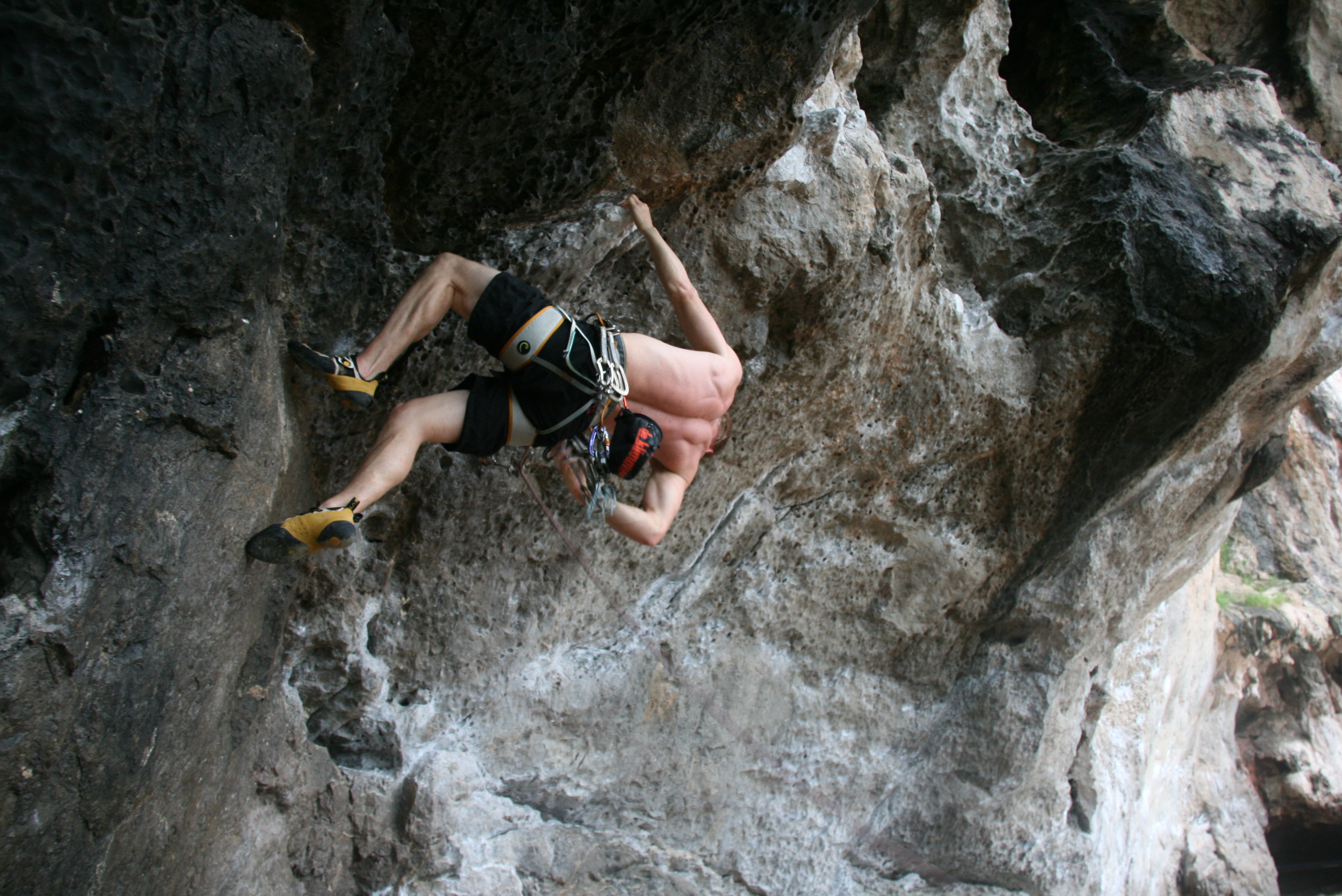
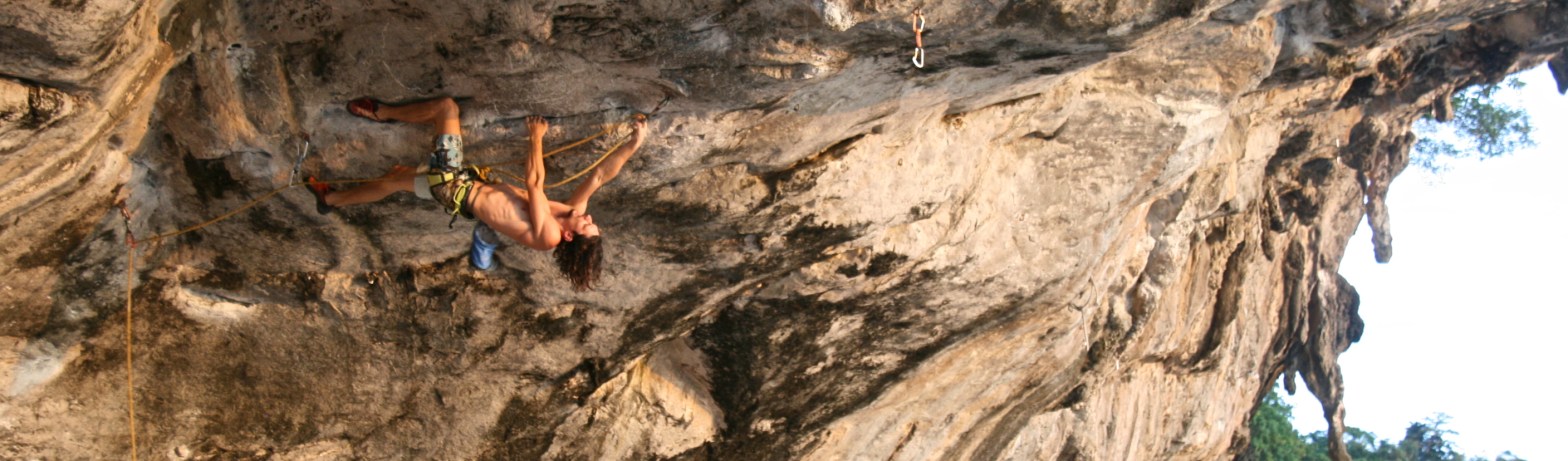
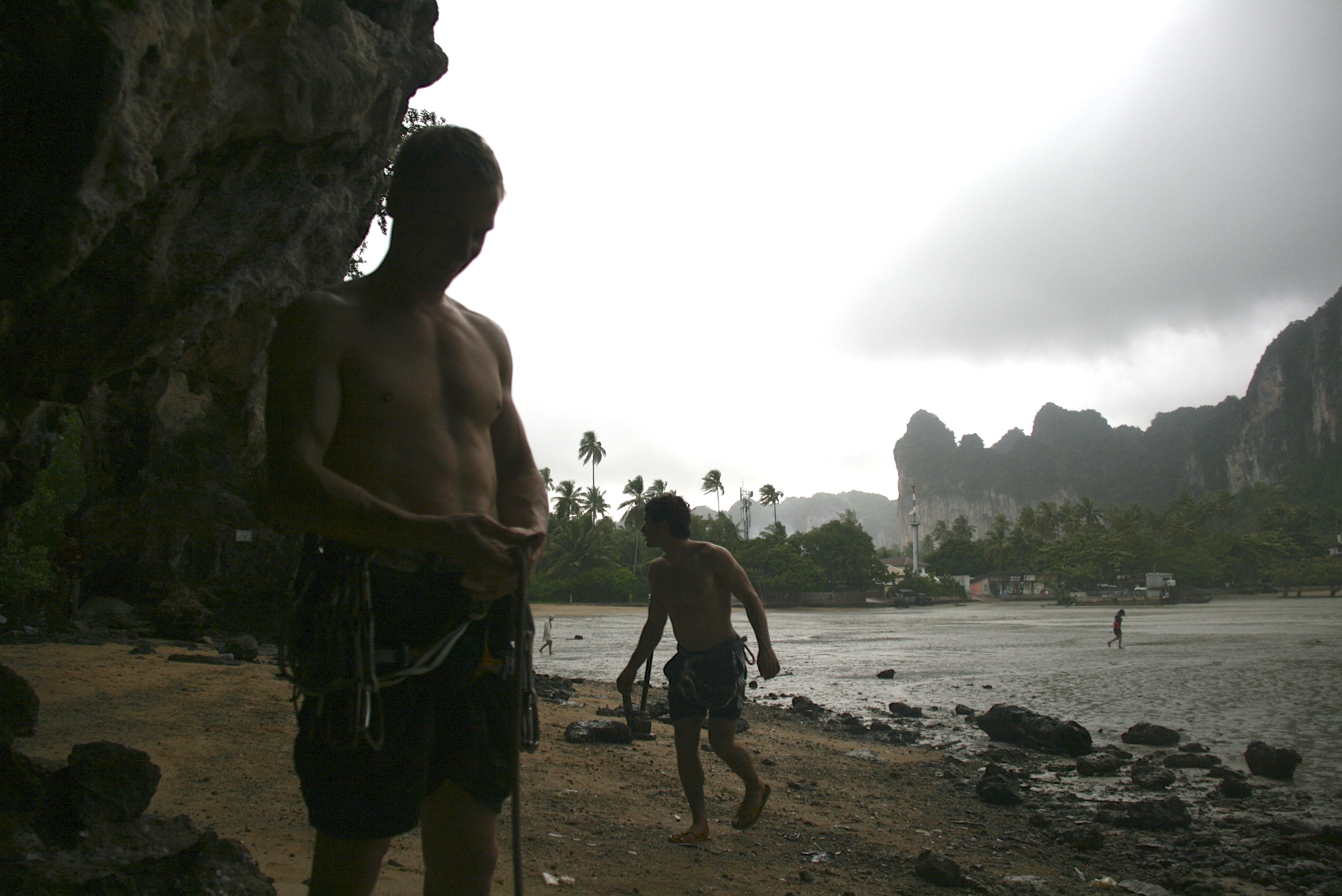
It’s been raining every day here, which makes rock climbing difficult. You need (mostly) dry rock to climb. However, there are so many routes to choose from in this area that some are protected even in the most horrific downpours. The cliffs here are so high and the rock formations so spectacular that it’s really not difficult to find a crevice out of the rain.

Tonsai is only part of the network of good rock to climb in this area. If you hike for ten minutes through the jungle and the sea (depending on the tides) you reach West Railay; walk another ten and you reach East Railay. From there it’s five minutes to Phra Nang with its network of roof overhangs and its beautiful beach. When there’s a storm approaching, this comes in handy.

IMG_0395IMG_0439

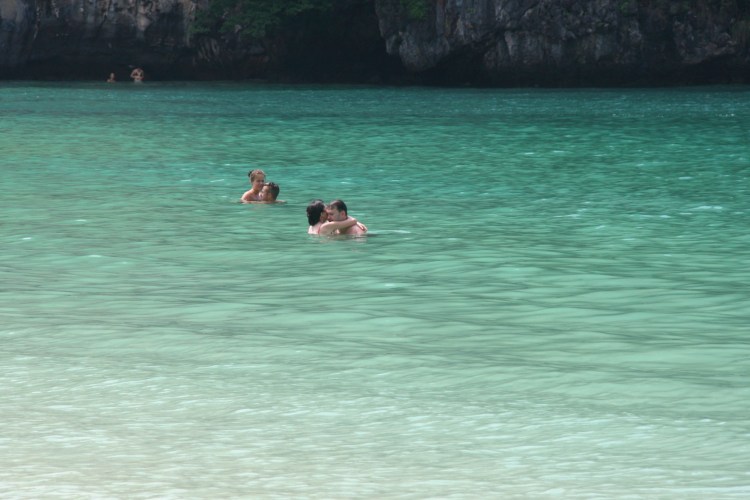
IMG_0476I am just emerging from the safety of a cave near Phra Nang with four climbing partners to find some lunch when it starts dumping. We have different ways of dealing with this: I suggest going into the ocean and thereby rendering the rain moot, while the older couple I’ve been climbing with finds a rattan mat to huddle under with several tourists. The ocean is much warmer than the rain, bathwater warm, and I sit in it for awhile, squinting against the water pelting my face. Then I remember lunch, so I fish out some money and buy pad thai from a boat bobbing in the water, standing knee-deep in the turquoise sea, the rain beating against my scalp. I eat it out of its Styrofoam box with a plastic fork, still standing there in the rain and the sea, the freshly-cooked noodles so hot they nearly burn me. Then we all troop back to the cave for more climbing.

IMG_0420

Finding climbing partners in Tonsai

Everywhere you look here in Tonsai there are the shirtless, smooth-skinned, compact bodies of climbers, the men short with overdeveloped lats, or lanky and stringy, the women with well-muscled shoulders. Some have aged like leather, pliable, rugged, striated, brown.

I gather my climbing gear together and I set out to see if I can meet anyone to climb with. I walk around for ten minutes with no luck, and decide I’m hungry anyway. I’m walking to get food when three Thai instructors from the Base Camp climbing shop pass by. One of them nods to the climbing shoes hanging from my bag. “We’re going bouldering,” he says “you want to come?”

“Sure,” I say. Eating can wait.

IMG_0316The instructors are so good that they gather an audience, as it often happens here. I hear two people speaking French, so I start a conversation with them, then jump in the ocean with them. They point out the multi-pitch they did the day before yesterday and offer to let me climb with them when I say that I have my own shoes and harness but I’m traveling solo.

However, I don’t see them around again, so the next evening after a rainy day I drink some tonic water at the outdoor bar by the rocks and start talking to a passel of Scottish girls drinking red wine and Dutch boys drinking Thai beer. The Scottish girls are not climbers, but one of the Dutch boys is injured, which means they may be climbing somewhere around my level. We make a plan to meet up at ten the next day at the same spot, and then climb for six hours with a break in the middle for lunch. We don’t even stop when it rains, just switching location to an overhung area that stays dry in the downpour. I am quite gratified because they are appear to be constructed entirely out of abdominal and back muscles, and I can still climb everything they’re climbing. But they’re from the Netherlands, which means that although they’ve climbed a lot, it’s nearly all been indoors, so they’re still getting their heads around this outdoor thing. They are undoubtedly better than I am, it’s just a matter of them figuring that out.

It’s always slightly awkward being the third wheel in a party that otherwise speaks a language you can’t. But I do my best. I learn the word for take in Dutch, as in “take the rope in because I’m about to fall and only have time to say one syllable.” This comes in handy because they tend to shout instinctively in such moments instead of remembering the English word I taught them.

At one point one of them says something to the other in Dutch, and I ask: “Oh, there’s a hot girl in a bikini and sunglasses on the beach?” They are surprised, but it was really just an educated guess based on the word bikini and the word zonnebril, which sounds like the German word for sunglasses, and the fact that what else would they be talking about? Nonetheless, I let them be impressed with my stealth knowledge of Dutch, and whip out the occasional Dutch phrase just to keep them on their toes.

IMG_0512IMG_0507We’re unsuccessfully attempting a 6c (5.11a; I had to look it up) when we meet up with an older fellow and his girlfriend from Utah. The older fellow says he’ll give the lead a shot, and he cranks it out. This is how it is done, grasshopper. His girlfriend anoints the mosquito bites on my back, which I have been unable to reach.


The dangers of Tonsai

Tonsai monkeyIn the Northwestern US, when you go out into the forest, you bear-proof your camp by hanging up your food in a tree. Here in Thailand, it’s a little different. Here, you’ve got to worry about the monkeys. The very first person I ask about lodging says that monkeys broke into his bungalow and went through his stuff looking for food, and made off with his girlfriend’s perfume. They found the half-empty bottle discarded a short distance away.

This person tells me that the monkeys cannot get into luggage, so I keep most of my stuff in my bag, zipped up. This is probably better anyway, since it also keeps the dust and the bugs out. I tie up my food in a cloth bag and hang it up high on a nail: separate, so there’s less temptation to try to get into my luggage. As a bonus, this also foils the ants, who try unsuccessfully to get into the bag, as I discover later. Thailand does not appear to have nearly as many ants as some other places I’ve been, such as Belize, but still. Keeping my clothes in my bag also seems to keep them drier, as everything that I hang up to air out in the room becomes slightly moist from the humidity.

Apparently the sanitation is also a problem in this fairly primitive inlet: people get sick here by the droves. They tell me of the ailments they contracted, from Dengue Fever to what sounds like food poisoning, describing the color of their vomit in intricate detail. I decide I should only eat cooked food, use a new pair of cellophane-wrapped chopsticks every time, and brush my teeth with bottled water. No matter what I try, however, I can’t seem to avoid getting bitten by bugs, and before long I count over 60 bites. Combined with my white skin and the stubble on my legs I can’t see to shave in the semidarkness of my lodging, it makes me look dead sexy in a bikini.

Arrival in Tonsai

There are two Tonsai bays near Krabi, or rather there’s Ton sai and Tonsai, often spelled interchangeably. Ton sai is the place on Phi Phi island where everyone goes to party, and Tonsai next to Ralay bay is where the rock climbers hang out. So, when you arrive at the bus station or the airport in Krabi, make sure you know which is which. If you’re headed to party central, it’s simplest to leave from the pier in Krabi town. If you’re headed to the climbing mecca, it’s easiest to leave in a long boat from Ao Nang. To make sure, tell your taxi or bus driver you intend to go to “Ton sai Phi Phi island” or “Tonsai Ralay beach.”

I, of course, am going to the rock climbing mecca, having discovered it last February and vowed I would return. It’s perfect for solo climbers who want to meet people to climb with and dunk themselves in the ocean whenever they get a little too warm. Kind of like the Camp 4 of Southeast Asia. I land in Tonsai and ask around about lodging, because this is a trick I’ve learned about Thailand: it’s best to look at lodging in person, and often the cheapest places are not anywhere online. I end up shouldering my little rolling bag and schlepping it into the jungle, pausing every so often at “resorts” to ask their price. There’s one with a pool for around $50, so I keep walking. Then there’s a bungalow for 400 baht, but I know things get IMG_0310cheaper so I keep going farther. On top of a little hill I find one for 200 baht, or less than $6. It’s a tiny hut constructed out of a concrete slab, sheet metal, rushes and sticks, and the electricity comes on from 6 pm to midnight, but the sheet covering the bed looks clean, at least apart from the sand around the edges. There’s pink netting hanging over the middle of the bed to catch the debris that falls from the ceiling, which reminds me of four-poster beds in the days of thatched roofs. I feel the bed — a bit saggy, but ok — and say I’ll take it.

I take a cold shower and am quite happy to be alone in my little hut in the jungle. I do the only logical thing: take a nap. I wake up with more mosquito bites than I started out with, but I’ve planned for this, and smear my Thai mosquito ointment on the bites.

Over the next few days I discover that my hut appears to be perpetually damp, despite my efforts to air the place out: the humidity, no doubt. Instead of drying, my bikini starts to smell like it’s molding. The weather is extra humid and raining intermittently. However, I tell myself it’s still more comfortable than camping. Fortunately, I have brought my own soap, wet wipes, toilet paper and headlamp: I was prepared for camping-level digs. I’d move to somewhere more expensive, but from what I can tell from the discussions at the outdoor bars, everywhere has its set of problems and even the fanciest place on the bay hasn’t found a way to get rid of the humidity. There’s apparently one place in the entire inlet that has semi-decent wifi, and it’s the bar, but you have to buy the wifi separately. I talk to one guy who’s staying on Ralay beach a ten-minute walk along a jungle path, where everything is more developed, and it sounds like he’s paying over triple what I am for something worse than I have.

Flo et les nanas

It’s a good thing I’ve been practicing my French, because I found out just a couple of days ago, from Facebook, that a French friend of mine will be in Bangkok the same time as me. I gave him the name of my hostel and, being perfectly located for his purposes, he booked the same one.

I haven’t really kept up with him so I’m a little surprised when we meet up to discover that he’s living in nearby Yangon, working for an NGO dealing with economics, fair trade, tourism and so on. He says he does not want Myanmar to turn into Thailand and neither do a lot of people there, so he thinks the expanding tourism and influx of Western capital has to be done carefully. Flo, you see, is all about preserving local culture. He worked in Rwanda when they were being invaded by a kind of water hyacinth that was taking up too much of their aquatic resources. Some people suggested using this plant to produce biodiesel, but Flo objected: given how biodiesel tends to work, this would bring nothing back to the local economy. They then discovered that this plant was strong and pliable and made better weaving materials for baskets and chairs than what they had been using previously. Perfect: Rwanda already had a strong weaving culture, even going so far as to have a basket on its flag.

We’re going to the Nana metro stop, to Soi 11 where I have heard the nightlife is. “Maybe they have grandmothers there,” I joke of the metro stop.

“Or girls,” says Flo, “les nanas,” French slang for attractive post-pubescent young women.

He is not wrong. We discover in short order that “nightlife” appears to mean something different here. We’ve wandered into a bar-club where a Thai band is singing Linkin Park, and we realize that the bar is filled primarily with aging white men and Thai nanas that I am trying to convince myself are not prostitutes. After a few minutes this becomes utterly fruitless, and Flo starts taking photos of the room in the hope that this makes the white men uncomfortable. “I want to punch every man in this room in the face,” says Flo “myself included.”

He disappears for a few moments to use the restroom and I stand there until a smiling girl with a soft, round face and braces says hello and asks why I’m standing by myself. “I’m waiting for my friend,” I say. I try to talk to her, but the music is too loud and the language barrier is too great. Flo comes back and another girl tries talking to him. She asks him something he does not understand, so he says no. She is outraged and yells in my ear: “Your friend said I was…!” I don’t catch what exactly, but I’m guessing she must have asked him if he thought she was pretty.

We go back out into the street and Flo says: “Maybe I should make this my life’s work, the one problem that I try to solve.”

I nod. “The girls from the villages make a lot more money doing this than most anything else,” I say. The right kind of economic development is needed, better jobs here for women, less income disparity, less commercialism. It’s like a Siamese Les Miserables where everyone needs a smartphone to fit in. “Myanmar isn’t like this?” I ask.

“No!” says Flo “but a lot of girls are trafficked from Myanmar.”

Flo is so creeped out that he convinces me we need to watch a Disney movie so he can sleep. I pick: Robin des bois, Robin Hood, which I have never before seen in French, least of all in a hostel foyer at 3 am in Bangkok.

One night in Paris

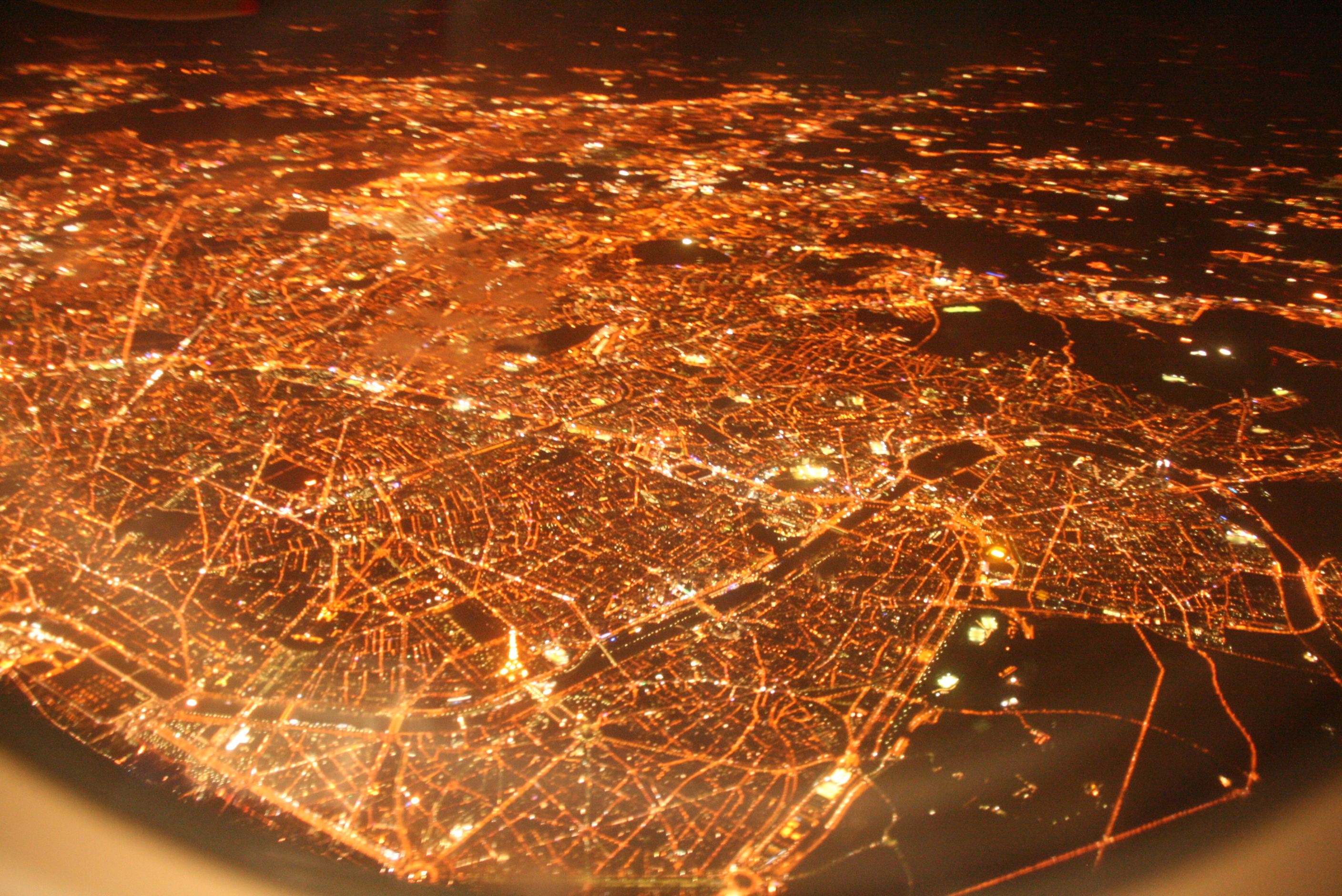
Paris from airplaneIt’s costing me 20 euros to ride in from the airport and back for a few hours in Paris and I don’t even care.

If New York is laid out in a grid, Paris is laid out like a splatter painting. To wander through Paris is therefore to be lost in Paris, and this is how it should be, because where New York demands the march straight and purposeful, Paris calls for loitering, for inefficiency, for the intimacy of small side streets.

So it is that when I am in Paris I become Paris, I take on the rituals that none of my dearly loved ones know, learned in emerging adulthood through practice, a hundred times, a thousand times. I have traveled tens of thousands of miles in the last weeks and I have thousands more to travel before this day is done, and I have finally outstripped my own nationality, have left all trace of myself somewhere else so that every cell merges with my surroundings, briefly, in this window of now between where I was last night and where I will be tomorrow morning. I picture myself sitting on the rail of the Pont Neuf, dissolving into the air, becoming the language itself, the rituals themselves.

The practice of listening fond but detached to the lisping French toddler: “C’est par la, papa!” The ritual of ignoring the instant man on the sidewalk with right mixture of politeness and scorn: “Bonjour, miss, ca va ou pas? Un moment, miss, j’ai une question!”

Most of all, the liturgy of walking into a boulangerie-pâtisserie, warm, welcoming, formal: “Bonjour, madame. Je prends un pain au chocolat, s’il vous plait.” The meticulous counting out of coins, horded for the occasion. The parting smile and nod. “Merci beaucoup, au revoir.”

I remember as I walk through Paris how much relief I would feel ten years ago coming back home from Spain or Germany, when once again I could engage with the people around me, ask for directions without resorting to pidgin, when I recognized the music, the chimes on the public transportation systems, the voice announcing the arrival of the trains. C’est bizarre, c’est toujours bizarre que c’est comme ça, que je me sense comme ça ici, que je suis presque plus chez moi ici que dans mon propre pays.

CouchSurfing vs hostel

Equity Point, Lisbon
My hostel in Lisbon cost me 8 euros a night when I booked directly on Equity Point’s website, and was probably the best value for money of any hostel I’ve ever experienced. Breakfast was even included.

Is CouchSurfing cheaper than staying in a hostel? Actually, this depends somewhat. If you’re going to an area where the hostels are inexpensive, as in around $10 a night or less, it may end up costing you just as much to CouchSurf.

For one thing, you tend to pay more in transportation costs getting to where your hosts live, which is rarely right in the middle of where you want to go. For another, at least if you’re a decent human being, you’ll bring your host some kind of thank-you gift and/or buy the ingredients to make him or her dinner. This could easily be more than $10.

Your host will likely also want to go out at some point, and you should pay at least your own portion of the bill. If you didn’t budget for going out, this could obviously be problematic.

However, your host may end up giving you a ride to some out-of-the-way place you never could have gotten to on your own, or otherwise show you things about the place you’re visiting that you wouldn’t have otherwise seen. It depends a bit how much this and the general CouchSurfing experience is worth to you.

Hostels are typically simpler, much more straightforward, and easier to assess in terms of cleanliness and location with a little online searching. There’s also less of a cultural barrier: it’s known you will pay X amount for X service and that’s that. You can nap in your bunk all day if you’re tired; doing this at a CouchSurf host’s house is a little weird.

Additionally, at a hostel, you can cook in the kitchen (if there is one) without worrying that you’re putting someone out. Pro tip: I sterilize my dishes with hot water from the electric kettle before I use them, because I really don’t trust the bacterial content of the sponges soaking in most hostel kitchens, even the clean hostels. I also remain dubious about the dishwashing skills of most hostel-dwellers. May the spoon you licked clean and then ran under cold water be the one you pick up next time.

Nine tips for CouchSurfing

Guitars on a couch
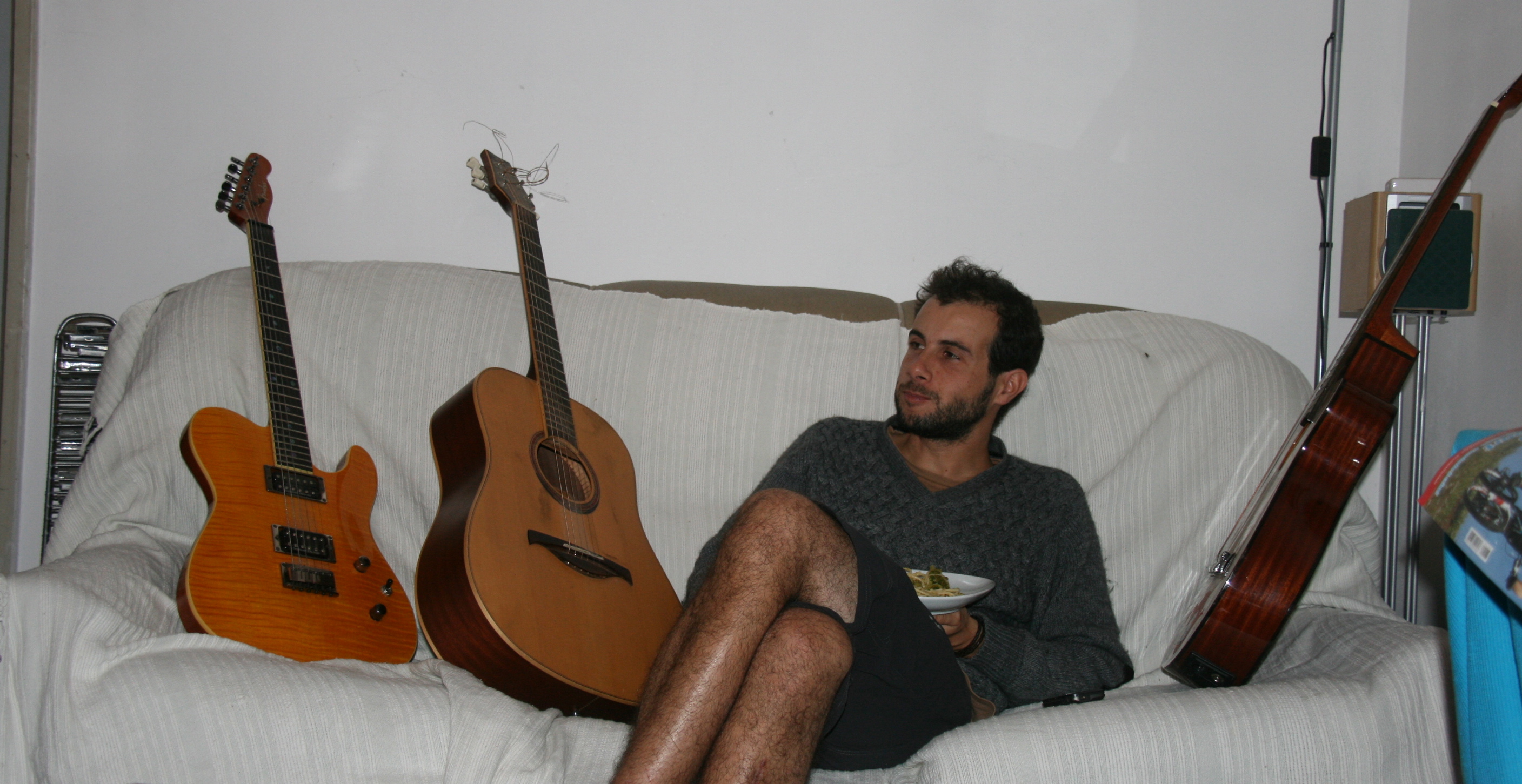
You likely won’t know until you get there how many guitars you’ll be sharing a room with — which may be good or bad depending on how much you like guitars.

Using the CouchSurfing website, particularly in more expensive places such as New York or Paris, can save you a lot of money. So far on this trip around the world, it’s saved me at least a few hundred dollars in lodging costs, and it’s introduced me to interesting people from the places I’ve visited in the process. If you want to try it out, here are some tips:

  1. Philosophy: Don’t be skeezy. Don’t be a mooch. If you’re joining CouchSurfing, be willing to host people and actually do so. If you’re staying with someone, expect to spend a reasonable amount of time hanging out with that person — but, conversely, you should be ready to be independent because this person’s life does not revolve around you. Above all, be flexible and open-hearted, and listen a lot. If you have 20 sites you need to visit per day or you hate talking to strangers, CouchSurfing is not for you. If you need to be in control of your environment, it’s also not for you. CouchSurfing is about connecting with different cultures in new and interesting ways more than it is about getting a free place to stay.
  2. Contacting potential hosts: Try to find people who have a lot in common with you and who haven’t been worn out on hosting people. Propose a kind of cultural trade if it’s appropriate, such as cooking for them if you are a decent cook in your country. Strike up some kind of comradarie before you arrive at this person’s house — consider becoming friends on Facebook, for example.
  3. Communication: Be straightforward and do not use euphemistic phrases. For example, I once told someone who said he could host me for two nights that I had a host for Monday, but asked if we could we meet up Tuesday evening. He thought I meant meet up only, like for coffee, and made other plans for the couch. Say what you mean as politely as possible and as clearly as possible, particularly if there is a language barrier.
  4. Planning: Have a phone that is capable of texting in the country you’re visiting. Short of that, have Viber or Whattsapp or whatever your host uses for internet-based texting. Set up a meeting time and place before you arrive. A café close to their house where you can get online is a good option if neither of you are rushed. Be on time and find a way to tell them if you’re running late.
  5. Manners: Bring a small gift to establish your non-mooch status, preferably from your own country and obviously of decent quality. Personalize this as much as possible, but typically good chocolate and small bottles of alcohol make universal gifts (unless, obviously, the person does not drink alcohol or eat chocolate for one reason or another). Clean up after yourself and all the other normal human things you’re supposed to do with housemates.
  6. Safety: Stay with hosts who have good references from other travelers, and have a back-up plan you could execute on your own, such as going into the city center and finding a hostel. Don’t stay with anyone whose house can only be accessed by car unless you have a car and are fit to drive. If you have a bad experience, tell CouchSurfing about it. And, obviously, the police if necessary.
  7. Comfort: If you’re uncomfortable, there’s no reason you have to stay as long as you said you would. Plans change. But be polite if it’s for sanitation or cultural reasons, even if you’re leaving because there are flies all over the kitchen. Don’t mention the flies all over the kitchen.
  8. Flexibility: Your proposed hosts’ plans may also change. Remember, they don’t owe you a place to stay. Be understanding. If you need a 100% sure plan, CouchSurfing is not for you.
  9. Experience: As I have found, you may have a great experience, or you may have a less than stellar one. It’s a bit hard to predict which will be which, though you can always try contacting previous guests and asking specific questions if you’re curious.

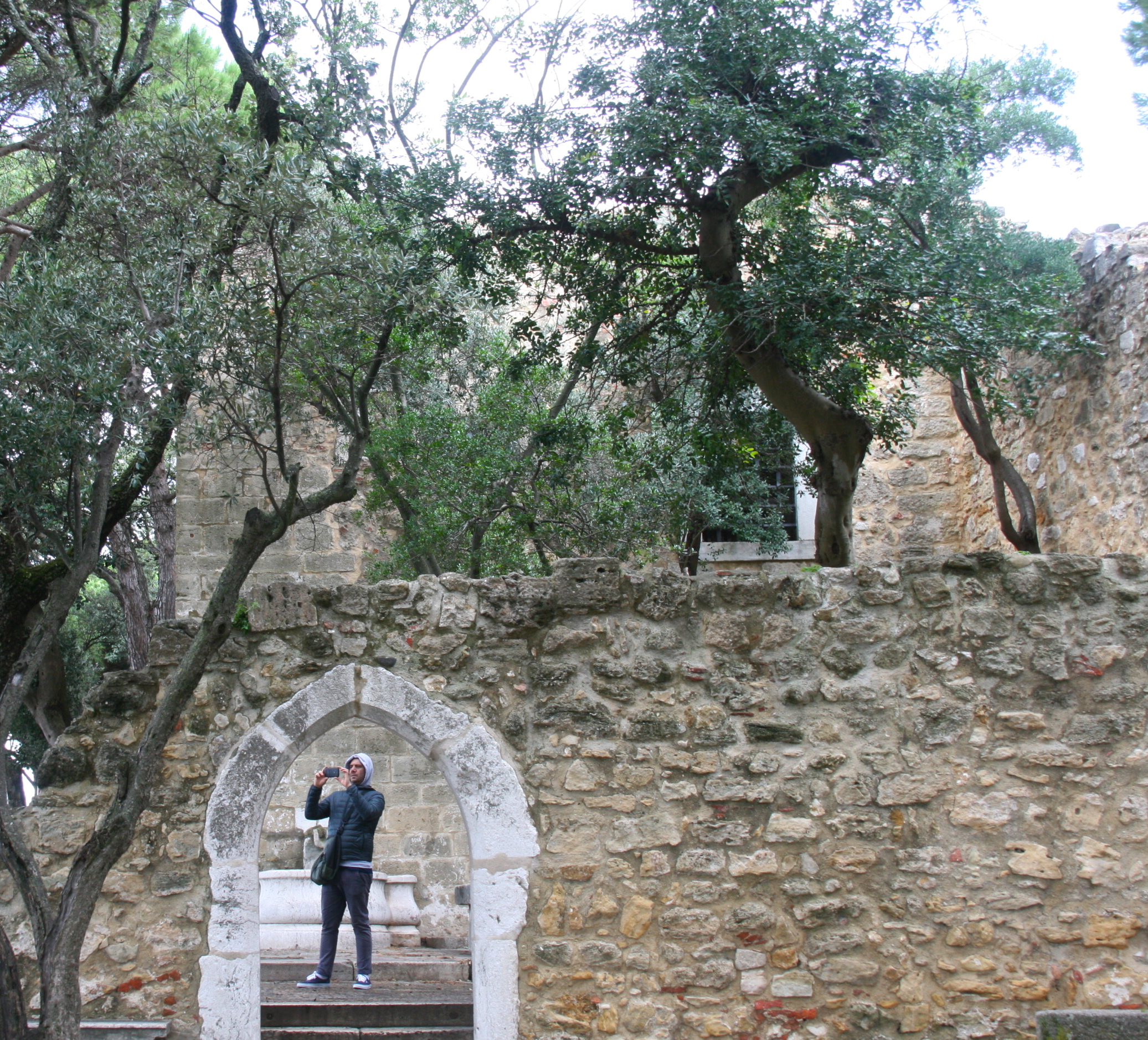
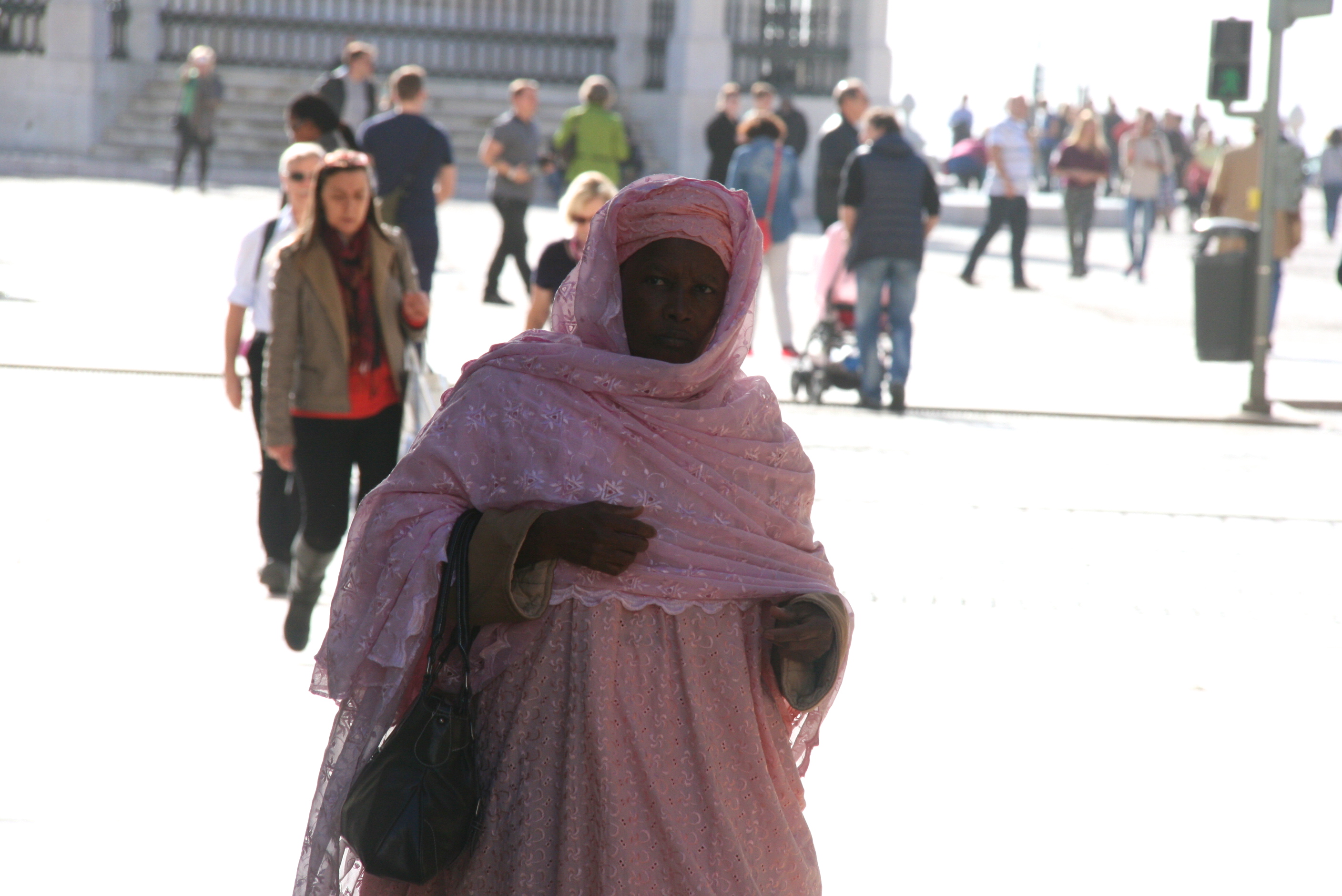
Tourists of Lisbon

Often when I travel, I end up at the spots where a hundred or so other foreigners have congregated also — in fact, this seems nearly impossible to avoid, unless you stick to the ugly parts of town. So I end up trying to find the beauty in the tourists themselves, in the postcards, in the photos that have been taken several million times already.

IMG_0032 IMG_0067 IMG_0066 IMG_0101 IMG_0124 IMG_0080 IMG_0132IMG_0137