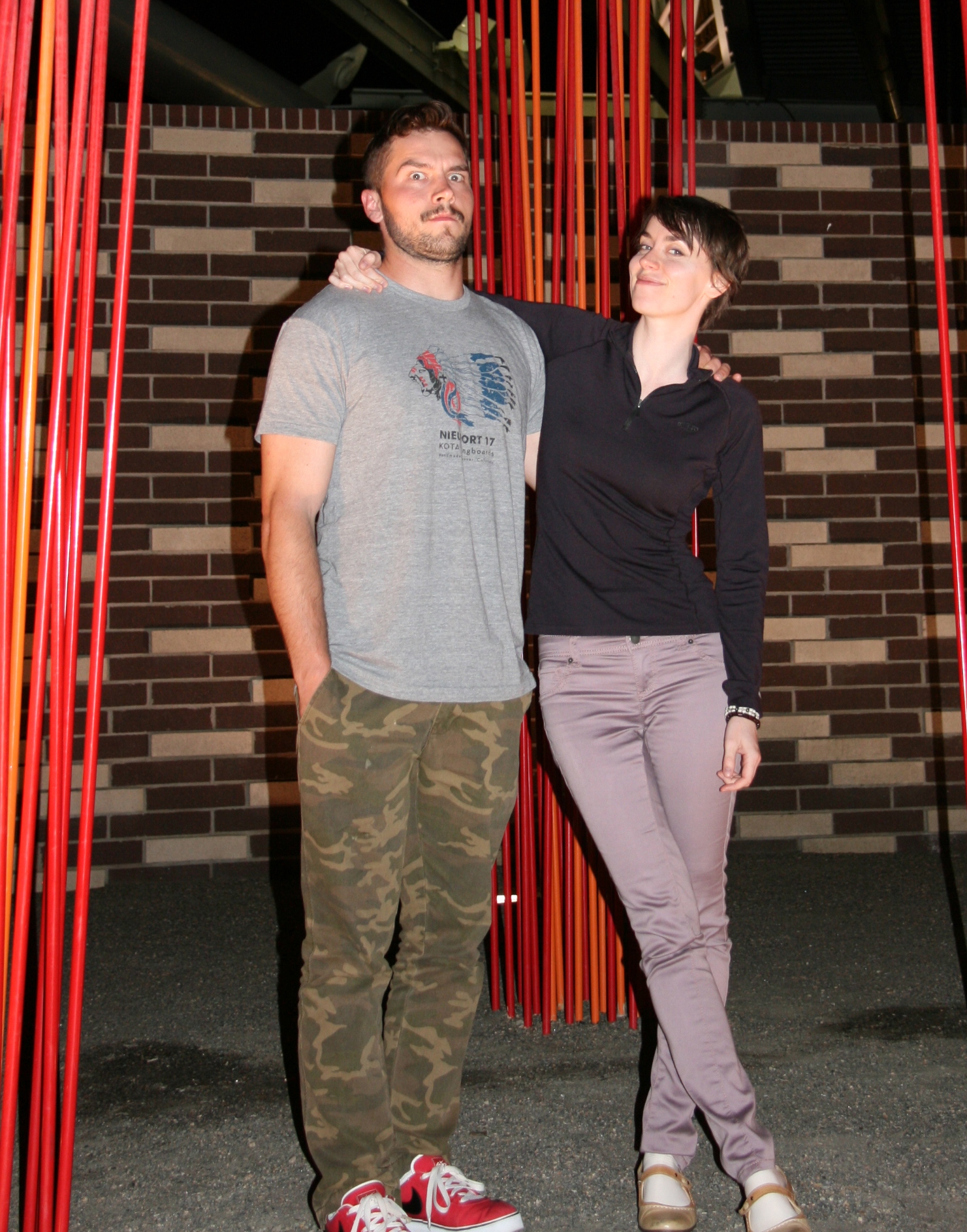
LX Factory, Lisbon


IMG_9922IMG_9929

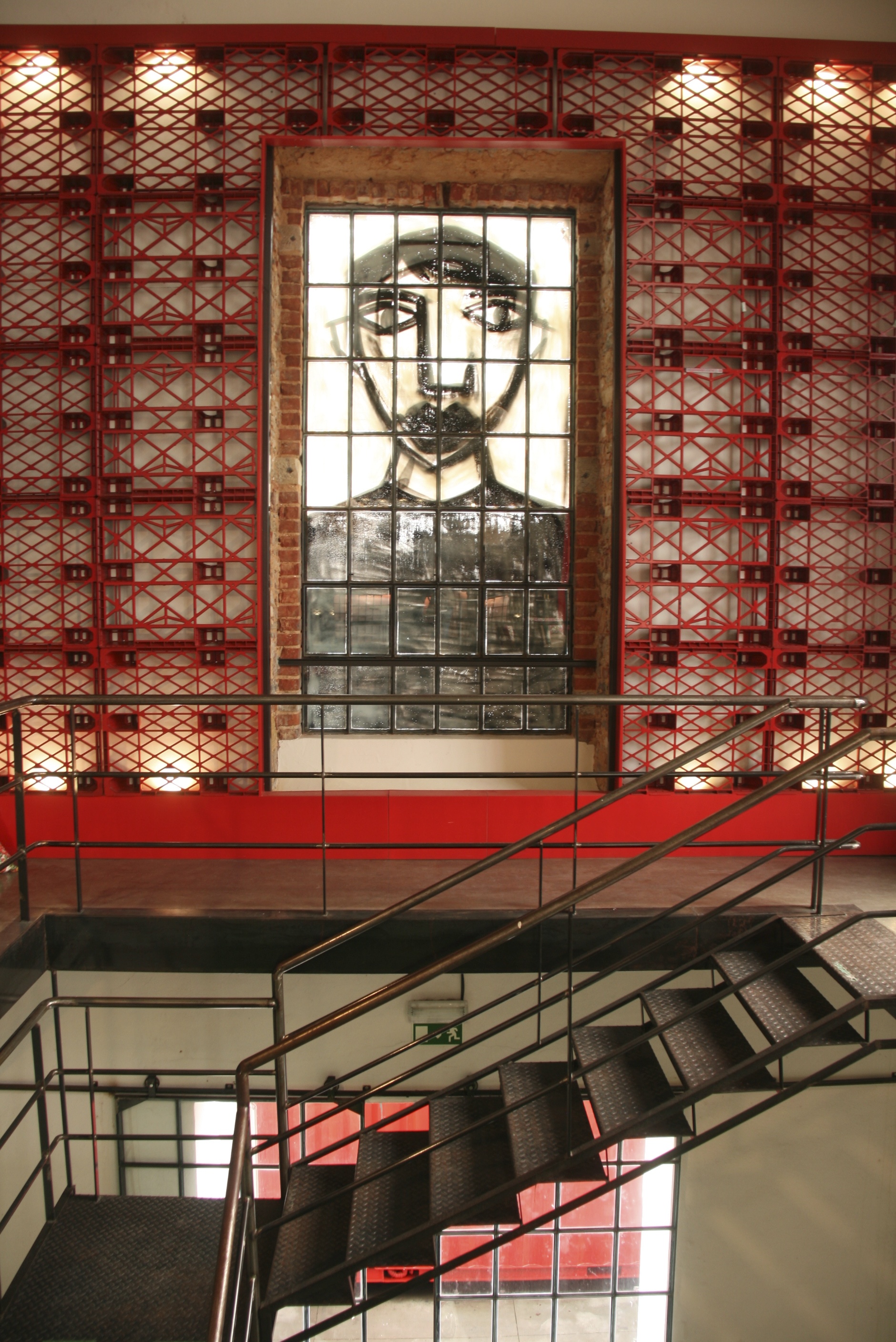
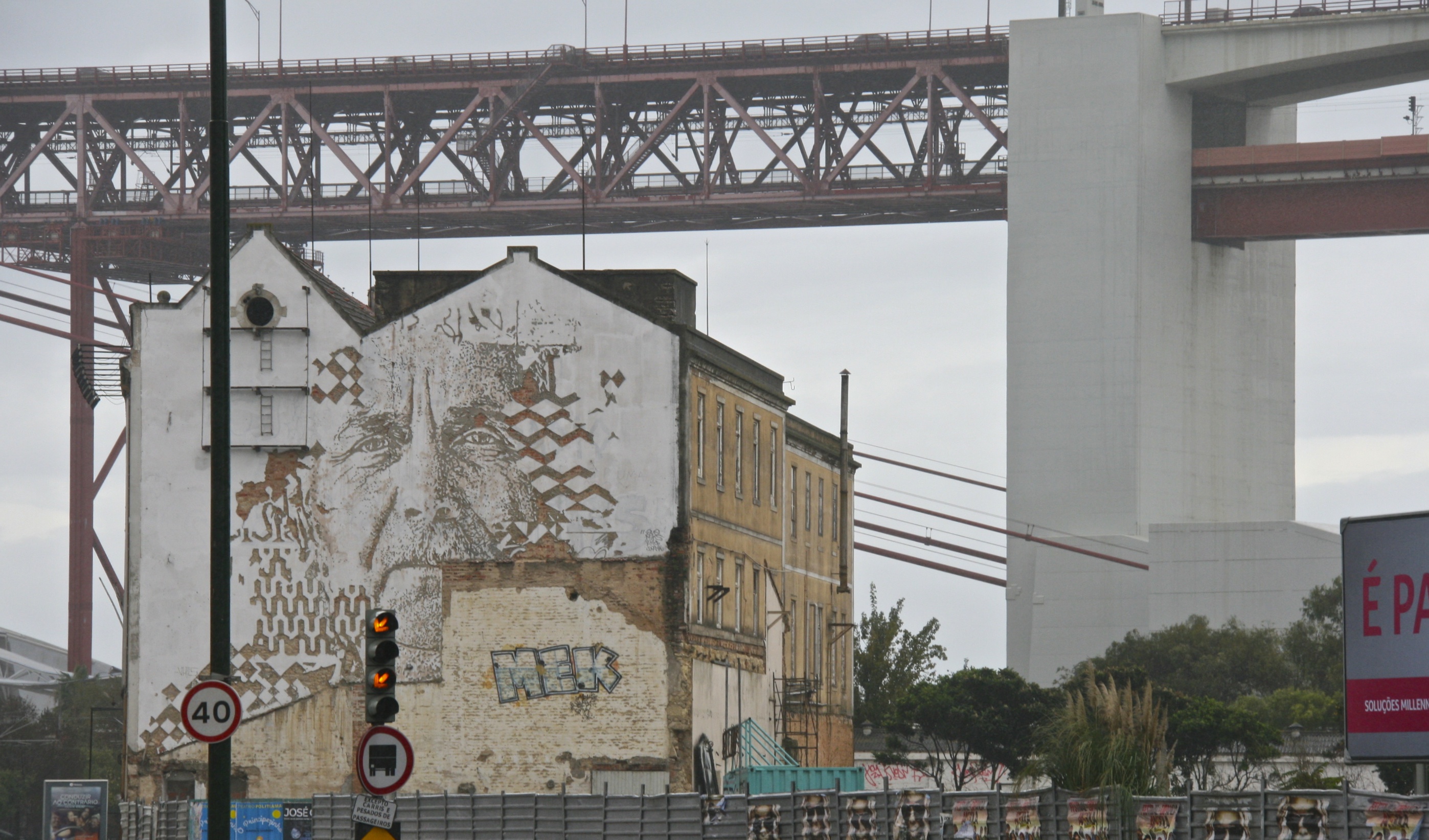
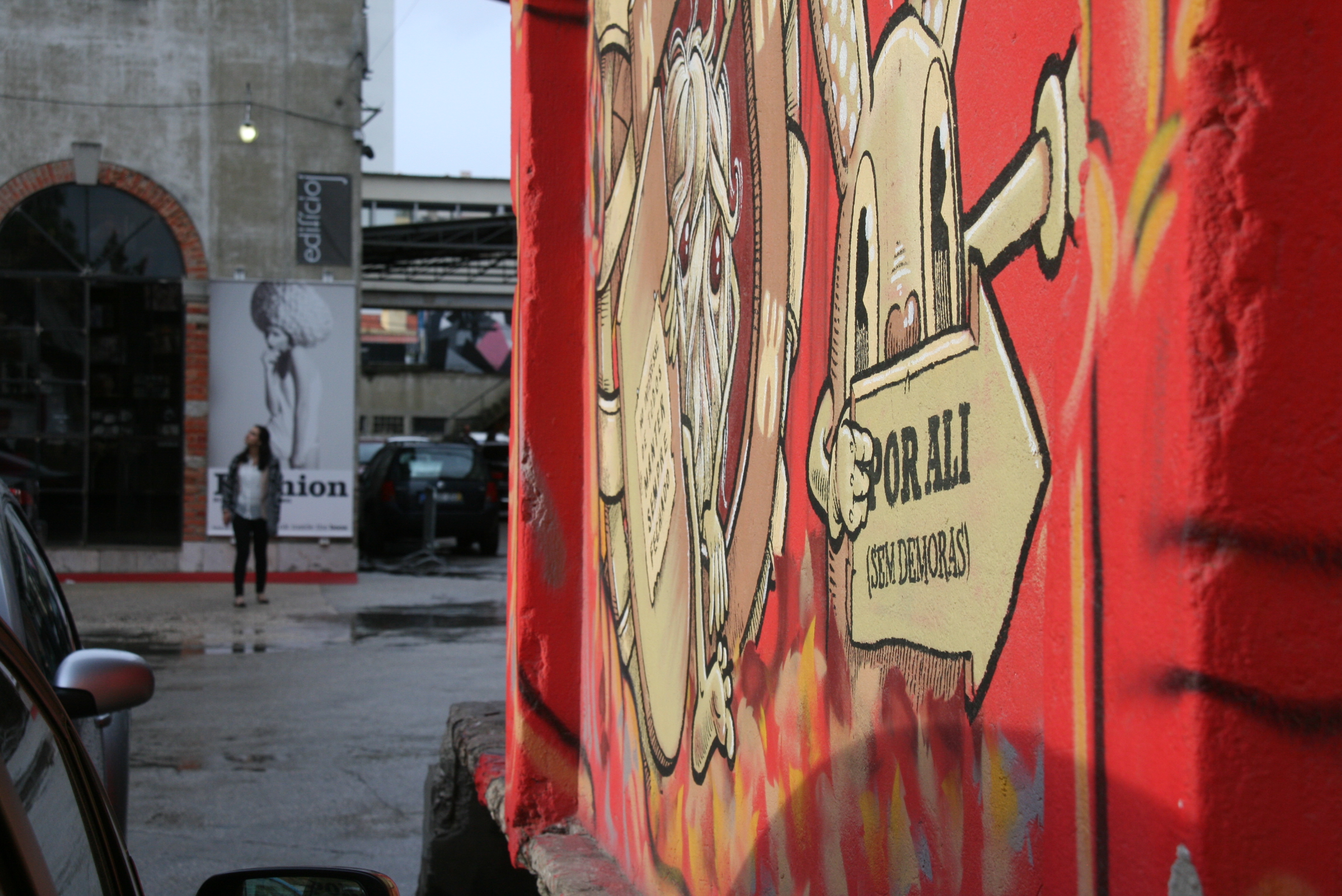
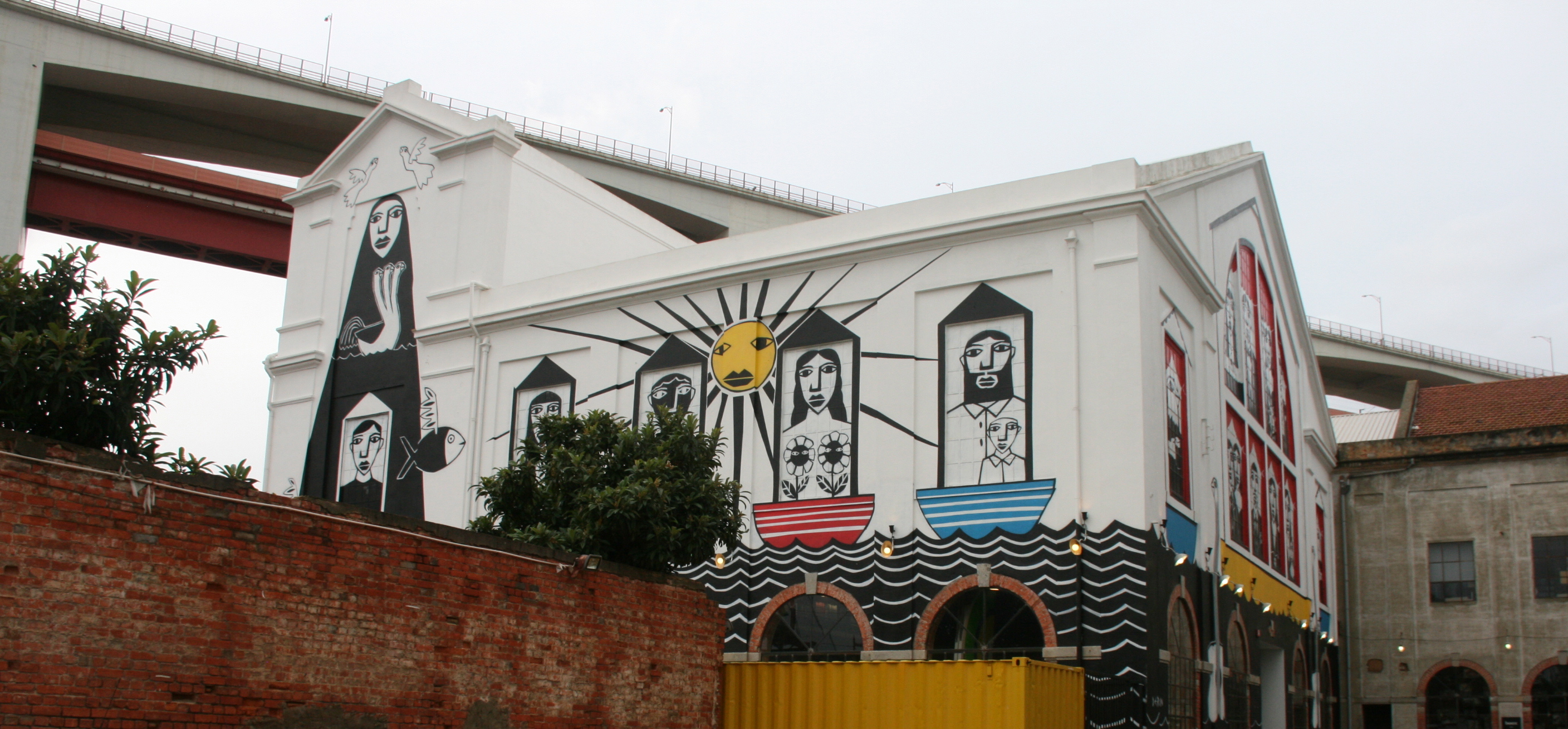
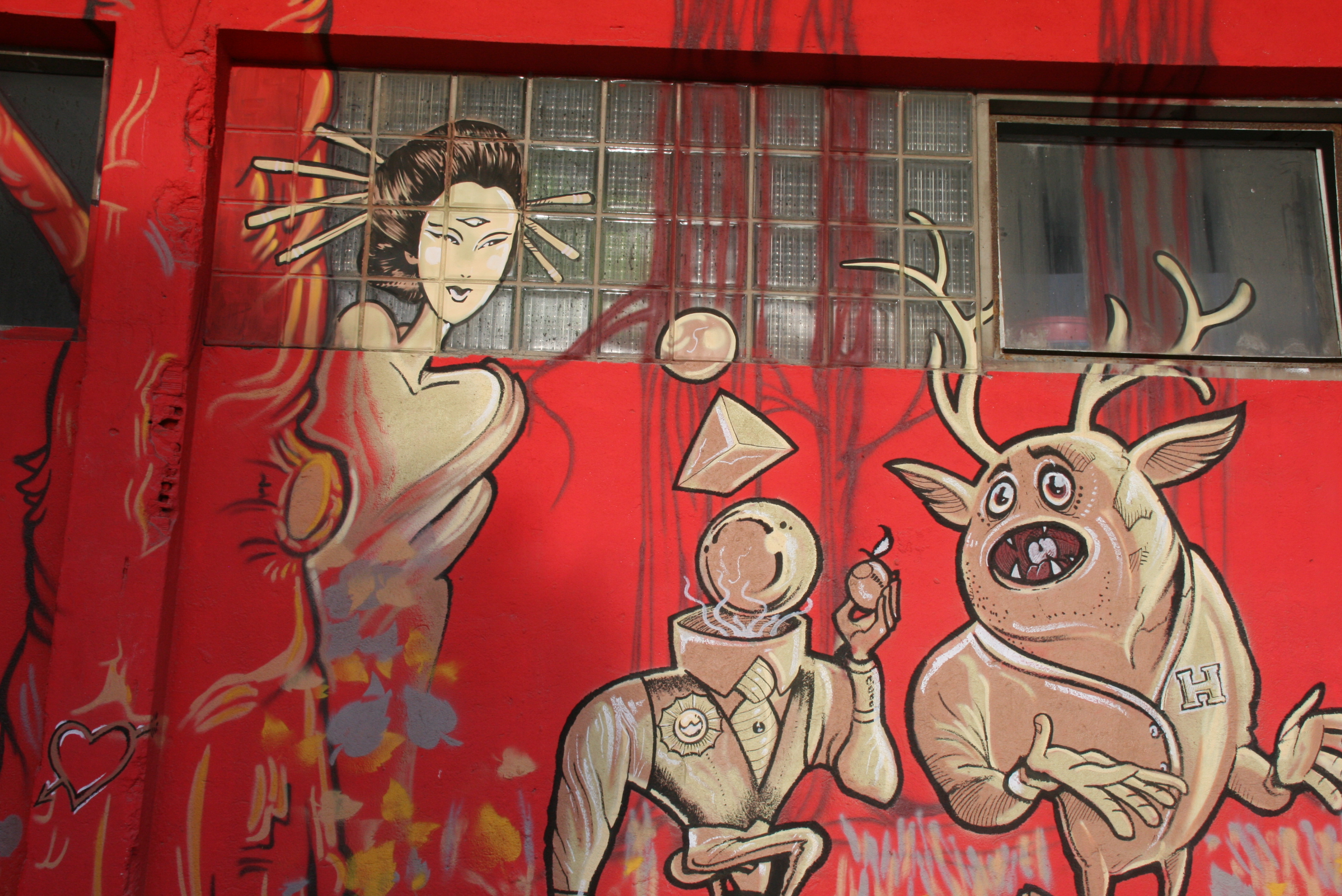
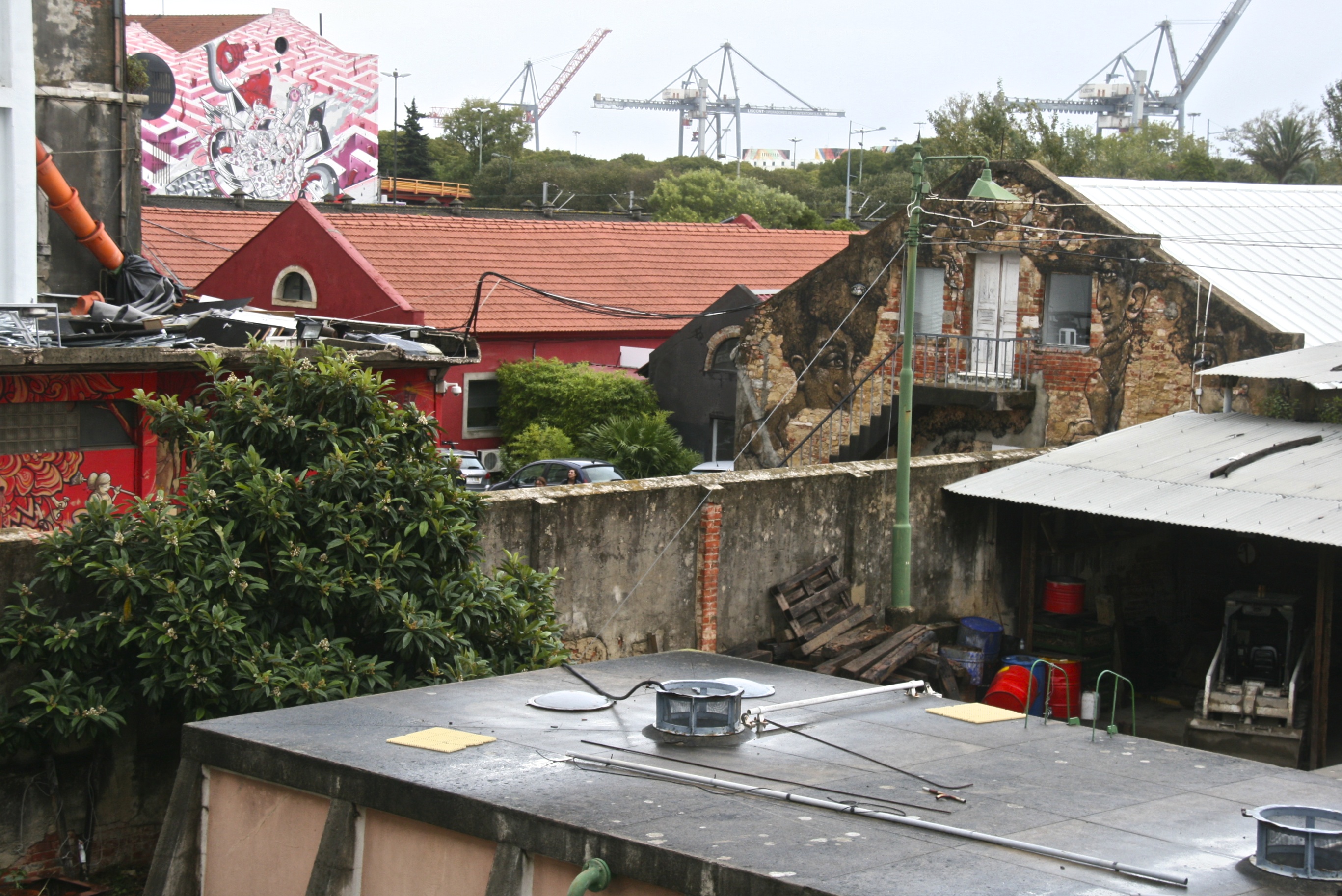
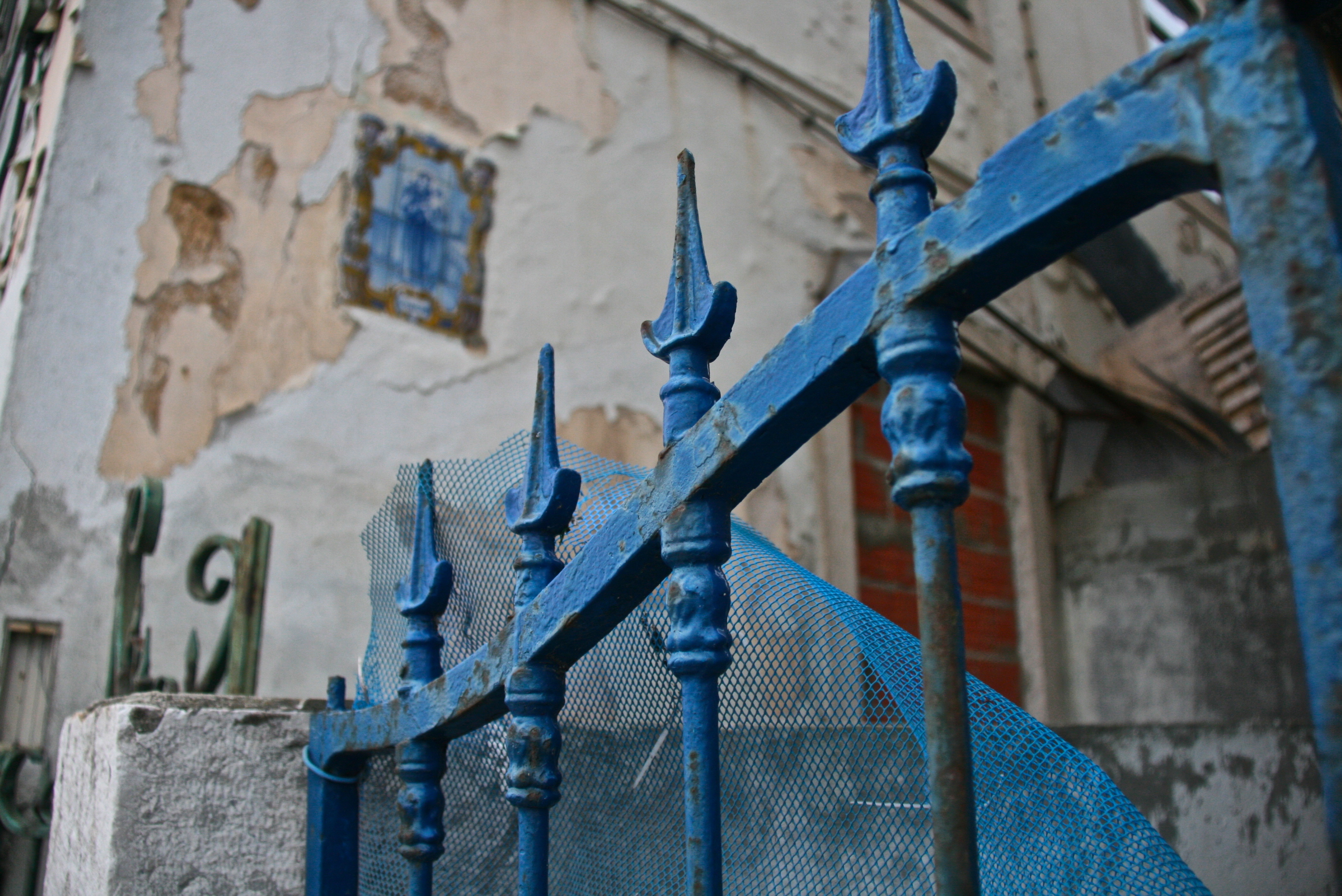
IMG_9874FX Factory, a former factory space near the Alcântara tram stop in the south of Lisbon, has been turned into an interesting hipster-esque scene with an industrial street-art feel. I say “hipster-esque,” because although I did spot some hipsters there, flannel and everything, and although the entire city of Lisbon seems like something hipsters would swoon over, it didn’t have the pretentious vibe I associate with hipsters. In fact, it seems not many people even know about this place yet. I arrived on a crowded evening, an “open” day, when the bars and the street markets were open until midnight, and it was pleasantly full but not crazy. It was one of the coolest places I’ve ever been. The next day I went back with my camera and it was relatively abandoned, possibly due to the rain.

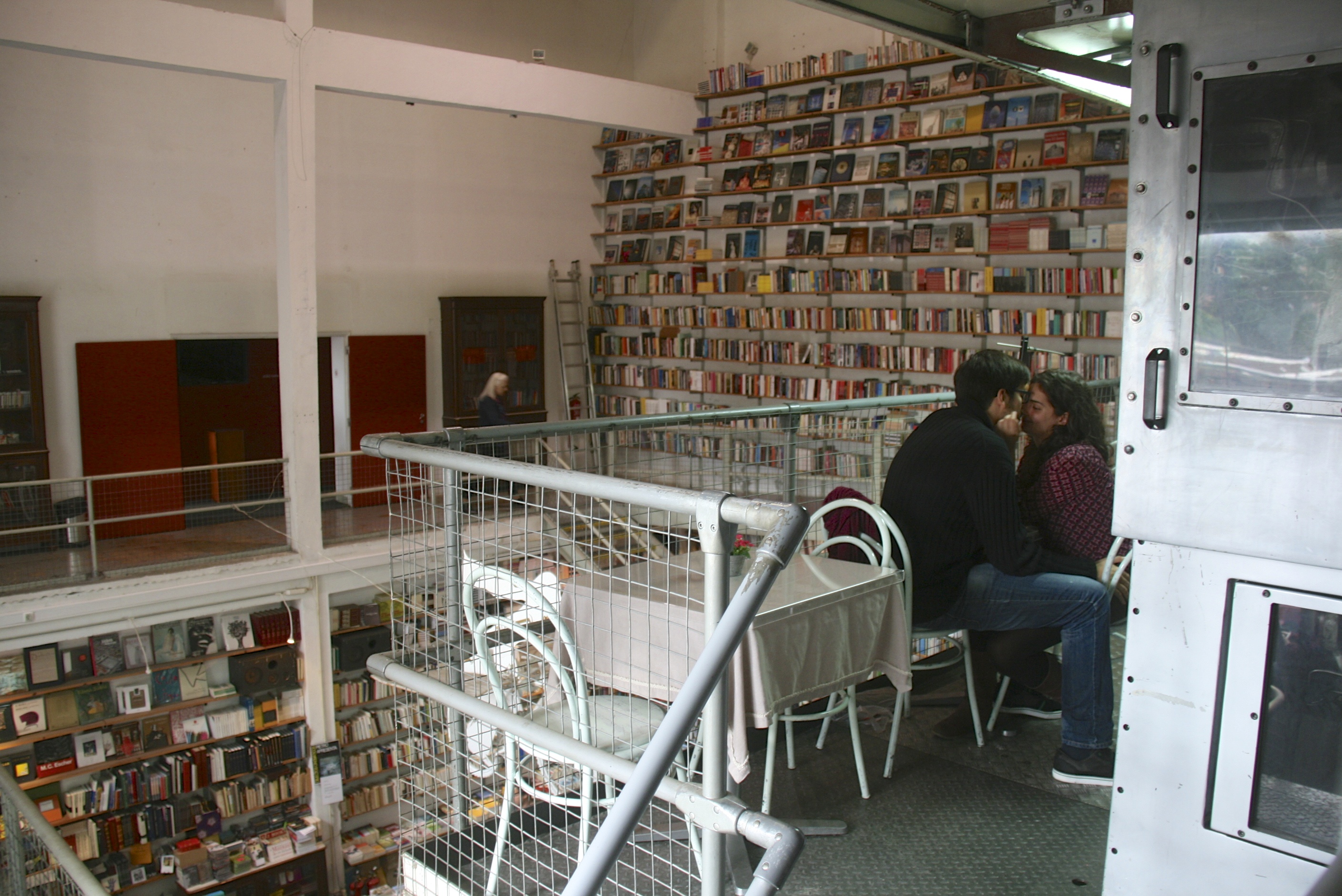
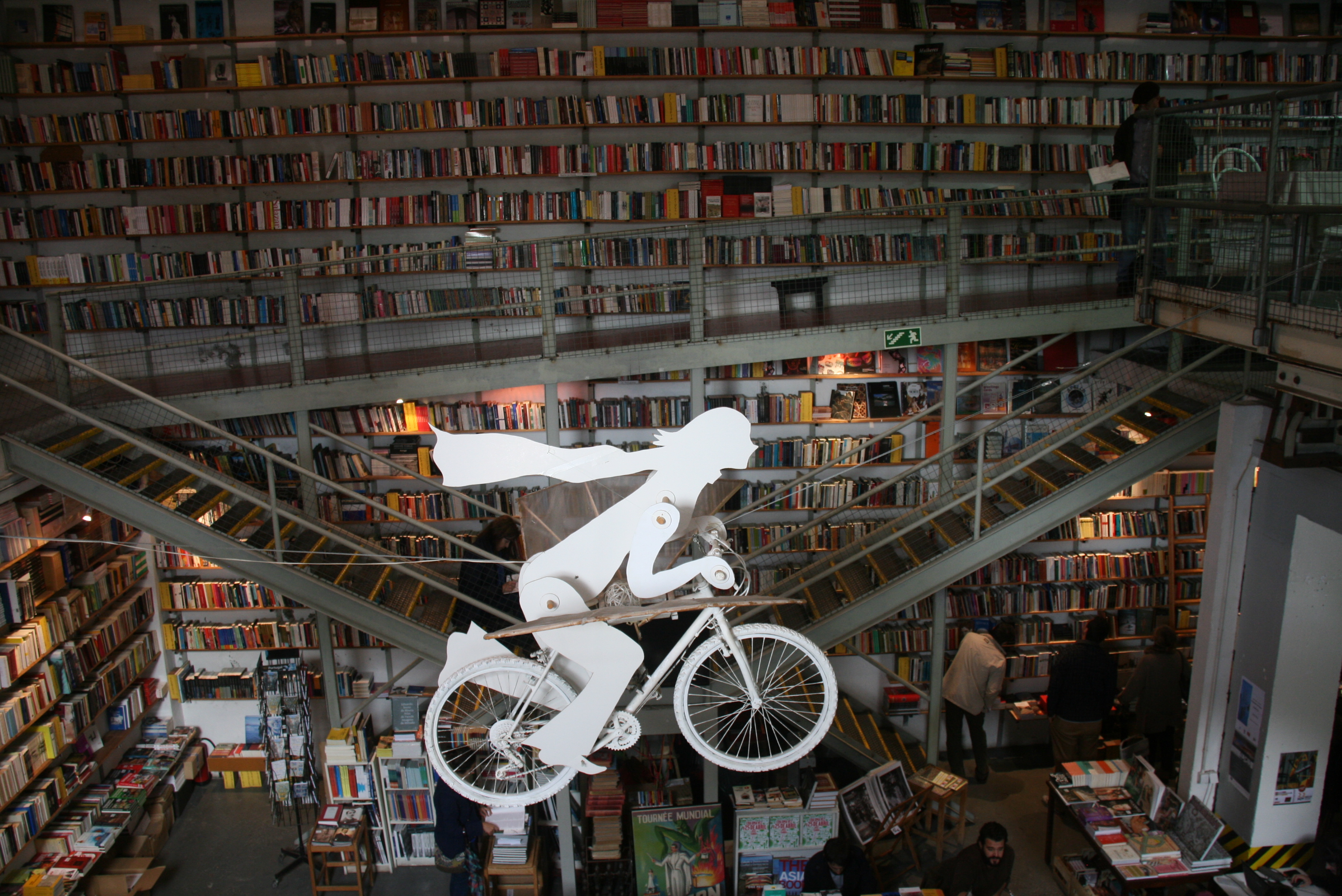
The gem of LX Factory is Ler Devagar (meaning “read slowly” in Portuguese), a print shop-turned-bookstore and cafe sporting giant walls of books and mechanical biker cutouts pulled along on strings.

IMG_9888

IMG_9890 IMG_9866 IMG_9913 IMG_9905 IMG_9911IMG_9954 IMG_9941

Cruz Quebrada

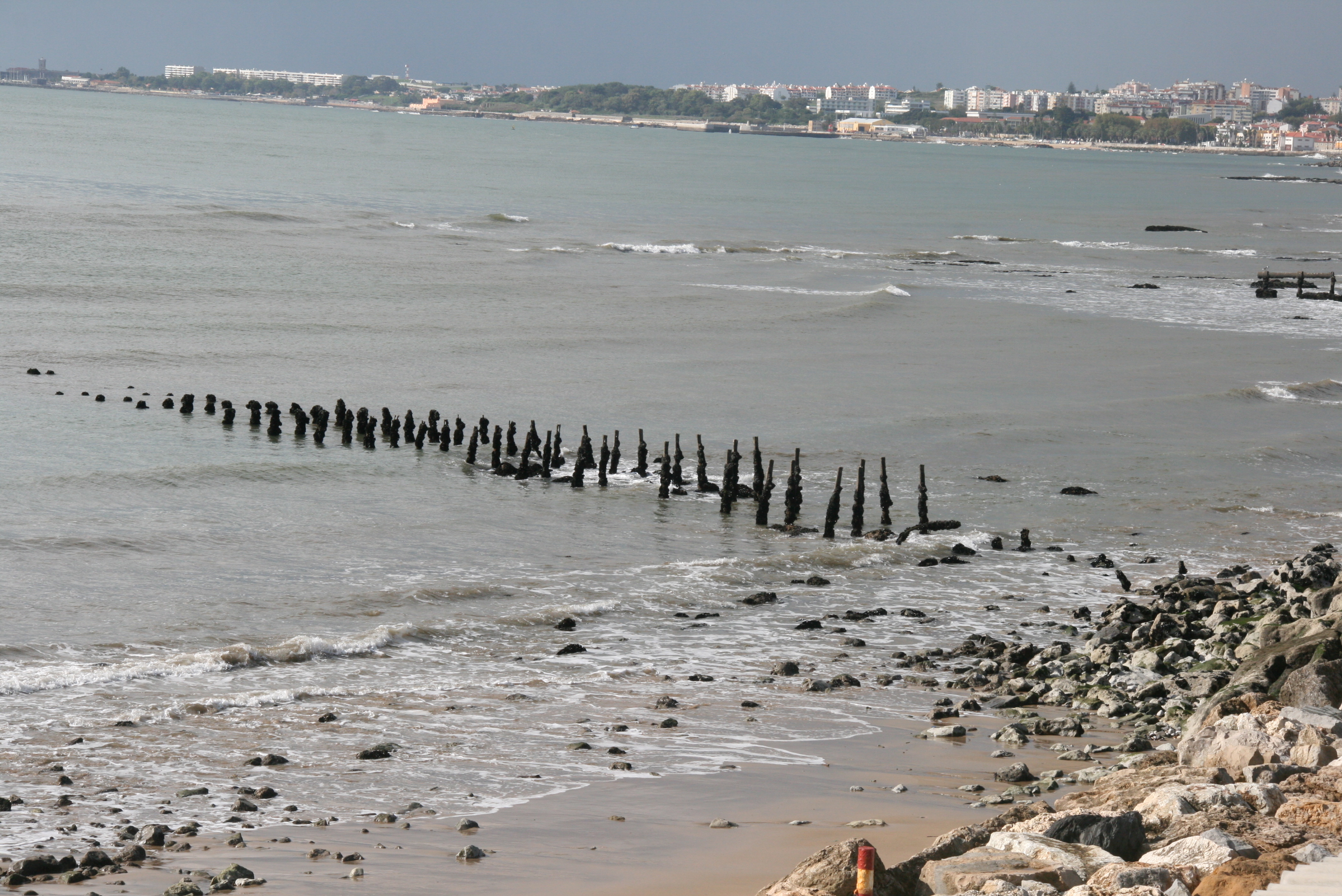
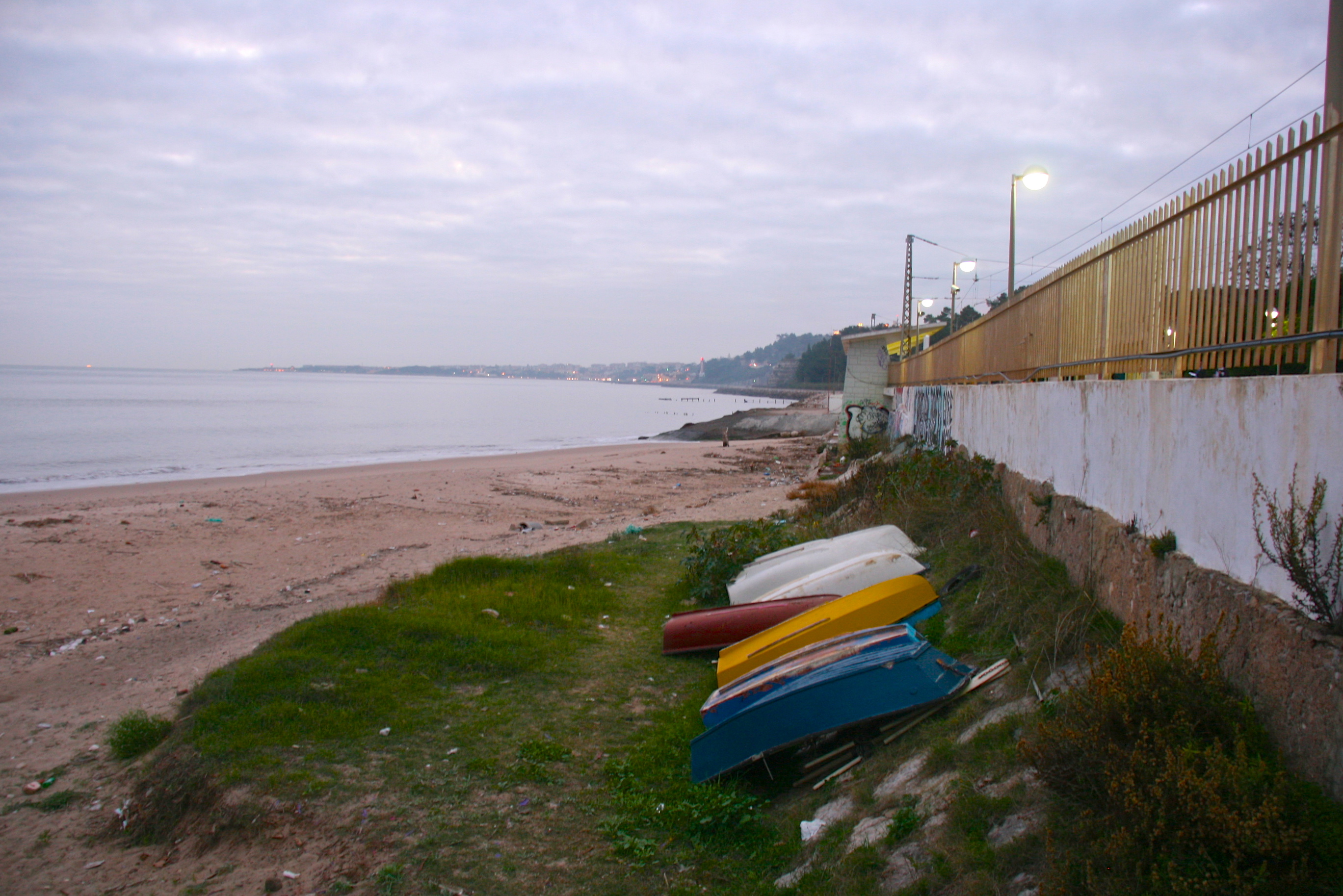
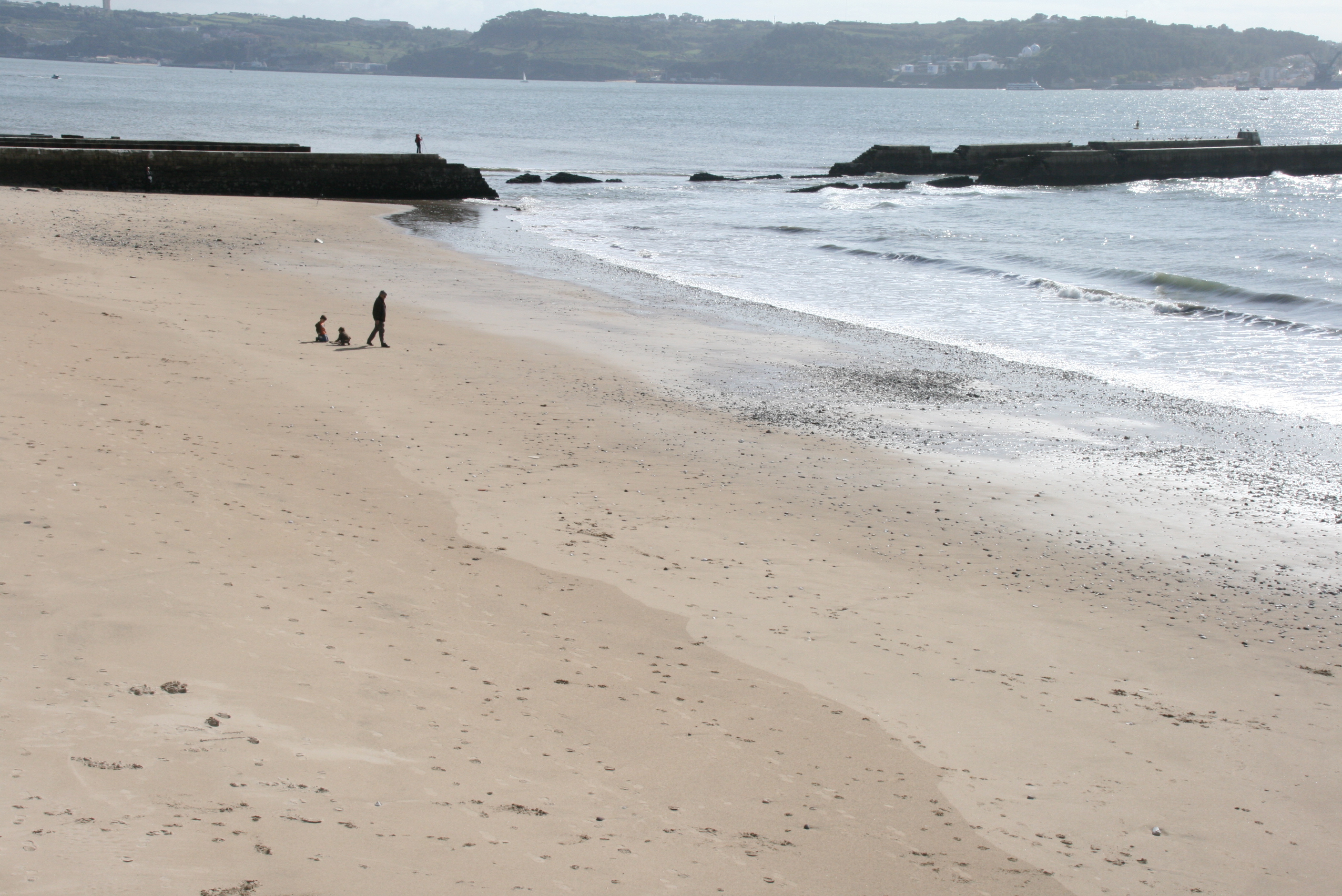
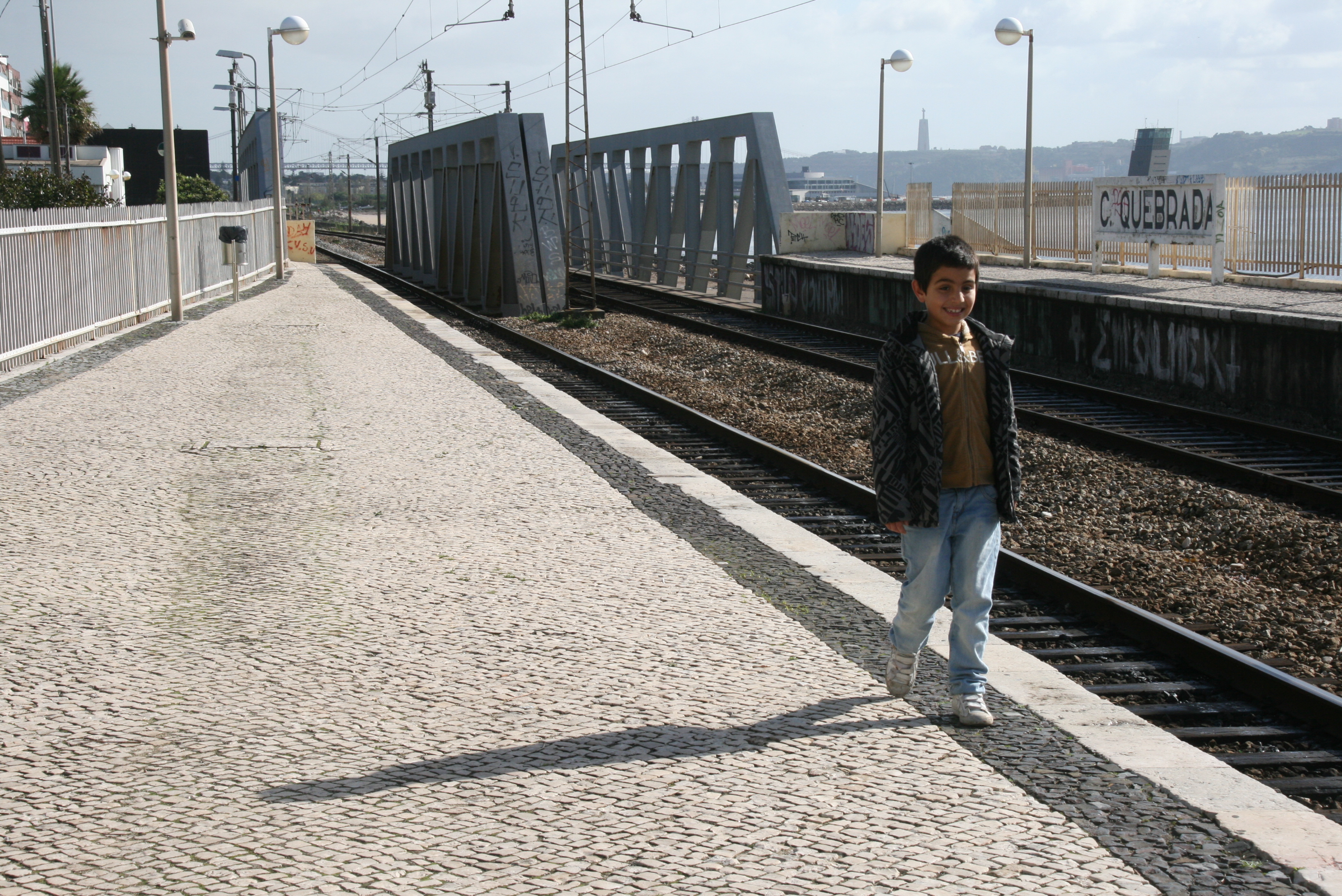
My first few days in Lisbon, I stayed in Cruz Quebrada because my CouchSurfing host lived there. Formerly a home to heroin addicts, it now primarily provides residential housing for mainstreamers. The tram station is directly next to the water — not the ocean, but still technically the Tagus River. The ocean is a couple of tram stops down.

IMG_0005 IMG_9856 IMG_9863 Cruz Quebrada Lisbon

Cruz Quebrada Lisbon

Spurning a drug dealer-beggar in Lisbon

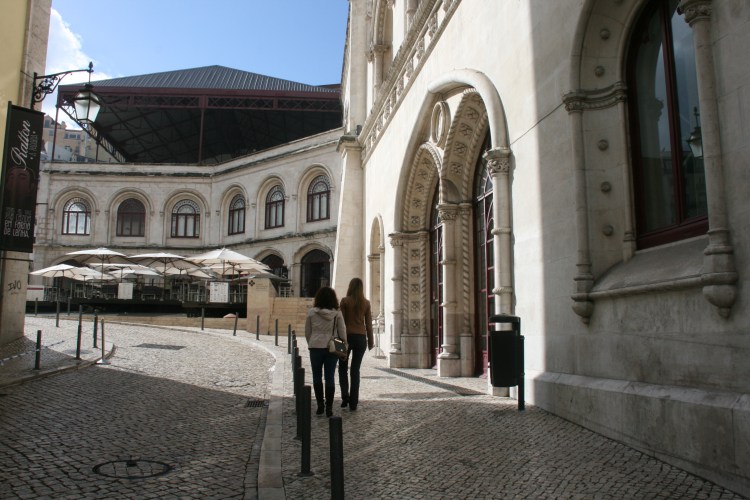
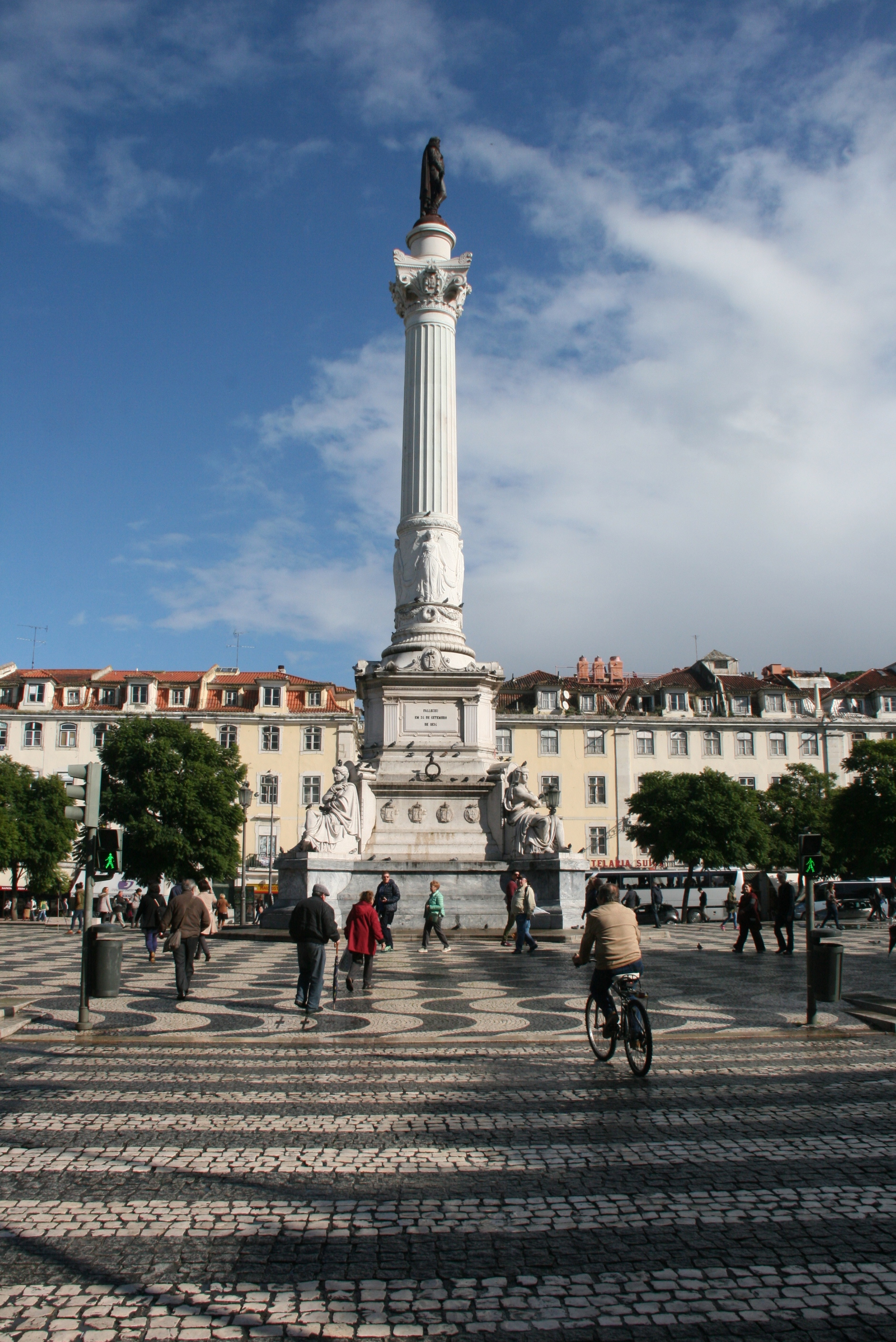
Restaurados LisbonIMG_0014IMG_0024I’m in downtown Lisbon, wandering with my camera, taking photos in Restauradores and Rossio, the beautiful light and the perfect cobblestones in contrasting colors. I’m starting to get hungry, and I spot some roasted chestnuts and slow down to get some. A wizened man with two missing front teeth falls into step with me and shows me cellophane-wrapped weed flourettes behind his hand. “Marijuana?” he asks “good price, good price.”

“No,” I say, waving it away, but I stop because I want the chestnuts.

“It’s legal, ten grams,” the man tells me eagerly.

“No, no,” I say, still shooing at him.

“You want cocaine?” he queries. I bust out laughing at this: I’ve literally never been offered cocaine before. “It’s legal in Portugal,” he tells me, encouraged. I pause: this is actually true; sort of, or at least you won’t get in trouble if you’re caught with a small amount of it. According to the locals, Portugal significantly cut down on its junkie population by decriminalizing drugs and treating junkies like they were sick.

“No,” I say, shaking my head.

“You have five euros for me?” he asks.

“No, no, I don’t want it,” I persist. But he corrects me: he’s not asking me to buy anything, he just wants me to give him money.

“No,” I tell him. I’m beginning to feel like a broken record. Then he says something that contains both Portuguese and English. I make a face and say I don’t understand.

He leans towards my ear. “Sssssssexxxxx?” he enunciates in question form. I stare at him, his gap-toothed grin, his dirty gray stubble, his upraised hand still flaunting the weed, trying to figure out if he’s offering his services for purchase or for free, and either way I shoo at him again, “no, no,” laughing a bit and rolling my eyes because I’m not sure what else to do. Then I have the great idea of pulling out my camera, and he disappears.

I think of better comebacks, comebacks designed to let him know how creepy he is. I remember that only yesterday, I was researching the philosophy of pick-up artist Julien Blanc, where Blanc claimed that when he said something outrageous to women he didn’t know, none of them were offended. He said on the contrary, many of them would bust out laughing at what he’d say. And I realized those women were probably actually highly offended and uncomfortable, and were just reacting in the safest way possible: by laughing it off, by making a joke out of it.

Pick-up artists of the world, take note. Even toothless drug dealer-beggars have the guts to ask strange women outrageous questions. And even in those circumstances, the women laugh. It’s not intended as encouragement, and it’s certainly not intended as a compliment.

It’s intended to let you know how absurd you are, camouflaged so you don’t get too mad and start breaking things.

Milan in the rain, on the cheap

I arrive in Milan on a gray and sopping wet day, and am greeted in the baggage claim area by a bevy of tourist fliers, all of which appear to be for shopping. Haute couture shopping, fine leather goods, discount malls in nearby Switzerland. The fliers and the weather are so discouraging, in fact, that taking a nap in the airport to catch up on the sleep I didn’t get on the plane seems like the best option for the morning, so I find a not-horrible spot and pop my silicone earplugs in. Several hours later, after wiping the drool from my chin, I make my way into the city to meet up with my couchsurfing host at the prearranged time, on a particular set of stairs at a particular metro stop.

We’re going climbing at the least-expensive place in Milan, Passagio Obbligato, an old-school bouldering gym packed with people who seem pretty serious about it. My host climbs longer than I do, so I take a break and attempt to read the Italian-language climbing magazines. I’m flipping through Pareti when I see a headline that includes the word Spokane. This makes me laugh, so there in Italy, I try to piece together what they’re saying about the climbing in my area back home. I think it’s good?

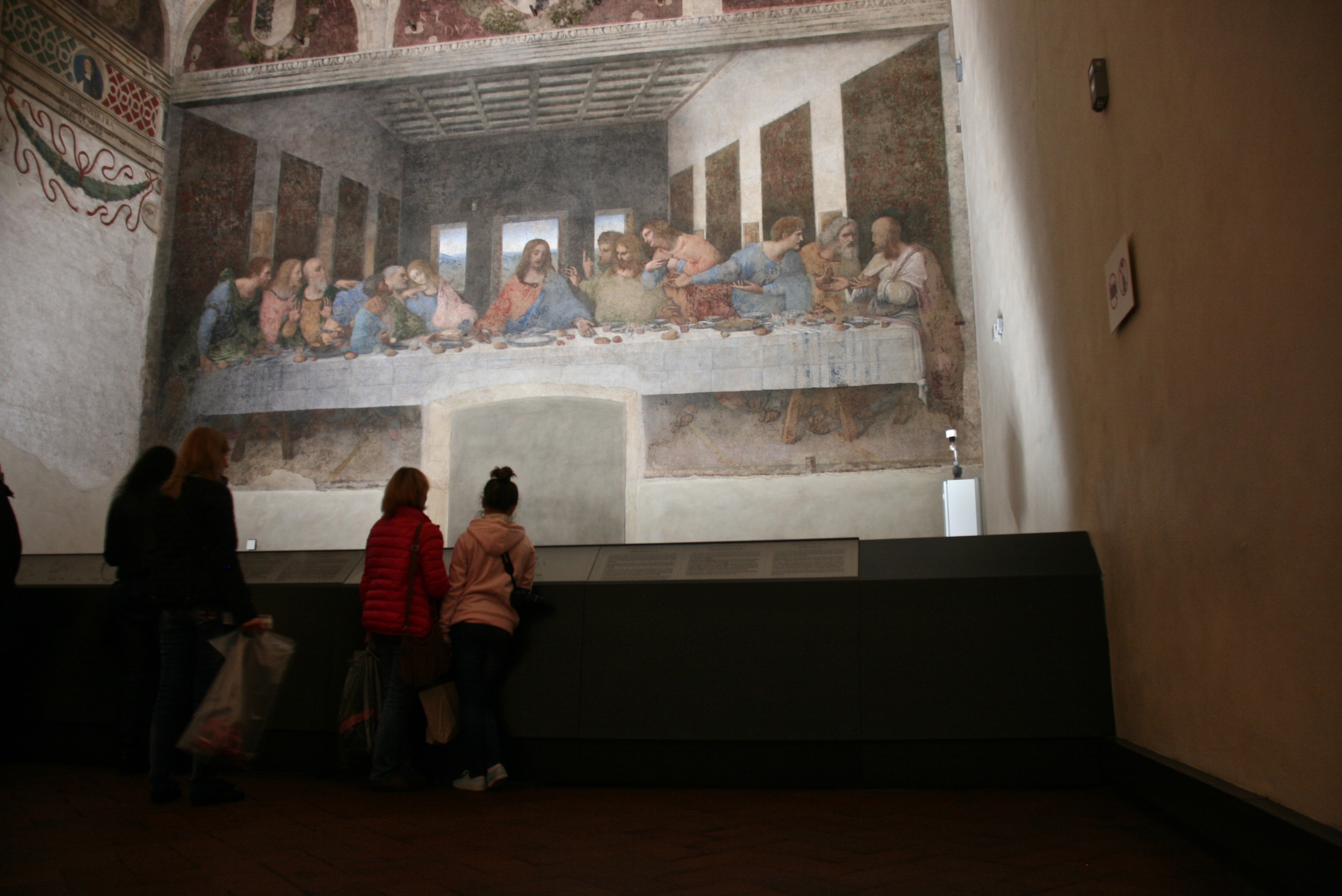
The next day, all I really need to do is make it to my 3 o’clock appointment to see Leonardo Da Vinci’s mural of The Last Supper. I purchased a ticket a month in advance for 8 euros online, having discovered that this was imperative if you actually wanted to see it — pro tip: check out the official link and select the date and time you want; other sites will likely charge you more.

I’m packed up and planning on leaving my bag at Cadorna, the nearby train station, but as it turns out, they have no lockers (pro tip: they do have lockers at the Centrale station), so I end up wheeling my little suitcase through the rain to the church, over the cobblestones. I purchase a 5-euro umbrella from a street vendor, since I have brought no rain gear, and I have my luggage in one hand and the umbrella in the other. Due to how lightly I packed, this is not as horrible as it sounds. I try to think of it as forearm training for rock climbing.

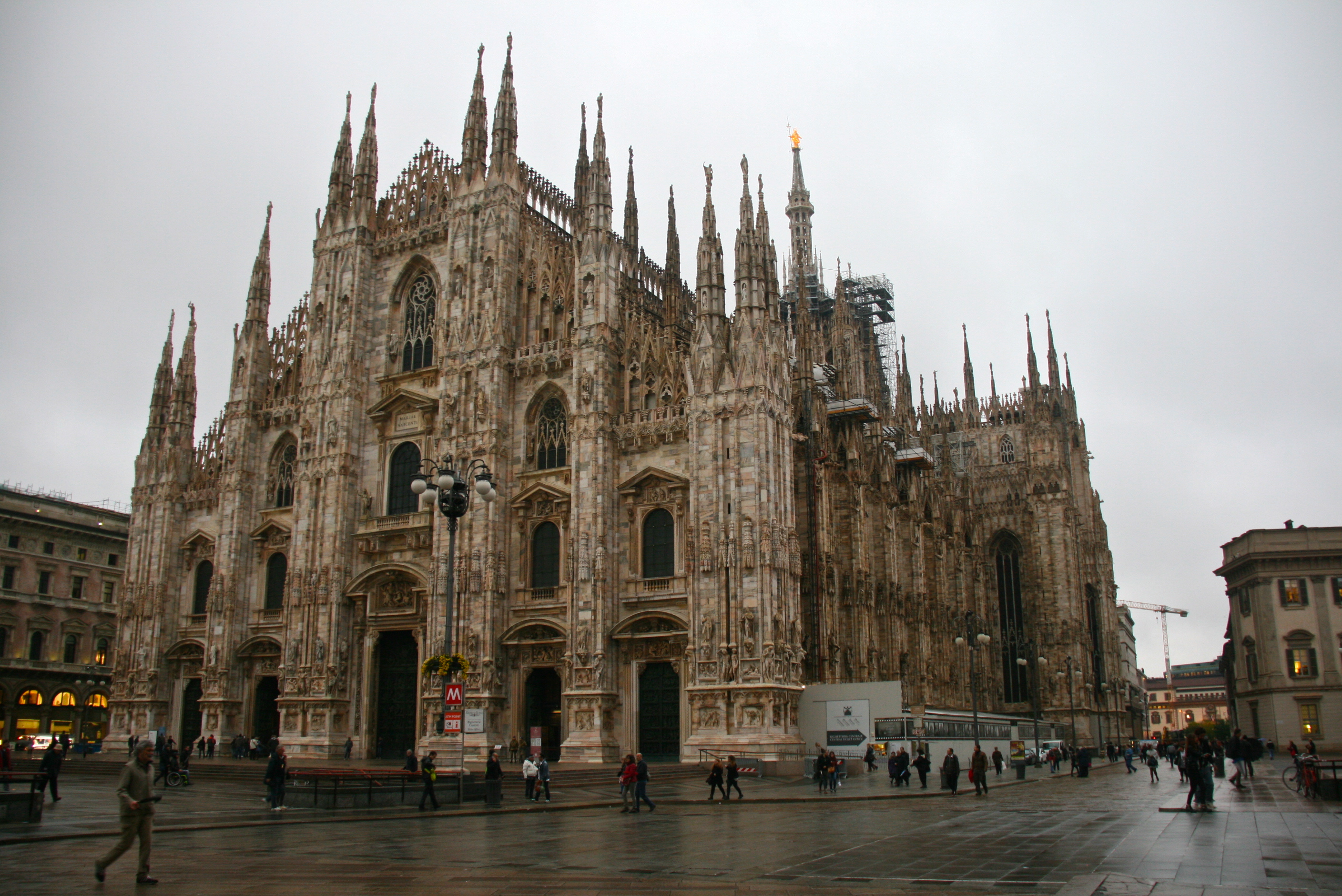
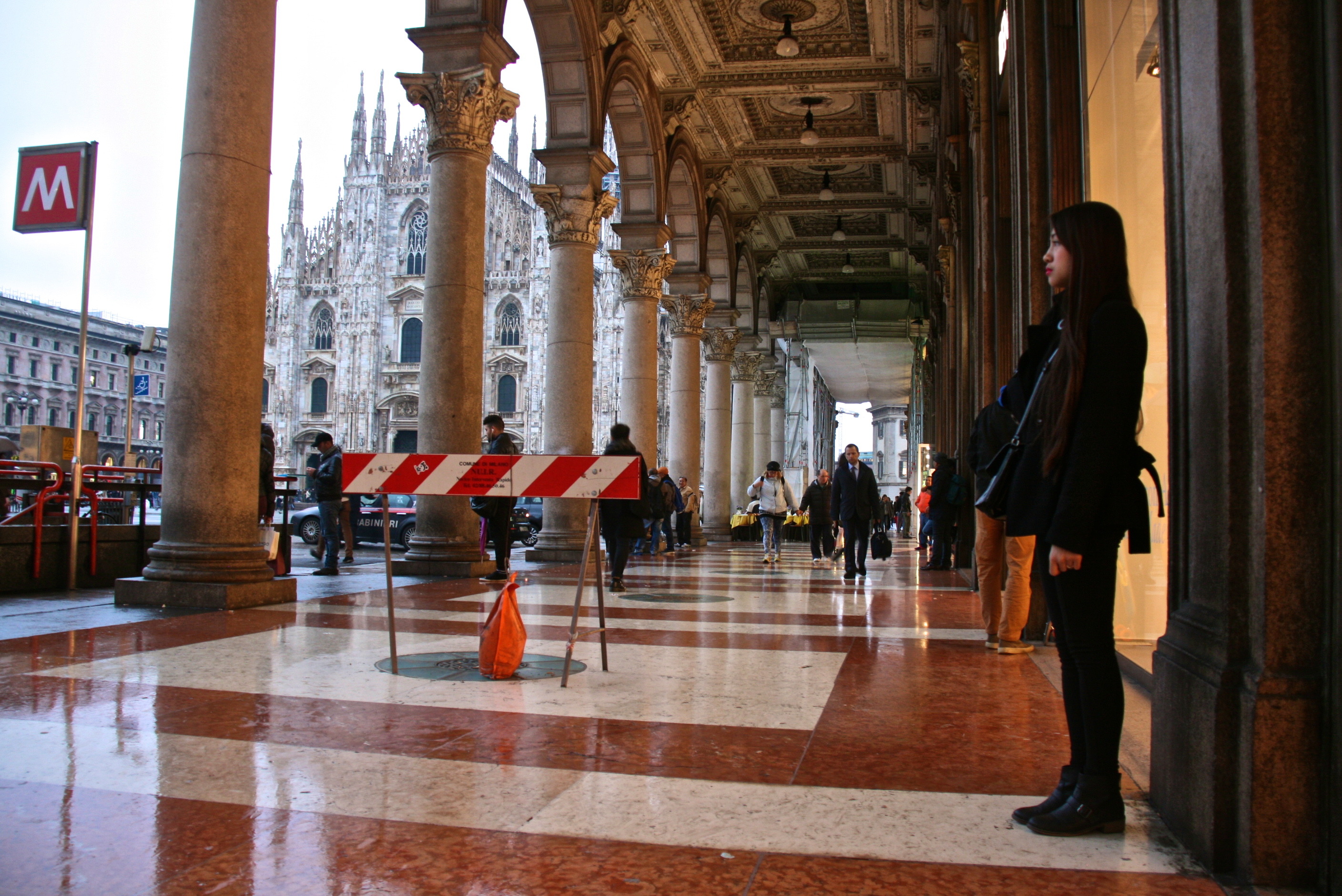
Once I’m inside the inner sanctum that is the Cinacola Vinciano, I park my bags in a corner and stare at The Last Supper for 15 minutes in near-total silence. They let a handful of people in for a quarter of an hour at a time, and the result is quite good. Reverent, even.IMG_9829 Duomo Milan IMG_9847

Then I walk to the Duomo, still hauling my suitcase, picking my way through the warren of small streets with the aid of my paper map, which is going limp in the drizzle. Then, worn out, I take the metro two stops to Crocetta and find Palo Alto, where I’ve been told there is an English conversation group that meets at 8 pm on Wednesdays. Apparently, it’s centered around the aperetivo common to Milan, where you buy a drink and get small plates of food for free. It’s only 5 euros — quite a bargain, because the food is not at all bad. Neither is the conversation. In short order, I meet an Italian with a near-perfect American accent who tells me he does Civil War reenactments with a small group here in Italy, which I have never even heard of. He prefers playing the South because the costumes are cheaper. He’s also done some WWII reenactment in Russia, apparently. I meet an Indian from Zurich who tells me how much he loves his job driving a pedicab: “It’s effortless, it flows like a river.” He says he takes it upon himself to make everyone he carts around feel special and connected, and he knows just how to do it. “Usually it’s music and alcohol,” he says. “People are simple.”

I meet Spanish women from Valencia and an Irishman who is busy correcting the near-perfect-American-accent guy’s English by telling him you shouldn’t say “typing on the computer,” because that means “typo.” I say nah, you can say that. The American-accent guy rebuffs the Irishman with “You are boring!” and everyone around him cheers.

A star called Rijel-Linda

I land in New York at 6 am on a Sunday morning, and stand in the freezing cold waiting for the A train. I get off at 14th in Manhattan, as per my instructions, and wheel my little bag over the uneven streets to 17th and 7th and there it is, my destination: Cafeteria, otherwise known as an all-night diner whose owner seems to be oblivious to the fact that the main use of her linen napkins is customers polishing their shoes. The doorman lets me in and I tell him: “I’m here for Rijel.” He looks confused.

Rijel was named after a star called Rigel, but her parents changed the spelling because they thought j looked more feminine. A six-foot-tall redhead who in her alternate life sings Wagner comes sweeping in, bearing a plate of food, and she tells me, “Nobody knows me by that name here. I’m Linda.” She pours me a cup of coffee and sets me at the bar for the few remaining minutes of her shift, and then she takes me to breakfast and we talk enthusiastically through the haze of our respectively sleepless nights. I never sleep on planes, which is unfortunate. Then we go back to her apartment in Bushwick, Brooklyn, the poor-hipster capital of New York, and we both take long naps.

I did not like New York much the last time I came, but Rijel-Linda says it’s because I stayed on the Upper East Side. Before, the city stressed me out, but my friend makes New York seem friendly. Strangers say hello to her on the street. A grown man gets on the Subway with a tiny pink bike, and Rijel-Linda laughs and asks if she can take his photo. He says yes, and that the bike is for his daughter’s fourth birthday. Rij snaps the photo and says it’s for her friend who has cancer, that she’s sending him photos of strangers. The strangers offer encouraging words to him: to fight, that they send him good wishes. We pass over the Manhattan bridge and Rij stares and stares. “I never get tired of this,” she says of the skyline “it’s so beautiful.”

We go to dinner with one of our mutual friends from our mutual days in college: Asher, who goes by Nathan in New York. Asher-Nathan tells me over Thai food that he’s convinced his parents to move from Brooklyn to Indonesia for their retirement, and that they all lived together as he taught English there for awhile. With him is Lily, another person from our college days, although I don’t really know her. Lily has been teaching Montessori school in Beijing for years now, and so we have a giddy night of it, laughing over the things we did in college together, comparing notes from our travels. We end up at Rij’s favorite place in New York, Mezzrow, a jazz club where the music, Rij says, is always good.

IMG_9797The next day, Rij and I go to the Met, since Rij says it’s a bargain if you don’t pay their suggested donation and instead just fork over a couple of bucks. “It’s a Rockefeller endowment,” says Rij. We’re going to see the Victorian Mourning clothes, which Rij hasn’t seen yet. Tyler, her roommate, comes with us. Tyler is five feet tall and from Alabama, diminutive and cute in every way. Tyler leaves early to buy a new white shirt, since a customer at Cafeteria doused his work uniform with red wine the night before, and Rij and I go find the Dutch masters because they’re my favorite. We have similar ideas about the way to visit an art museum, which is to march purposefully through everything until we see something we like. We pause in front of a Rubens, classically portraying a voluptuous white-skinned female in the nude. “And there I am,” says Rij, gesturing to the painting. Indeed, I think, Rubenesque is the perfect word for her. A Rubenesque opera singer with a half-shaved head of red hair.

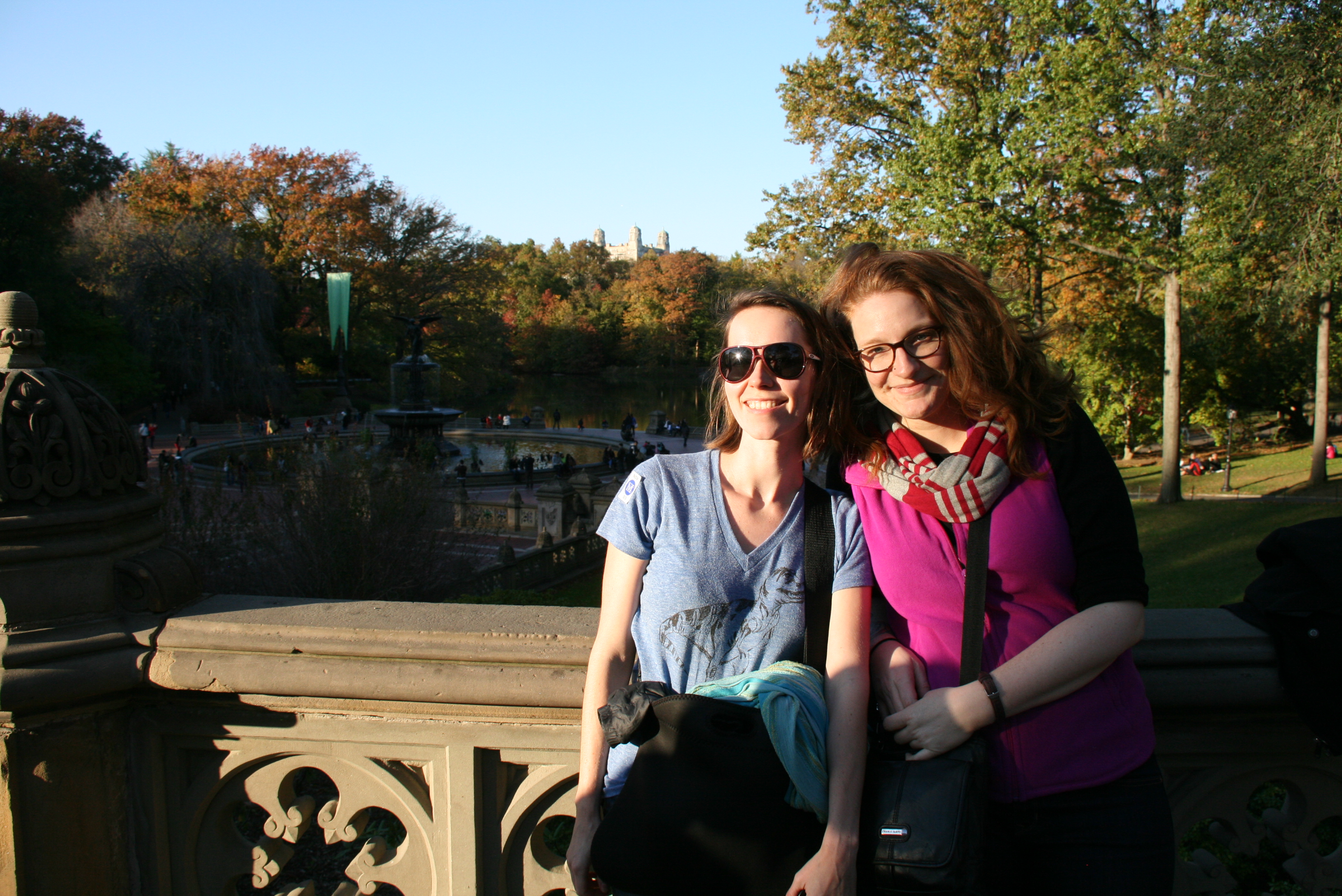
IMG_9817Central Park bridge

We walk through Central Park and I get a migraine from trying to take photographs of the sunlight coming through the trees. I have to rush back to Bushwick to pack for my flight, however, so we get on the train through the block splotches crowding my vision. I put my head on Rij’s shoulder and she pats it soothingly. “She has a migraine,” she tells the lady sitting next to us. The lady whips out a vial of peppermint oil and tells me to massage it into my temples and between my eyes. The oil feels cold against my skin and I wonder if it’s going to trick my brain into thinking its vessels should constrict. Just to make sure, I stick my head in the freezer when I get back to Bushwick and apply a bottle of frozen water to the base of my skull. Something works, because my migraine subsides just in time for me to catch the L and then the A to JFK. Goodbye, USA, at least for now. Total spent in New York: $50, much of it for subway fare.

Virtual reality in Vancouver

So Vancouver is hard to really get to see when you’re going to conferences for a week straight, but I did get to walk around and take some photos one afternoon when the sun came out — and then my camera ate the pictures, so you’ll just have to take my word for it. I walked along the waterfront, and then down to Water Street and found the John Fleuvog store, an artisan shoe shop that was supposed to be good. I was prepared to be wowed by the feel and smell of the leather, and by the design, but it was a disappointment — apparently, my tastes far outstrip my budget, to the point that I do things like travel cheaply. If it’s not a secluded five-star resort in a tropical paradise, it might as well be a hostel.

As I walked, I kept thinking: globalization is not good for the particular vibe of a city. Basically anywhere you go now in the developed world, it’s gluten-free-option bistro food with a hipster twist, bearded guys with baby beer guts hidden by v-necks, bike culture, iPhones, spare-changers both with and without dogs, people selling cheap wares on pieces of cardboard, and lots and lots of black leggings. And chic Asian girls taking photos, laughing over the results with their hands over their mouths. It’s just odd how mushy cultural boundaries have been getting in the last ten years in big cities, even if you choose to ignore the Starbucks and McDonalds on every corner.

Vancouver reminds me of Seattle, or San Francisco, or Madison, Wisconsin. Or perhaps it’s the feel of the weather: I’ve explored those cities in October, my explorations coinciding with the yearly US Localization World conferences.

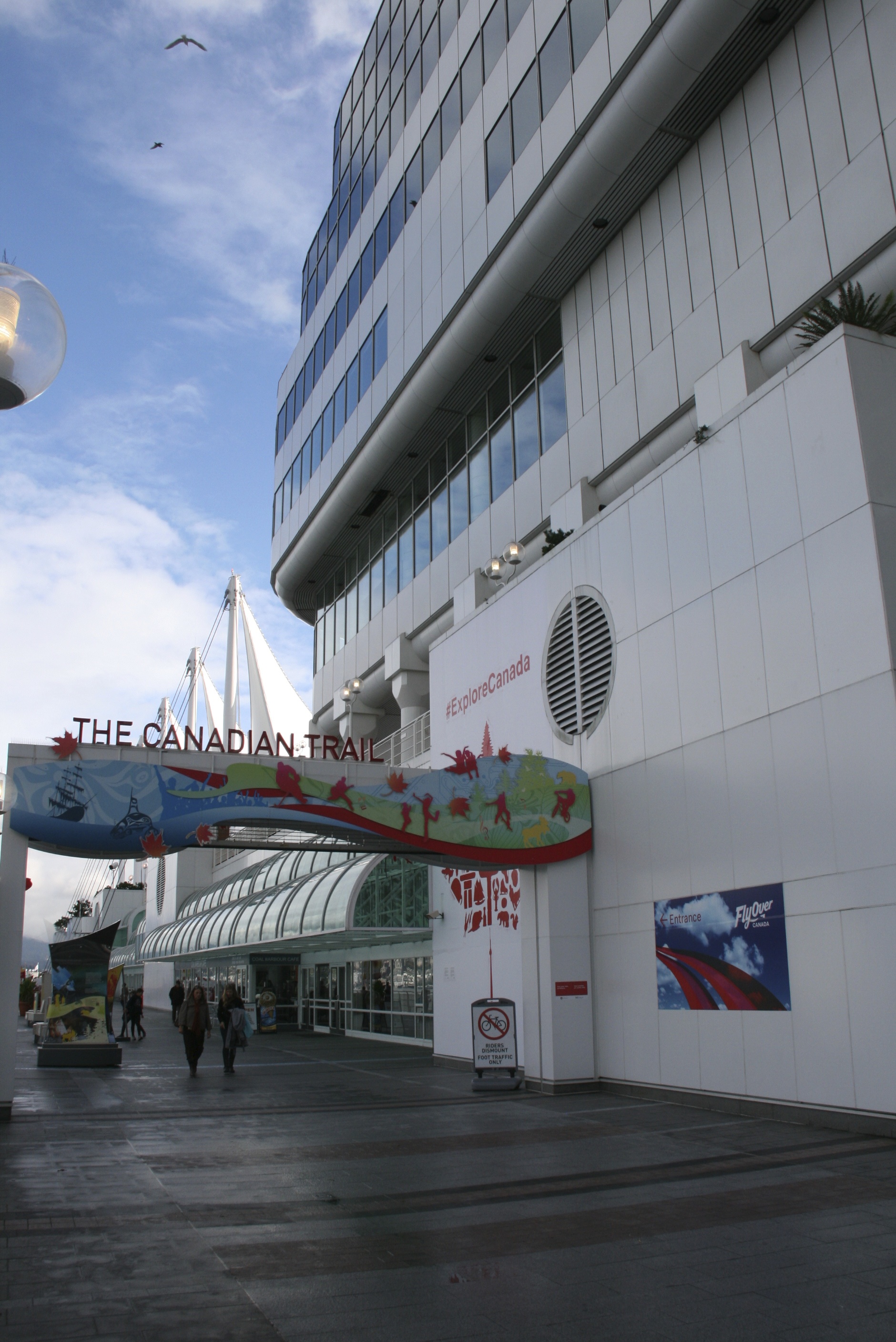
Fly Over CanadaOn Halloween, I cut out of the conference with three friends for about 15 minutes to experience FlyOver Canada, conveniently located at the tail end of the Vancouver Convention Centre, and conveniently priced so that conference attendees get a 20% discount. FlyOver Canada is one of those experiences that I’m not sure if I should have loved, or hated on principle. The technology nerd side of me thought it was awesome: you sit down in long rows in front of a giant Imax dome, and then the lights go dark and your seat moves forward so that your feet are dangling above the edges of the dome, and the landscape starts to roll across the screen in conjunction with the tilting of your seat so that it’s hard not to believe you’re actually flying through space. A gentle breeze blows into your face, and as you pass through clouds or the spray of Niagara Falls, real mist appears and chills you. As you fly over prairies, the smell of sun and grasslands emerges through some hidden channel. Anne-Maj pulled out her phone and started snapping photos of the scenery, towering mountains with skiiers underneath, lakes and gorges. The ride, if it can be called that, takes you from Eastern Canada to the West Coast, and passes over the Vancouver Convention Centre. “Sorry we’re not working!” Courtney yelled down to the screen as we zipped overhead. We ended above the clouds, watching the Northern Lights, and then we trooped back to the conference. Nerd-me thought it was fun and beautiful and really cool, Imax taken to its logical conclusion, and outdoor-me was not happy that virtual reality was replacing the real thing. With me being a prime example, taking 15 minutes out of my busy schedule to pretend I’d seen Canada instead of going out into the rain and seeing it for real.

Packing light for an active, varied, round-the-world trip

I can fit all of my possessions for this round-the-world trip in one carry-on. Well, that is, if I cheat a little. My goal has always been to pack light enough to meet Ryanair’s cabin requirements of one cabin bag with the maximum dimensions of 55 by 40 by 20 centimeters.

Ryanair says the weight limit for cabin bags is 10 kilograms, but I’ve never seen them check this. The airline seems to have eased up its rules, because now they’re also allowing one small bag of up to 35 by 20 by 20 centimeters (13.77 by 7.89 by 7.89 inches) per passenger. That’s totally doable, especially if you remember that the bag can be a little bigger than that, as long as you can actually smash it/fold it down to the right size if asked.

I have several goals with what I pack. One, keep myself warm, healthy and safe. Two, look good. Three, make my life as easy as possible as I travel. So I balance packing light with including enough comforts to sustain me. Here’s a partial list of what I packed for my round-the-world trip:

  1. Climbing harness, locking carabiner and belay device.
  2. Climbing shoes.
  3. Climbing shorts.
  4. Sports tank with built-in support, svelte enough for going out in.
  5. Reasonably quick-drying tshirt I won’t mind wearing a lot. Most blended tshirts fall into this category.
  6. Icebreaker cardigan, or other light jacket layer that resists odor and washes easily in bathroom sinks.
  7. Icebreaker travel clothes
    Visiting my little brother, wearing the pants my niece picked out and an Icebreaker shirt.

    Long-sleeved Icebreaker or similar multi-purpose long-wearing shirt >>>

  8. One pair of pants, appropriate for dancing, professional situations, and general sightseeing. In other words, they should be sleek and comfortable, with stretch. I allowed my three-year-old niece to go shopping with me and she advised me to buy this particular pair; as it turns out, she has impeccable taste.
  9. Light scarf.
  10. Five pairs of wool socks, differing weights, including one small enough that they don’t show over your chosen pair of shoes.
  11. Seven pairs of underwear, small and reasonably quick-drying (most women’s underwear seems to fall into this category, as long as it isn’t all cotton).
  12. One pair of flip-flops you can walk for miles in (mine are North Face).
  13. Two stretchy sundresses with built-in support (mine are from Patagonia and Mountain Hardwear).
  14. Two bathing suits.
  15. One travel towel/sarong.
  16. Tank top and stretchy shorts for sleeping; to double as streetwear in an emergency.
  17. One decent pair of sunglasses, polarized.
  18. Collapsible water bottle, such as those made by Platypus.
  19. Bandana and silicon earplugs, for sleeping.
  20. Digital SLR camera, and charger.
  21. Adapter. I researched what I’d need based on where I’m going.
  22. Laptop, cord.
  23. Some kind of laptop case that doubles as a collapsible day pack.
  24. Hard copy of my schedule, compiled into one master document and protected in a plastic sleeve.
  25. Simple first aid kit: band-aids and possibly moleskin, as well as cures for what commonly ails me.
  26. Vitamins (including fish oil and probiotics).
  27. Wet wipes.
  28. Screen Shot 2014-10-26 at 1.48.10 PMToiletries. I go light here, but I’m bringing mosquito repellant, sunscreen and itch ointment. I’m also bringing silica hair powder, a volumizer that doubles as dry shampoo.
  29. Small notebook and two pens.
  30. Enough of the foreign currency to get me into the main city and out of the airport.
  31. Passport and some way to wear it under my clothes. Because I don’t like losing passports.
  32. I started out with ten Epic bars, ten Larabars, and my coconut macaroons with chocolate whey powder substituted for some of the melted chocolate. This is mostly to avoid eating overpriced airport food, and to have trustworthy, healthy snacks available.
  33. Ten or so teabags, assorted. Often, there’s hot water in a hotel or hostel, but it’s rare they have the kind of tea you want.

On the plane, I wore another Icebreaker shirt, comfortable jeans, a down jacket (doubles as a pillow) and Toms knock-offs in black. These canvas shoes are my new favorite traveling shoes — they’re minimalist and don’t offer a ton of support, but they’re very comfortable and they look decent in spite of being extremely inexpensive. And I’m kind of into minimalist shoes right now anyway.

As a sidenote, nobody is paying me to plug their products, or even offering free review material. I’ve just discovered that the brands I mention are excellent for traveling. As I’ve said before, good outdoor gear makes for the best-performing, most compact travel wear I’ve come across. It can be pricey, especially if it looks good, but I scour the sales on deal websites and physical stores — being size XS helps.

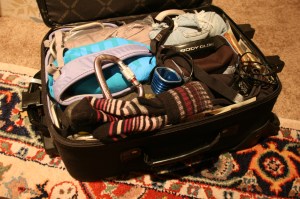
IMG_9457As for how to pack all this stuff into the small space allotted to you, that can be tricky. I took two thin plastic bags, the kind you use for produce in grocery stores, lined my (cleaned) climbing shoes with them, and then stuffed smaller clothing items into the lined shoes. I converted my clothes into tightly-rolled blocks and laid them like brickwork into the Tetris field of the larger, immobile objects. I used food bars to fill small spaces. I unlaced my climbing harness and strung it around the parameter of my suitcase. Basically, I was going for maximum density. I left enough space at the top for my laptop.

Searching for travel apps at the AMTA

The customs agent pauses with the passport stamp in his hand and asks what my business in Canada is. “I’m going to a conference, the AMTA, Association of Machine Translation in the Americas,” I say. “You’re late,” he tells me, snapping the stamp downwards. This is the first time any customs agent has even heard of the conferences I go to, so I nod and then slink away past him into Canada, feeling chastised and amused both at once.

I’m attending the AMTA as a localization professional, but my globe-trotting self has a pressing question: is it ever going to be possible to have a reliable, accurate machine-translation (MT) travel voice-recognition and text-reading app for all your daily communication needs in far-flung locales?

MT combines linguistics, coding and even mathematics. At the AMTA, I keep thinking: this is a homeschooler’s paradise, where the super-nerds could really excel and maybe even make money from being super nerdy. If you could corner the market on accurate MT, you’d be rich. I wear my super-nerd-trying-to-be-cool uniform of an artisanal T-Rex tshirt purchased at the Portland Saturday Market from ARTjaden. And then a somber gray wool cardigan to button up over it in case it’s too casual.

Nearly all of the presentations at the AMTA deal with corporate or governmental MT: which engines work with which languages, which subject matter, which approach, how many errors are Ok in what kinds of documents. Also, how to train linguists to be corporate MT post-editors, and how to feed their improvements back into the MT engine so it learns how to translate better.

MT is incredibly complex because language is incredibly complex. For a language pair like French-English, something like Google Translate works reasonably well, reasonably being the operative word. First, because the languages are similar in terms of grammar and vocabulary. Second, because a huge amount of text already exists in parallel French and English iterations. There’s a whole slew of English source texts and French translations, and vice versa. This means that when something like the Google translation engine is learning how you are supposed to translate “Bob’s your uncle,” it can approximate pretty accurately from the million or so similar examples previously translated by real humans. Google is a statistical machine translation engine, meaning that behind its machinations, it learns basically how babies learn: by rote, by observation. Or perhaps I should say, how second-language learners learn. Like many second language learners, statistical machine translation engines may err on the side of taking things too literally.

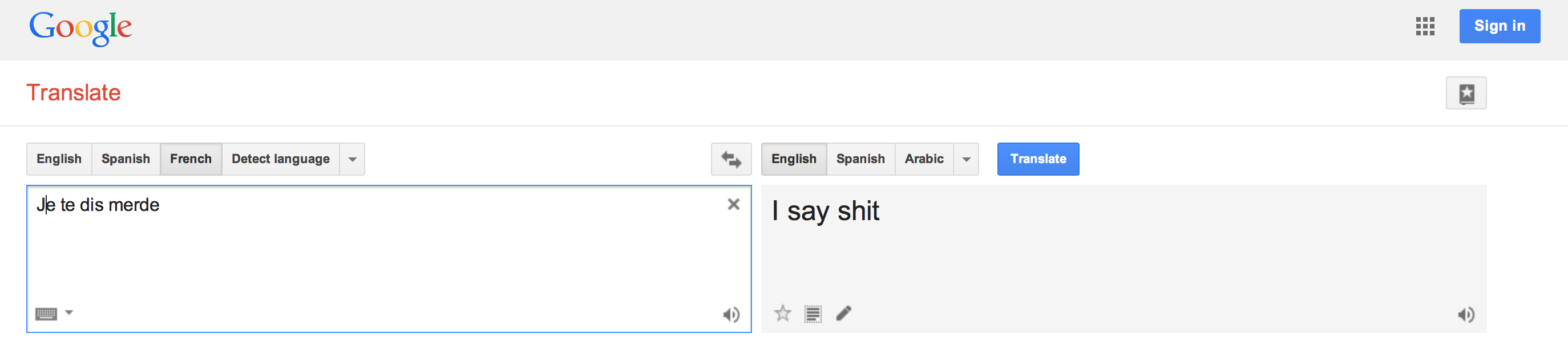
Here’s why literal translation may not work. A guy behind me this morning cheerfully says to the speaker, who’s about to go on: “Je te dis merde.” She’s horrified; she must understand some French, and asks “why would you say that to me?” He responds: “It means break a leg,” but she still doesn’t understand. Since I’m physically in the middle of them anyway, I translate the two idioms: “it means good luck, but you’re not supposed to say good luck.” She’s relieved, and tells the French-speaker thank you. Ironically, her presentation is about how to code semantics with rule-based engines so that mistranslations like this don’t happen.

Now I’m curious, so I look this phrase up on Google Translate.Screen Shot 2014-10-25 at 1.17.06 PM

Nonetheless, a properly trained pocket French-English statistical machine translator might not be that bad, as long as it could access the cloud and the enormous of data it would need to run effectively. Something like Swahili-English, not so much. Swahili is too grammatically complex, too dissimilar to English, and very little parallel data exists on the web for it. You’d need to build a rule-based system for it, and spend a fair amount of time training the engine.

I keep an ear open for it, but nobody in the private or public sectors at this conference specifically mentions developing MT apps for backpackers; the conference focused mainly on scenarios for more accurate translation, complete with mathematical formulas and heavy use of acronyms, such as “C API used for BASIS Language ID, rather than SOAP-based API.” One person did bring up having apps for tourists, and suggested having different apps for different scenarios, such as a specific terminology-oriented app for the doctor’s office. As everyone in MT knows by now, training engines for domain-specific, limited usage is way more accurate than when you throw hundreds of idiomatic expressions together into computational soup. So, in case this wasn’t already obvious, if you’re relying on Google Translate for your foreign doctor’s visit, that’s a terrible idea.

However, all this behind-the-scenes research and development may one day trickle down into cheap portable commercial MT paired with voice recognition, and the way things are looking, it may only be five years or so before this is a reality. Note: this is what people have been saying about MT since about 1955.
One woman, one round-the-world trip, one month, $1,000

Back in May, one of my friends posted on Facebook about this crazy deal on Priceline: you could get tickets from JFK to Europe and then on to Asia for a couple hundred dollars. He said to play around with the parameters to see what you could get, so I spend a couple of hours doing just that, worried that the deal would disappear the entire time.

My final itinerary was from JFK to Milan, and then from Lisbon to Bangkok, for $376.

To this I added a one-way ticket from Bangkok back to Spokane for $74 — and a lot of Delta air miles. I got to JFK on a paltry $5.60 fee and 12,000 United points. Mind you, the route was less than ideal, sending me through LAX and taking longer than all but the Bangkok-to-Spokane leg of the journey. From Milan to Lisbon I purchased a one-way Ryanair flight for $94. Total round-the-world flight price: $556.

I tacked all this onto the end of a work trip to Vancouver, BC. I leave in a couple of hours. All told, I’ll be gone for a month and a day, and I’ll travel eastwards the circumference of the globe and then some. My plan is to try to do the entire trip on a $1,000 budget, just to prove I can — and without resorting to sleeping on park benches and eating out of trash cans. More power to those who can do that; I’m too spoiled for such austerity.

As for the budget, it’s about what I’d spend in the month of November anyway on housing (as luck would have it, a friend called and wanted to rent for a month, so I’m getting out of my biggest bill), food, gas, entertainment and so on. So, really, if you look at it a certain way, the trip will be free. I’ll even be working remotely — appropriately, on an issue of our magazine that deals with how cloud-based technology is affecting global business.

I’ve never done anything quite like this before. I’ve traveled enough, I feel savvy enough. I think I can pull it off. But we shall see.

Trail-ready paleo coconut macaroons

I made an entire bag of chocolate-coconut macaroons that we took hiking with us, small treats that combined the caloric punch of fatty coconut and coconut sugar with the protein of egg whites and the buzz of chocolate. Because space was an issue, I didn’t whip the egg whites, opting to food-proccess them instead. They were probably the best trail food I’ve ever had.

I adapted this recipe from Smitten Kitten, halving the chocolate on the assumption that I was going to be eating about five of them in a row. I also added another egg (extra protein) and a dab of coconut oil (extra fat) and adjusted the sugar. Note: if you want a really decadent treat, use the Smitten Kitten version.

Yield: About 2 dozen tablespoon-sized cookies

About 2 ounces (115 grams or about 1/3 cup) unsweetened chocolate. I used half of Ghirardelli’s unsweetened baking bar, and also added a tablespoon of coconut oil.
About 14 ounces (400 grams) unsweetened flaked coconut. I bought mine from the organic bulk section.
1/2 cup (130 grams) coconut sugar
2 tablespoons cocoa powder
4 large egg whites
Heaped 1/4 teaspoon flaked sea salt
1/2 teaspoon vanilla extract

Heat oven to 325°F. Oil a glass baking dish well.

Heat chocolate chunks and the tablespoon of coconut oil in a small saucepan over low heat until almost melted, then stir until they’re smooth. You don’t want to overheat the chocolate.

In a food processor, blend the coconut. Add the sugar and cocoa powder and blend another 30 seconds or so. Add egg whites, salt and vanilla and blend until combined, and then blend in the melted chocolate. With a tablespoon, scoop batter into 1-inch mounds on the baking dish. You can arrange the cookies fairly close together as they don’t spread, just puff a bit.

Bake cookies for 15 minutes, until the macaroons are shiny and just set. Let them rest on the tray for 10 minutes after baking, and let cool completely before putting them in plastic baggies for the trail.