Arkansas to Oklahoma

ImageAs a child, Collin spent his summers in Arkansas, on his grandparents’ 300 acres outside Little Rock. It’s surprisingly pleasant; nothing like I remember of my own childhood in neighboring Oklahoma. It’s hot and humid, but the breeze coming off the lake is delicious and there is shade everywhere. It’s green and the roads wind up and down, left and right, and Collin revs his inherited minivan, the ostensible point of this trip, tires squealing around the curves as I gasp.

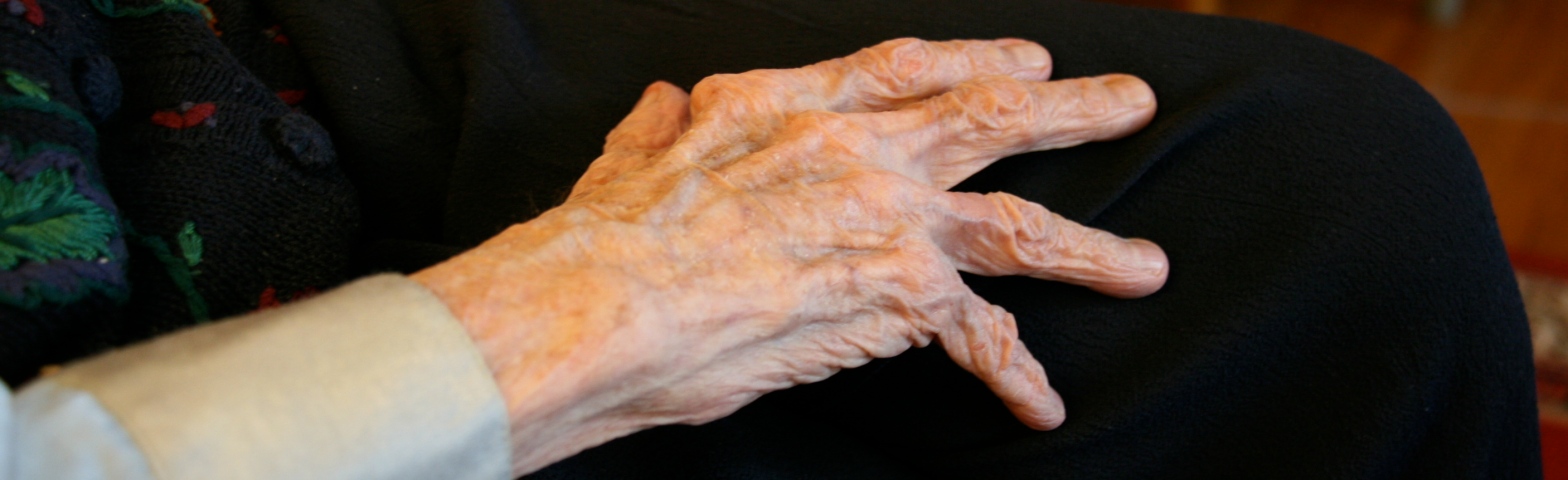
When we do drive west into Oklahoma, the land flattens. We arrive in Tulsa just in time to discover there is a tornado heading towards us. We talk with my grandmother Halcyon, who has always lived up to her name, even now that she is on hospice care and looked after by my aunt. Grandmother holds court for two hours in the living room before she gets too tired and has to lie down. She tells stories: a new one about the time she helped her brother drive to San Francisco, and then, afterwards, sat on her luggage, alone, wondering if she should get dressed up and go look for a job. But she didn’t; she decided to go back home to the farm in Iowa. “Your Grandfather told me I was his blithe spirit,” she says, chuckling over her many tangential forays into the wide world as a young woman. You know, she kept saying, I just couldn’t marry someone from there, someone from that small town in Iowa. Collin records her on his iPhone as she talks about this, and then talks about the nanny they hired for the four children, birthed in quick succession. “She left us and moved to California, and then we heard she was murdered,” says Grandmother. This is news to me, and I wonder if maybe she’s mixed up. Her dates and facts have begun to lose themselves in memory; 23-year-old cousin Meghan whispers that Grandmother recently asked what Meghan was doing when Pearl Harbor was bombed.

In any case, Grandmother has hit upon the idea that Collin and I are there to invite her to our wedding or something, and Aunt Betsy says: “no, Mom, they’re just getting acquainted.”

“Oh,” says Grandmother “I hope I haven’t embarrassed anyone.” She really looks embarrassed, and so I quickly assure her that no, it’s fine, and I laugh.

The tornado passes us by, and all we get is light rain. The next morning, I slip in to say goodbye before we drive on to Colorado to see my brother. Grandmother is clear and sweet, and frail, just awaken, and she says, remembering from the day before: “give my love to Samuel, and oh, little Kate, I love you so much.”


Solo female travel as therapy

Sometimes, particularly when I’m hot and bone-weary and I’ve just done something like lose a passport, it occurs to me that I might have a slightly perverse desire to get the best of weird situations.

Because when I travel, when I overcome the barriers of my own shortcomings and whatever happenstance is flung at me — fatigue, strain, the wrong bus route — I feel powerful. I am alone, and hence in a real way I am the only one who can protect and look out for myself. I am not always in control, but, I tell myself, I always have power.

Power is not the same thing as control. As a woman, especially as a comparatively small-framed woman, sometimes you may feel that, if you’re not careful, control of your own body or your well-being will be taken from you by force. This fear is reiterated in a thousand ways large and small to us as women, and yes, there is danger in being small and alone, and it should not be underestimated. But neither should it be overestimated or given inordinate weight. Your vulnerability should not be, and is not, your defining characteristic.

Because however large or numerous you are, sometimes things will be beyond your control. At a bare minimum, if you travel enough, at some point your plane will be delayed and you’ll miss your connecting flight. You’ll get sick, you won’t always be able to find a taxi, and you will get blisters. The train workers will go on strike, thunderstorms will catch you in the open, the TSA will change their regulations.

These are things that are impossible for you to change. But you are far from powerless: your power lies in how you react to them, how you rise to the occasion, and on a larger scale, the steps you take to be vigilant for, and advocate for, yourself.

I travel, I think, because at home I tend to forget how much power I have over myself and my surroundings, even when they are difficult and unpredictable. Certainly, it is not the only reason that I travel. But it does tend to break things down into concrete, immediate goals: go here, do this, figure this out. It’s like solo boot camp. It’s like going out to hike a mountain by yourself, only with more psychology and cross-cultural analysis. In its own way, it can be a form of therapy, because when you are finished, not only have you seen and done something new, you have done it on your own initiative. You are the one who has birthed success or failure from your time and effort. Well, you and the hospitable strangers who have welcomed you.

People watch Eat, Pray, Love and other such movies not because they are about blossoming in some safe, well-known environment, but because they’re about challenge, adjustment, forced growth — an exotic blossoming. The movies often feel contrived, but we still admire and even envy the women who do this sort of thing in real life. We often think they are strong to even attempt such journeys, and thus we think we should feel this same strength before we could ever attempt something similar. But as someone once told me, “Feelings rise and fall like the waves on an ocean. Rather than feeling powerful, how about knowing that you are powerful? Knowing so deeply that nothing on this earth or in the heavens could wrest that truth from your soul?”

In order to set out on a journey, I need to know just how strong I am and just how strong I am not. And so I set out on them to remind myself, to flex the muscles of my understanding and my independence, to feel the earth sing in my blood and to move past its many obstacles.

What to do when you lose a US passport in Singapore

The US Embassy website for Singapore is incomplete in that it doesn’t actually tell you everything you need to do in order to get out of the country legally. Also, the only information it provides about timeframe is that it will “take one to two weeks for passport renewal.” Note: that’s for regular passport renewal. You can actually get an emergency passport in about 24 hours if you need to leave the country more quickly.

The first thing you should do when you misplace your passport and need a new one in a hurry is to make an appointment at the US Embassy. If you manage to track the passport down, you can cancel the appointment online. The thing is, they’re usually booked a few days in advance, and they aren’t very good about answering phone calls or e-mail about lost passports, so if you go to the online appointment form and can’t get anything soon enough, your best bet might be going to the Embassy in person and trying to talk to someone. However, you might want to file your police report first, because otherwise they can’t process your paperwork and they may not even let you in the building.

IMG_0623It’s relatively painless to file the police report, and unlike the Embassy, police stations are open seven days a week. You can go to a neighborhood center, but they will want to see photo i.d. of some kind. If you have none, try to get a faxed or scanned copy from home. After filling out your report, the police will give you a sealed envelope with the mysterious instructions to take it to the Immigration authorities at the listed address. They will also give you an additional photocopy you will need for your passport renewal application.

Do not go to the Immigration authority until you have your emergency passport, however, because it will be a wasted trip. You will spend a long time there, and finally they will give you an official-looking page saying you need to come back within a few days with a US passport.

Instead, fill out form DS 11 and form DS-64 in advance and take them to your appointment (or your attempt to procure one). You’ll need one two-inch-by-two-inch passport photo and your copy of the police report. They also want photo i.d. and a photocopy, and a copy of your previous lost passport. If you have none of these, it’s best to go talk to someone at the Embassy.

Arrive ahead of time, because the security checkpoint can be slow. You may have to stand outside in the sun for a few minutes. You’ll have no problem getting in if you have the printout showing your appointment time. If you don’t have this appointment slip, my only recommendation is to bring whatever you have and try to explain the situation.

Your appointment is basically just an attempt to regulate how many people come in to the Embassy at any one time, because you still have to take a number and probably wait five or ten minutes. The more prepared you are, the quicker things will go once you sit down and start passing your papers through the window.

It will cost you US$135 for the passport renewal. The Embassy accepts major credit cards, and apparently has a method for temporarily waiving the cost if you’ve been robbed of everything, though you will be asked to pay when you return to the United States. It will take approximately a day for the emergency passport to be ready, and picking it up is pretty straightforward.

My advice once you have your emergency passport in hand is to walk down to the number 7 bus stop, which you can do by crossing the elevated pedestrian walkway just outside the US Embassy. The bus costs SIN$1.20 and you’ll need exact change. The number 7 bus will take you across the city to the Lavender bus stop/ MRT station, and if you get off there and take the pedestrian underpass, you’ll emerge right outside the Immigration authority at 10 Kallang road. Or you can take a taxi, which will cost about nine Singapore dollars. Go up to the fourth level of the Immigration building and present your passport and police paperwork; you’ll get a number and the instruction to go to a certain counter and wait for your number to be buzzed. Because that will take a few minutes, I suggest making a copy of your passport in the interim; there’s a copy center on level four. Apparently nobody tells you you’ll need one until you’ve already waited awhile.

The Immigration authority will file some internal paperwork and stamp your new passport. And then you should be good to go. Getting out of the country may require a few extra minutes, but getting back into the US appears to be easy. In fact, the agents nod sympathetically when they see you’ve lost your passport abroad.

Orange Grove road to Silat avenue

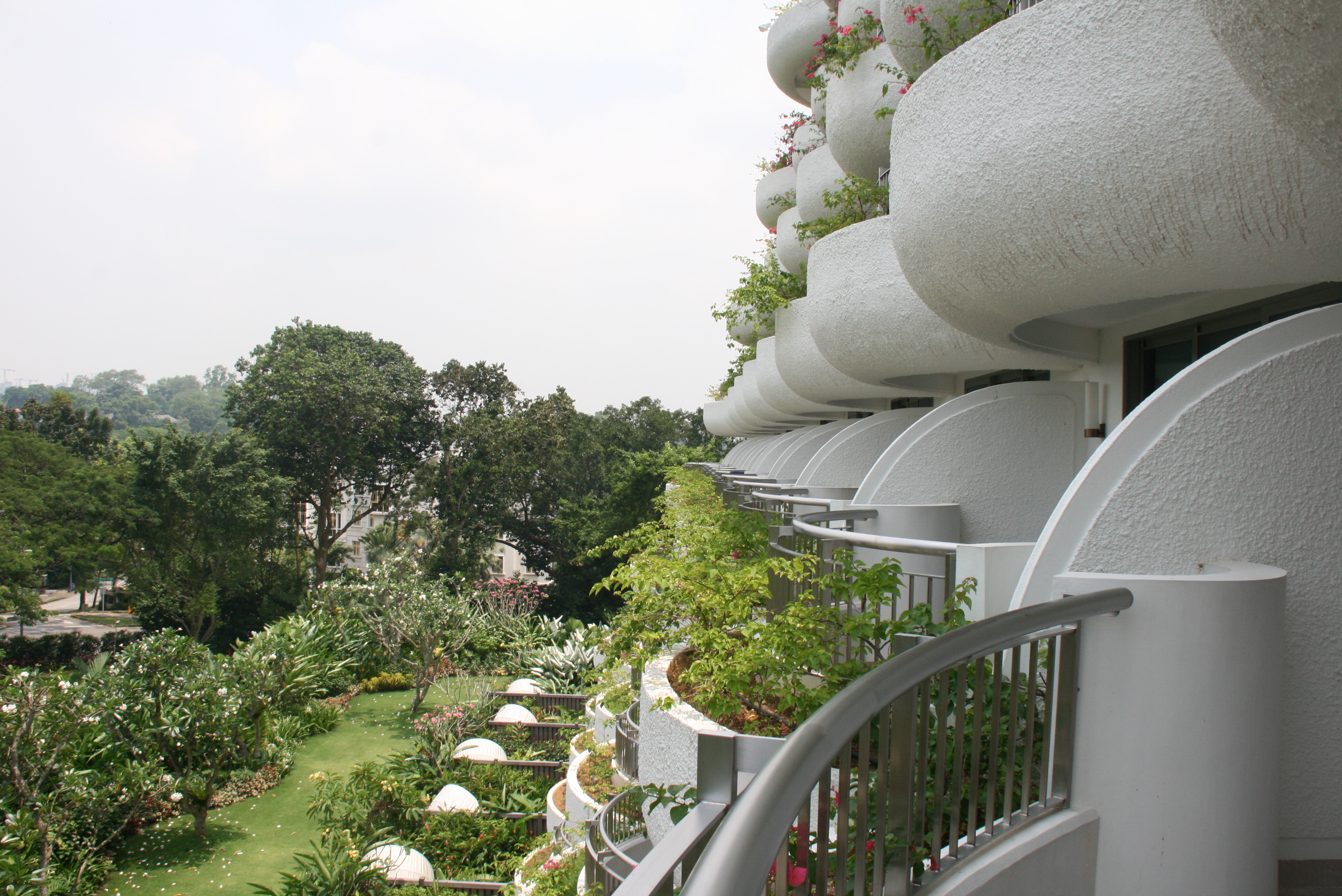
Shangri-La hotel, SingaporeI walk down Orange Grove road, past the lush gardens of opulent hotels, which are much the same in every country in the world, to Orchard road, which is lined with high-end shops and high-end shoppers who teeter along on their unusually frilly designer heels and look impossibly sleek in the humidity.

I am wearing jean shorts and a sports top and lugging a small rolling suitcase. I am looking for the nearest bus, and after only a few moments my entire body is sticky with sweat. I pass men and women who are smaller and more dainty than me, and feeling my muscles stand out on my bare shoulders from the drag of my luggage, feeling the solidity of my sandals, feeling how I tower, I begin to also feel very masculine. I wonder if this is how men feel. You know, large and capable of crushing anything in their path.

At 5’7” and 116 pounds, I am an Amazon. I kind of like it. Although my ire at the heat and my lost passport may be a contributing factor.

Finding the bus is no small feat, however, even for an Amazon. The problem is that is apparently impossible to cross certain streets in Singapore on foot. I come to the cross-section of Patterson and Orchard, and then I am stuck there for half an hour, wandering the mazes of pedestrian tunnels (also lined with shopping) which are under construction and mostly blocked off. I emerge above-ground on the wrong streetcorner repeatedly, and finally walk down the street to a spot where there is a visible crosswalk, cross, and walk back.

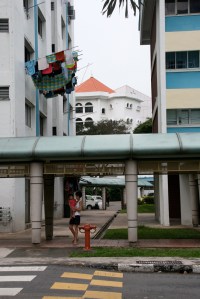
Apartments, south Singapore, with Sikh temple in the background.

IMG_0109

I get on the bus and ride it through Chinatown down to a neighborhood seemingly inhabited by locals, in tall, cheap-looking apartments. The ground floors are open-air diners, small supermarkets, Chinese medicine, betting parlors. Here, you can get dinner for $3. It’s nothing fancy; rice, meat, and vegetables, but it’s a fraction of the price you’d pay for a salad up in the opulent parts of Singapore.

There are scrawny cats lazying around in the heat, and the English that is nearly ubiquitous in Singapore is here more halting and unpracticed. I supplement my requests with hand gestures, pointing at the photos of food and drink portrayed prominently on the shop fronts.

Religious tour of Chinatown

My sightseeing here in Singapore has been somewhat curtailed by my efforts to get my passport paperwork in order, but I did make it down to Chinatown, which is both a huge free tourist destination and an interesting cultural commentary on Singapore.

There is no majority religion in Singapore due to the diverse ethnic mix of its population. The largest slice of the pie, 33%, is Buddhist. The first place I went in Chinatown was the large Buddhist temple containing a relic of the Buddha tooth. I am fairly ignorant of Buddhism, but I wasn’t aware that it included relics. I went in and a woman made me cover my shoulders… I had brought a scarf, thinking this might be an issue… and then a man handed me a wrap because I was wearing shorts. Thus enveloped, I stood to the side and watched for a few moments as people came in and pressed their hands together as if in prayer, bowing towards the statue of the Buddha. I say towards because Buddhists’ reverence of their statues is somewhat like Catholics’ reverence of theirs: Buddhists don’t believe the Buddha was a god, and neither do they worship him or his image; they revere his ideas and his example. Many of them also bow to their elders and revered members of their society. Catholics, of course, do not believe that images of Mary or the saints are something to be worshiped, but they also bow and make the sign of the cross out of reverence to the people and the example they represent. Image

This is not to say that Catholicism is much like Buddhism — in the first place, Buddhism, according to many Buddhists, is not a religion, because it has nothing to do with the existence of God and focuses instead on personal enlightenment and responsibility — but wandering around this Buddhist temple, I was rather amazed at how familiar it felt after all of the cathedrals of Europe I had visited over the years (not least because of all the tourists wandering around with their cameras, which always vaguely annoys me, despite the fact that I am one of them). I am certainly not the first to remark upon some of the similarities between Catholicism and Buddhism, from the monastic orders of both to some of the overlapping teachings. For example, the five precepts of Buddhism are:

  • I undertake the precept of abstaining from destroying living creatures.
  • I undertake the precept of abstaining from taking anything not freely given.
  • I undertake the precept of abstaining from sexual misconduct.
  • I undertake the precept of abstaining from false speech.
  • I undertake the precept of abstaining from taking intoxicants which lead to carelessness.

Although perhaps these precepts are closer to the tenants of Quakerism than Catholicism. In any case, when I walked one block up the street to the Hindu Sri Mariamman Temple, which has been declared a national monument, it felt much less like what I was used to. In fact, I felt clueless. However, there were some adorable children running around chasing birds; I don’t think that was part of anything other than their own antics, but I could be wrong.ImageImage

One more block up the street was a mosque, but after peeking in I didn’t go further, because there was a class of small boys sitting in the middle of the floor, and the sign in the entryway required a more strict dress code than what I was up for, especially in the heat.

Singapore, jet lag and a lost passport

I arrived at 1 a.m. local time in Singapore. Everyone lined up neatly, politely, for the taxis outside the airport, and I stuck my passport in my back pocket after having cleared customs. I was just telling my co-workers that I felt pretty good, considering, and then I think I stuck my passport in my bag. But I really don’t remember, because “pretty good, considering” falls on a sliding scale after three planes and 24+ hours of travel. Then I got in a taxi, and made my way to the Shangri-La, where there was a bit of a mix-up, in which I dug frantically through my bag looking for various information and a wifi connection. Somehow, the concierge made out that I was with the Localization World staff, and he volunteered the information that Chris Luxton had just checked in, and did I know Chris Luxton? So I called Chris’ room and ended up crashing on her couch.

ImageThe next morning, we went to breakfast and I ate a lot of local fruit, fish, and veggies, and had a cup of tea. Chris had some errands to run for Loc World, so I did some yoga on her terrace and then sat outside in the muggy heat for a bit, relaxing. I was thinking to myself that the strategy of arriving in the middle of the night, eating an excellent breakfast, and taking it easy seemed to be working wonders on keeping jet lag at bay, and that I should leave soon to check into my own accommodations. I packed everything up, and then I asked: “Where’s my passport?”

Let me just say, scouring a room repeatedly, tearing apart your luggage, frantically searching a hotel lobby, calling every lost and found you can think of, and finally researching how to get a new passport abroad and realizing it involves a whole lot of steps and paperwork does not really promote a relaxed non-jet lag state of mind.

However, with all this on my plate, I made it until 8:30 p.m. that night without taking a nap, and then crashed hard and slept well. I’d done just about all I could do for the moment; the earliest slot at the US Embassy wasn’t for a few days.

I went to the local police station this morning to file a report, which is one of the steps you need to take before filing the paperwork at the Embassy. I realized, waiting in a neat row of chairs and staring at a commercial for a Tom Cruise movie, that I had never been inside a police station before. I had nothing to compare this to, but it seemed very neat and polite, like the rest of the Singapore experience. Everyone spoke softly and the air conditioning fell softly on my skin. I gave a young police officer my information and he filled out some paperwork and then gave me a copy. Two copies, actually: apparently, I would also need to go to an immigration and customs office and get additional Singapore paperwork that would permit me to leave the country.

So that’s what I’ll be doing tomorrow, because they’re not open on Sundays. The next day, I have my appointment at the US Embassy.

Dancing with the divine

I have recently taken up dancing lessons, which is not anything I haven’t tried before. I danced for many years: in my childhood and early teens, I did ballet, up until I got pointe shoes and decided I’d gone as far as I wanted to go with it. In college, I regularly went swing dancing, often going early for the hour lesson beforehand. The highlight of my trip to Argentina in 2008 was the tango lessons. The highlight of many an evening out on various and sundry continents in the last decade has been the dancing, where I coiled my vertebrae with the music, any music, all music, ignoring fatigue and sidelong glances in favor of the union I felt with the pulsing air.

But all of this has been explicitly solo dancing. Even with the partner dancing I’ve done, the partners were friends or strangers, and I learned briefly from them or in spite of them; never with them. In ballet, my classmates went through the same exercises I did, but there was no sense that my classmates were an extension of myself, that we two made a whole.

And now I’m attending dancing lessons as half of a larger whole, and it feels very different. I had attempted it briefly once, but the male in that equation couldn’t hear the beat, not at all, not even a little bit, and so his lead was off-kilter, jarring, a slap in the face of the swelling music. No amount of dance classes could connect the music to his body, and so he operated removed from it and removed, therefore, from my own rhythm, from the years I had spent honing my ability to pulse with larger meaning.

But Collin hears the rhythm, and although in some cases he concentrates harder to learn the steps than I do — I already know many of them — when he takes my hands, faces me, and we practice a complex move until it flows naturally from one to the other, it feels how dancing was intended. It feels like we are playing at something bigger, acting out something bigger, deeper, his eyes on my eyes, our movements matched but asymmetrical. He is strong enough that my strength here is not a terror or a curse to him. His own talent can enfold itself around mine, can direct without losing both of us.

Later, I remark upon how ritualistic dancing with him feels, and he says yes, we play at god and goddess, at what has existed since the earth began. And I remember the words of C.S. Lewis: “It is here no impoverishment but an enrichment to be aware that forces older and less personal than we work through us. In us all the masculinity and femininity of the world, all that is assailant and responsive, are momentarily focused. The man does play the Sky-Father and the woman the Earth-Mother… what cannot lawfully be yielded or claimed can be lawfully enacted. Outside this ritual or drama he and she are two immortal souls, two free-born adults, two citizens.”

I have always wondered why C.S. Lewis, an overtly Christian author, chose to compare these male-female roles with pagan ones rather than Christian ones. And suddenly, it came to me: because despite all the Christian talk of marriage being a picture of Christ and the church, it seems innately wrong to think of male and female roles as being mirror images of Christ and the church. To say so would mean that what is male is divine, and what is female is sinful — saved only by the divine, which is male. Christ and the Church means Christ and the guttersnipe. She’s a rescued guttersnipe, and she’s been given a fresh bath, but she still has the origins of a guttersnipe.

It is therefore quite apparent why certain Christians are so hung up on male protection and female modesty and heavy-handed gender roles. They have taken the marriage imagery of Christ and the Church quite literally, and in so doing they have denied women’s moral strength, women’s free-born adulthood, women’s immortality, women’s divinity. Even typing “women’s divinity” makes me feel a bit strange, because all my life I have heard that God is male, that God is masculine; that to claim divinity for the feminine is to evoke the pagan gods, to depart from orthodoxy. And yet even in the Old Testament, there is rich imagery of God having female characteristics. God is said to have borne and birthed Israel, to be like a protective mother bear or eagle, to comfort like a mother. One of the many names given to God is El Shaddai, “the breasted one.” I actually remember hearing this in church, and it was so strange that I thought the pastor must have been mistaken — because if God is male, how could he have breasts?

But it does not seem like a mistake now. All that is female plays out in a woman’s strength, in her grace, in the divinity of her life-giving. All that is male plays out in accord with it, and his lead in their pairing comes less from him than from the music, from the air, from the pulse of greater life.

HPV for the uninitiated

You know that phone call you just hope you won’t get for a long, long time. That one from the clinic or the hospital, saying “We just got your lab test back, and there’s something abnormal going on with some of your cells. We need you to come in for further testing.”

That call sounds vaguely like mortality, like the name and hour of your death. And it doesn’t help that it’s so vague; that they don’t actually know anything yet. So you rush off to the one place that has all the answers: the internet. The internet should be able to give you some clues as to what it is you might be facing. Only, of course, it doesn’t really help, because it holds such a gamut of possibility from the people who have gotten similar calls, everything from “this turned out to be nothing” to “and then I had cancer, wouldn’t you know it, and had to have my organs taken out.”

So, in my case, I tried to slow-breathe my way to what turned out to be a mini-biopsy of five different sites. The doctor threw out terms I’d never heard of before: squamous cells, glandular cells. Both of mine had some form of abnormality. That’s pretty common, though, the doctor told me. You know, you have HPV; this is common in women with HPV, and the immune system often just clears these things up, but we’ll wait for these biopsy results and see what they say.

I like to think I’m reasonably well-informed, but as it turns out, I knew little about HPV, and for that reason, I didn’t get regular Pap smears. I’d had a grand total of one ever previous to this. Apparently (who knew?) a typical STD panel does not check for HPV, and a typical Pap smear doesn’t check for it either. Also, long-term celibacy does not guarantee that you won’t develop an HPV infection, because the virus lives invisibly, often for many years. Even if you’re a virgin, you can contract HPV through, shall we say, messing around with someone, as this study mentions. Truth be told, transmission possibilities are still somewhat a mystery, and in looking for medical articles on the subject I stumbled across this Finnish study that looked at the rate children get it from their parents, for example. In any case, HPV rates among the general population are quite high; available data from the Center for Disease Control indicates that “at least 75 percent of the reproductive-age population has been exposed to the sexually transmitted HPV.” The moral of the story: even if you think you’re pretty low risk for “sexually transmitted” anything, as a woman, you should probably get checked out and talk to a medical professional about HPV and cervical cancer.

Because if you have high-risk HPV (which apparently I do), you can get what’s called dysplasia, where cells start turning shady. I say “shady,” because to classify them as “precancerous,” which they potentially are, sounds scarier than it actually is. Often, your immune system can take care of minor dysplasia. Once it gets past a certain point, though, they recommend getting the cells removed. In other words, having part of your cervix snipped out.

I have CIN II, moderate to marked dysplasia. So they recommend the surgery. I’m not terribly happy about this, to say the least, because with the surgery — an LEEP procedure, where they cut stuff out with an electrical wire — your risks of premature delivery during pregnancy are increased. Not necessarily substantially, as I was relieved to discover. But it doesn’t get rid of the HPV, just the infection. Theoretically, you could have reoccurring infections any time your immune system is having an off month, and by the time you get two LEEPs (or one larger surgery), things can get more dicey from a childbearing standpoint… and other standpoints, apparently.

So for nearly the last month, I’ve been thinking about this, pondering what to do next. I haven’t scheduled the LEEP. Instead, I started working on my immune system in various ways, primarily through improved nutrition and not getting stressed out. It’s a bit of an experiment, but from the research I’ve done thanks to temporary access to a medical database, my odds of improvement are much higher than my odds of actually developing cancer (about 40% versus about 5%) and the whole thing is pretty slow-moving. I’ve told myself that if I get too stressed out, I’ll go back in, and if I feel worse — honestly, I can feel the inflammation that sometimes accompanies HPV lesions; a dull cramp-like ache that first alerted me that maybe I should go get myself checked out — I’ll go back in, and either way, I’ll evaluate my progress soon. So far, I feel better, although that could be wishful thinking. And I suppose we shall just have to see what happens next.

Elaina becomes a little girl

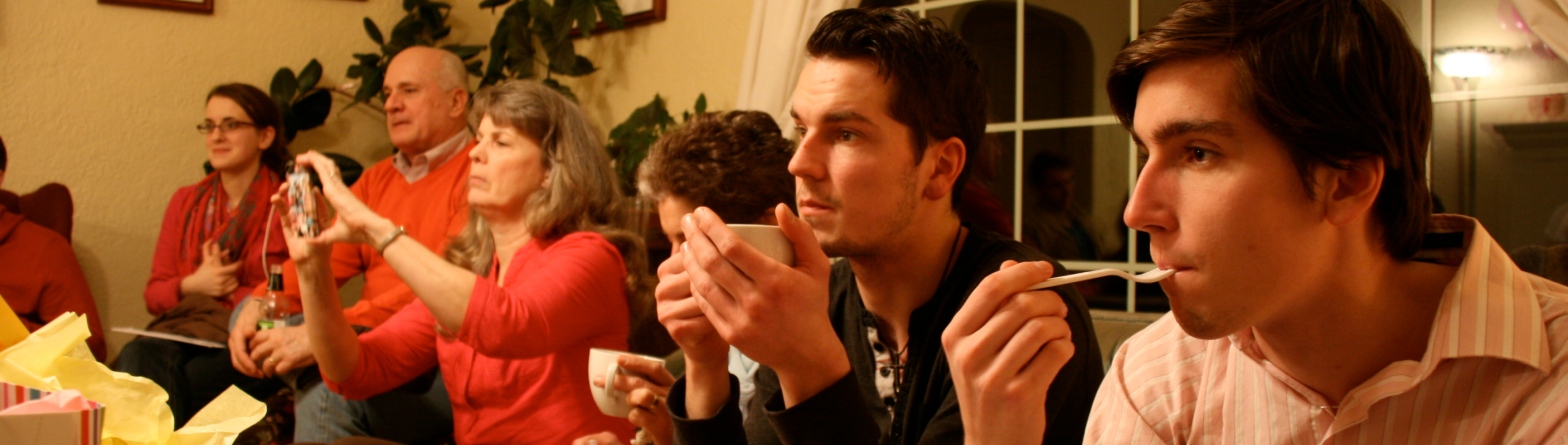
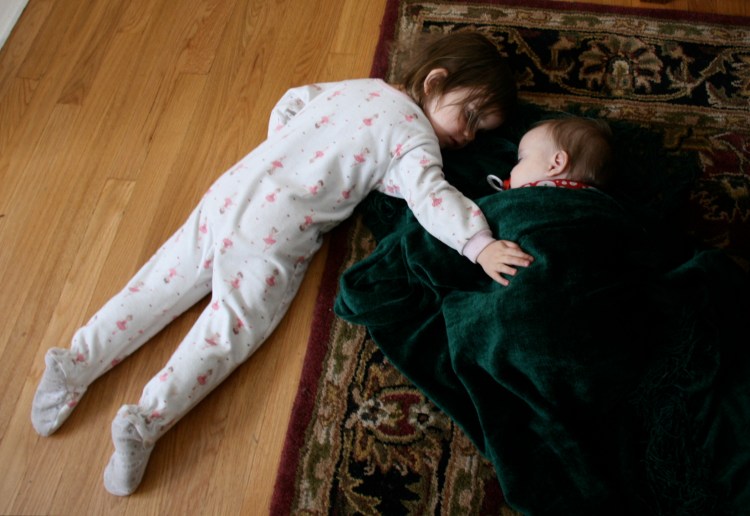
IMG_9480 IMG_9587This is Elaina. She has just turned one, and she likes health food. She is currently enjoying a stick of celery. She prefers it to the birthday cake on her tray. She is sort of good at sharing her presents with her older sister, who has a tendency to help herself anyway. Elaina’s not that into boys.

Because she is one, she is almost a real, functioning toddler. Now, she expresses her emotions in word form for the first time. “Happy, happy,” she says, and she smiles and waves her hands and kisses her reflection. Her older sister tells me: “Elaina is a very big baby,” and her parents say “no, she’s a little girl, because she’s one.”

Chloe nods and without missing a beat, she tells me “Elaina’s a little girl.” That’s Ok, because Chloe is a big girl. She’s two and half years old. She is potty trained and sleeps without her binkie and everything. “With my friends, I’m a big girl,” explains Chloe.

“Uh huh,” I say “And with Aunt Katie and Mimi and Papa, are you a little girl?”

“Yeah,” says Chloe. That’s what she was driving at. She shrugs at the relative nature of the universe and flips through her cardboard book.

IMG_9637 IMG_9682

Winter peace

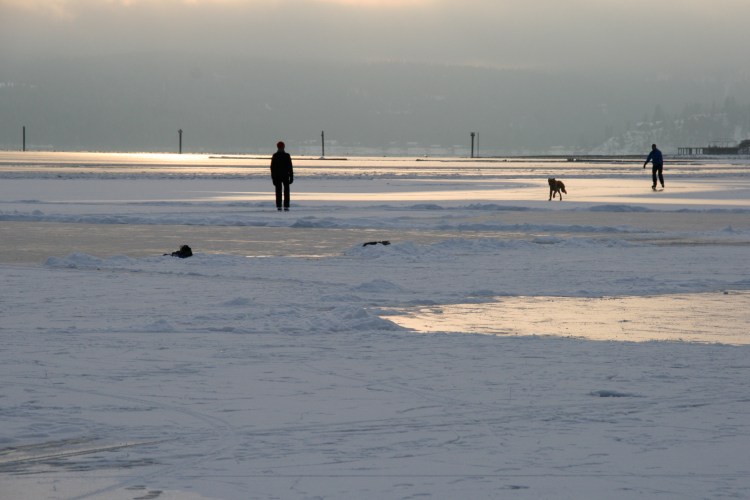
IMG_9260 Here in the north, winter can be long and cold. But sometimes that means stories told after dinner, candlelight, long naps, and the change in matter from liquid to various solids, enabling small miracles. Gliding across water, writing messages in the lake.  IMG_9422IMG_9401IMG_9412Yesterday, I wasn’t feeling too well. I told a couple of people, and when I got home at the end of the day, there were two glass jars of broth sitting on my step. I texted the donor my thanks, and he asked: “Was the moose still in your yard sleeping?” Apparently, one had wandered into the edge of downtown somehow, although I’ve never seen moose outside the wilds before. It was a blessing, said my friend. “It felt to me like he was guarding your home.”

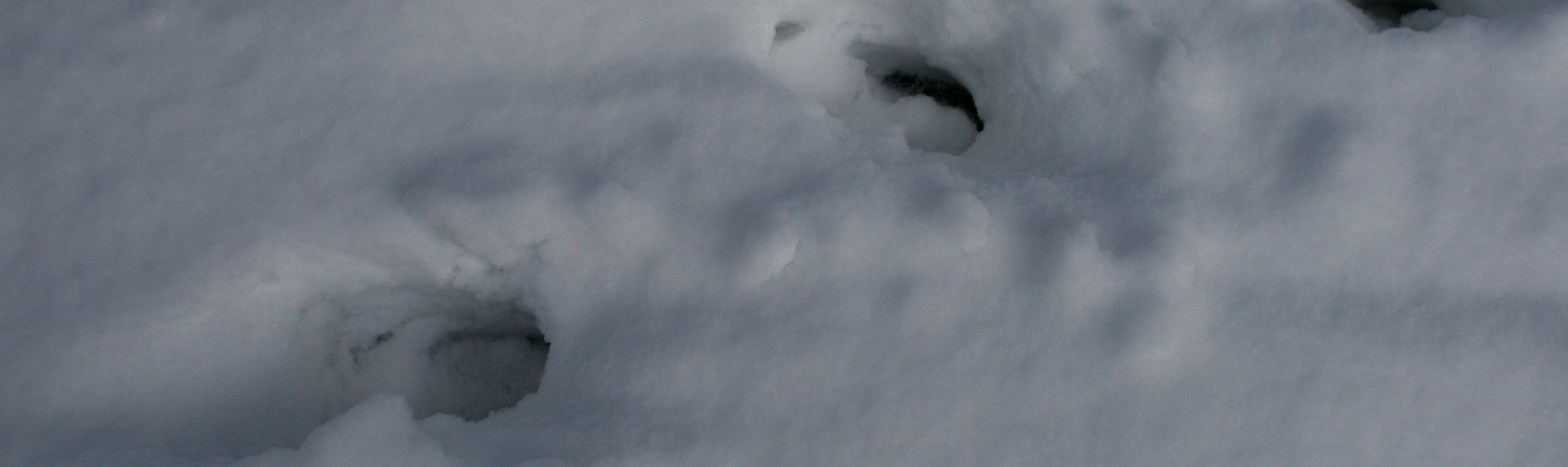
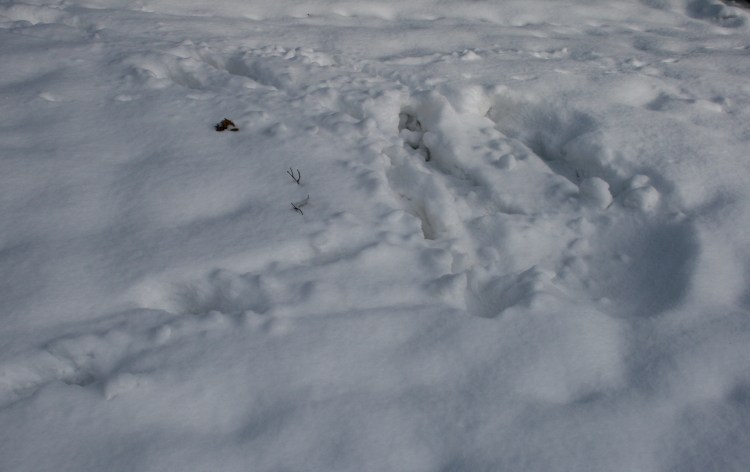
This morning, I got up and went outside to study the tracks. Sure enough, it looked like a moose had been there, from the shape and size of the hoofprints to the sharp outline of the legs and the lolling shape of belly.

IMG_9439