Waves, meteors and cougars

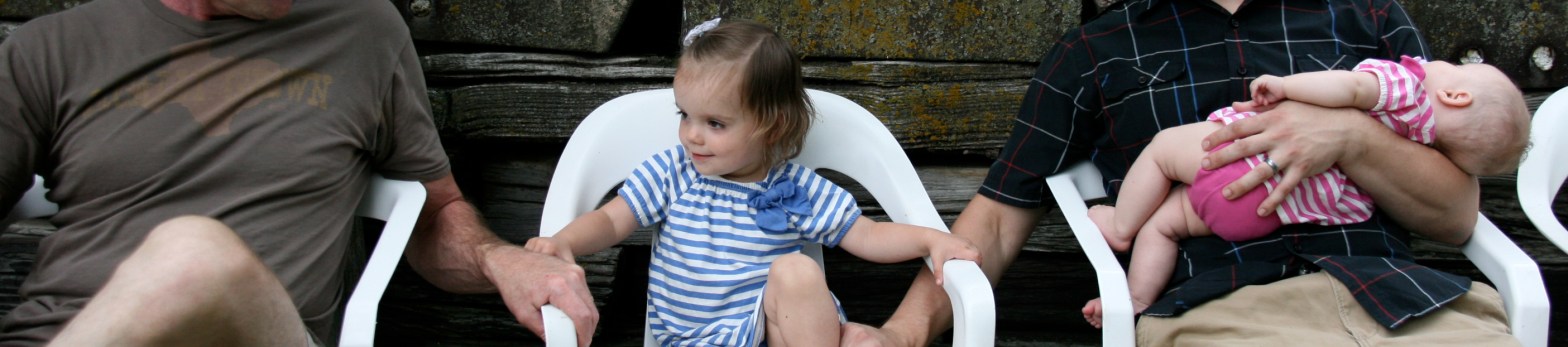
My family took the opportunity of a recent trip to Oregon to revisit the cold, gray beaches where we grew up. My niece spotted the rolling mass of waves from afar and asked: “Get in it? My feet?” and her parents were happy to comply, while the baby kept warm with my own parents. My brothers ran away to explore in the mist.

A few weeks later, we re-gathered to watch the Perseids. Ever since I’ve been little, I’ve watched the Perseids in August. This time, I drove up to my parent’s property out on the edge of the country — quite literally, I’ve walked the six miles to Canada from their house — where there were no city lights, not even a glimmer of them. When it got dark, we spread out blankets over a tarp and looked for shooting stars. My niece, 26 months old, snuggled with her parents until it was time for her to go to sleep. She didn’t want to go inside, and as they carried her, she let out a sob: “Goodnight, stars.”

As I lay out there in the yard, now relatively alone, I started wondering if the cougar was nearby.

A couple of weeks ago, my 18-year-old brother was out for a walk with a girl. They had meandered down to the pond and started up a hill when Isaiah spotted a dead fawn. And then another. And then a doe. And then, out of the corner of his eye amidst this carnage, Isaiah saw the cougar.

The girl let out a scream, turned, and ran. Note: this is not what you are supposed to do when you spot a lethal cat. Isaiah knew this, but he wasn’t going to let this girl go running away alone, like in some bad horror movie. So he ran after her. She fell down. He pulled her up and they kept going. They made it to the house and the cougar had not eaten them.

When it was day, several of us set out to see the site of the cougar’s kills. The deer had decayed, half-eaten, mummifying in the sun. We paused over one of the fawns. Poor little thing, it didn’t look very big. My niece stared down at it for awhile and then asked her parents: “I eat it?”

Her parents bit their lips to keep from laughing at her. “No, that’s not for eating,” they said. We walked back up to the house and ate chicken grilled over apple and mesquite wood instead.

My favorite traveling shoes

I have tried traveling with quite a few pairs of shoes over the years — everything from Doc Marten boots, to Converse All Stars, to Asics running shoes, to expensive ballet flats of various brands. In a good travel shoe I want support, comfort and flexibility. They have to go with everything in the limited but multi-purpose wardrobe I bring with me. And they have to not give me blisters.

I have failed at this a number of times. The ballet flats, which looked so comfortable and supple, were a particular nightmare. I had bought them tight enough so they wouldn’t fall off, and apparently, this was a bad idea. More than once, I hobbled back to my room and taped up my feet after wearing them. Just like real ballet shoes!

The Doc Marten boots, and even the Doc Marten shoes, were heavy and really not that comfortable. The boots even did this weird thing to my toes.

The Converse made my feet stink and were not good for walking, not even with some foam inserts. The Asics were comfortable, but they were also relatively hideous. I have photos of myself from France in a black peacoat and those shoes. The shoes really ruin the look.

In essence, what you want is a shoe that fits without moving too much, but also without pinching in any way. It needs to support your feet comfortably, allow them to breathe if necessary, and either keep them dry or allow them to dry quickly, depending on the climate. And the shoes need to look good and not label you a tourist. Even if you think you have found such a shoe, take it on a long walk anyway and see how you get along. If, even after breaking it in, it doesn’t feel good, do not assume your relationship will improve upon exclusivity. And do not try to combine breaking it in and exclusivity.

Here are my all-time favorite traveling shoes. From the left: black Chacos, which I have gone hiking and even running in, and have also worn to conferences with long pants. You adjust them to your feet and they stay put marvelously. Cost: about $90 new. So far, they’ve lasted through six years of heavy to moderate use. Although they really need new soles about now. Next: North Face flip-flops. I bought them a bit small, for $10 on sale, and they are the most comfortable flip-flops I’ve ever owned. Because they stick on my feet pretty well, they don’t give me blisters. I can wear them with almost anything. Next: Hush Puppy Mary Janes with rubber soles. I got them for about $30 secondhand, and I’ve done everything from light hiking to heavy dancing in these puppies (sorry, I had to). Last: Black leather boots, unlined. Especially good for a trip to Germany and Scandinavia. $50 on ebay. They could also use new soles at this point.

Advice to my youngest brother as he prepares for his first trip

My 18-year-old brother is going on his first semi-solo backpacking trip to the UK in a couple of weeks. He’s planning to be gone for two months, and he’s traveling on a budget. So, Isaiah, here is some packing wisdom from your oldest sister, who happens to have spent about two years of the last 11 living out of suitcases schlepped through the flights, subways, trains and busses of five continents.

When I was 19, I started out with an all-purpose red backpack, large enough to hold a thick poncho and an assortment of clothes, but small enough to fit into the overhead bins of most airlines. However, I realized after awhile that it gave me back pain and marked me as, well, a backpacker, and at least for that first trip to China at 19, what I had brought with me made me feel really out of place and ugly. I didn’t want to wear hiking boots all the time, for example. So I moved on to a variety of shoes and rolling suitcases, reasoning that I would mostly be hauling my stuff on flat surfaces, and that any hiking I would be doing would be on day trips. Rolling suitcases are great for a number of reasons, but they do have one drawback: the wheels can break, especially on cobblestones, and it’s not fun to run for your train clasping your broken suitcase in both arms.

My last few trips, I packed very carefully in rolling suitcases that fit Ryanair’s cabin requirements so that I could purchase cheap transportation. I am a smaller woman, so my clothes don’t take up too much space, but I also packed a largish laptop and a largish camera in my cabin bag, so I can say with a good degree of assurance that it is possible for most people to squeeze everything into this, if they’re willing to do the wash frequently.

But it is important to take care of yourself, especially your feet. You, Isaiah, may need to shop for a good pair of shoes. I recommend leather for class, for breathability and water resistance, as well as good soles for comfort. Nothing too heavy. If you find the right pair of shoes, you only need one. Break them in before you leave. Almost nothing is worse than being stuck with one pair of blister-inducing shoes when you’re supposed to be walking everywhere. Just in case, bring band-aids, and a pair of sandals or flip-flops for when you’re relaxing. Or for when you need to take a shower in the sub-par hostel you’re staying in without contracting foot and mouth disease.

Bring good socks. I recommend wool socks, athletic-grade, at least if you’re going to the UK in the fall. They stave off odor, are warm, and help keep your feet dry and unchafed.

Bring clothes that travel well and that you don’t mind wearing on repeat. Brands like Patagonia and North Face can actually be quite good for travel, because they have been built to be smashed into packs, worn for days on end, and still look good. They’re usually compact, too.

One of my all-time favorite pieces of clothing for extended trips is a dark blue Patagonia dress. The one thing I didn’t like about it was that it tied in the back in a knot, which made it slightly uncomfortable for sitting around in. So I altered it by hand. And then, at the Storm Cellar, I found this silk crepe blouse of gossamer sheerness that made it look dressy. Without the blouse, I wore the dress hiking, boating, wading, sightseeing, and to dinner at maybe the best restaurant in Rome. With the blouse, the dress was perfect for the Catholic wedding and the Parisian conference I attended in the same trip. And for sitting around with my family in Iowa.

Bring layers. Bring a good coat; either something that’s water-resistant with a hood, or a down coat, if it’s less likely to rain on you and you know you’re going to want to put it in a stuff sack and use it as a pillow. Bring a small towel; it could even be a ShamWow. Bring hand sanitizer. Bring hand lotion and chapstick and toothpaste in travel-sized amounts. Bring a small canister of baby powder or dry shampoo. Bring Ibuprofen, Benadryl, and vitamins. Don’t bring expensive jewelry — or your flashy pocket watch. Do bring a money belt and a coin purse, so you don’t ever have to go digging through your money belt in public. Do not leave your valuables alone in the hostel, unless they’re locked up in a decent locker. Do bring a day pack of some kind — my most recent one is a black neoprene bag with a zipper, into which I could fit water, my camera, granola bars, a jacket and so on, but which would also collapse into a small enough mass that it could go in my suitcase too. Bring a small internet device, such as an iPhone, if you have one. Disable your cell data and just use wifi, and you won’t get any international charges.

Traveling with less luggage is cheaper. You won’t have to pay checked bag fees, you won’t be tempted to take a taxi rather than the subway, you won’t have to rent huge storage lockers, and possibly most importantly, you’re less likely to get robbed. Thieves tend to target people who are juggling a bunch of stuff and who otherwise look like tourists. Quite simply, try not to look like that.

You may have to invest in good travel gear, but in my humble opinion, it’s worth it. If you’re planning on spending $500 on a rail pass so you can bring a huge pack, and can instead spend $200 on short-distance individual bus and rail tickets, and $100 on Ryanair flights for longer distances, your travel allowance alone might pay for it. I’m not guaranteeing that; check out where you’d like to go and what the best investment is for you. Do your research before you go. Often, you’ll want to buy the tickets in advance.

And use CouchSurfing. Be polite wherever you go, and listen more than you talk. Bring your hosts a small gift, if possible. You’ll learn more that way.

Chloë on the farm

I’ve written before about our family farm in Iowa, where my Swedish ancestors settled down. My little niece (the sixth generation) had her first explorations of the place at our most recent family reunion. She got to drive the farm truck, ride the tractor, celebrate her second birthday, walk the train tracks, and play with toys and books purchased by her great-great grandmother.

The Blue Lagoon

If you have a few hours of layover in Reijkavik, I highly recommend taking the 20-minute bus ride to the Blue Lagoon medicinal hot springs. The short ride takes you through fields of dark lava rock, and once you’re there, you will be handed a bracelet that will allow you to program your locker and purchase beer at the waterside bar. The lagoon itself is a flat expanse of steaming pastel blue — silica, potassium, calcium, magnesium and various algeas all mixed in with geothermal seawater. The silica deposits make everything underfoot, down to the wooden steps, smooth and white.

The souvenir

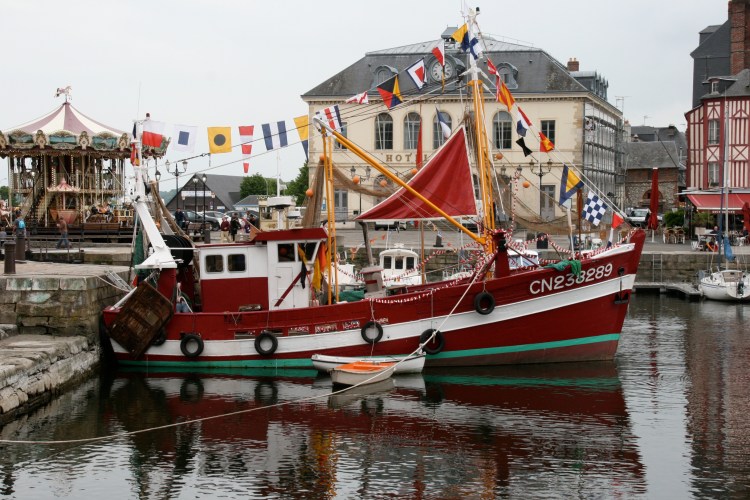
On my 31st birthday, Antoine, the youngest member of the family I am staying with in France, has given me an unexpected birthday present: a beautiful little pendant that looks like a large pearl or a small, pristinely white Fabergé egg. I put it around my neck and feel the smoothness of it with my fingertips. I thank Antoine, but I wonder if he knows how much I like it. Somehow, oddly, it reminds me of the bracelet I got from all the teachers at the Lycée in Rouen when I left their ranks years before. But perhaps not so oddly, because both pieces of jewelry were handcrafted in Rouen. Christine, Antoine’s mother and my fellow teacher, was sure to tell me that it was local, just as Antoine tells me now that this necklace is local.

Back in 2005, when my contract ran out and I left Rouen to see Italy and Ireland, I threw most of my clothes in the charity bin by a supermarket hidden in the labyrinth of the Norman streets. I hadn’t brought or bought much of value. But I was proud of that silver bracelet around my wrist, serpentine leaves with centers of blue crystal; not sapphire but just as hot in the light. I hadn’t liked the bracelet at first, honestly, but, overwhelmed at the generosity of my colleagues, I had put it on and kissed all of them as was the custom, even the dour principal with sagging jowls.

I wore it to Italy. In Pisa, I sat in a green field, contemplating the tower alone, playing with the facets of my bracelet. At one angle the reflected light shone straight up green into the green of my eye, taking up the total of my vision. In Florence I slept with the bracelet clasped around my wrist in a stranger’s apartment. I trusted the stranger, who lived near Seattle normally, recognizing her as the sort of girl who wanted to have adventures to tell upon her return, like, yeah, there was this one time I met this chick outside the train station and I was like, yeah, you can stay with me ’cause we Americans need to stick together. I assume she thought I was OK because I didn’t look like a beggar.

But the only barrier between myself and those beggars bowing on the pavement was the weight pressing me downward, the bite of my luggage, the euros around my neck, and my paltry gentility. I had no idea which city to live in after I got back to the States, no home, no job; I really and truly was homeless and jobless just like those beggars, however temporarily. But I shrugged and took the train to Rome, talking on the way with a parachutist from Sardinia, who tried to teach me Italian and then left forever with a tip of his cap.

On the plane to Dublin the light came in the window and sent back prism shards onto the plastic wall, some blue-cold, some separated sharply into red yellow purple. We flew over Normandy into the sunset. In Dublin, I hopped on a bus to my hostel, debarked, and took a shower. I looked in the mirror to see my wrist and it was naked.

I felt naked all that day, and the thought that kept coming back to me was: what is the point of seeing things if you have no way to keep them?

So when Antoine gives me the necklace, I think, secretly, this can replace the thing I lost before. On this trip, I’ve gone in exactly the reverse of that other trip: Ireland, Italy, Normandy, and here I am with something to remember my time in Normandy again. It’s a pleasing thought.

I take the train to Paris wearing this necklace, check in to my hotel, and meet up with friends from the Netherlands. We all go to dinner, where I can’t help running my fingers over the smoothness of the white pendent in between courses, just to make sure it’s still there. Then we decide we’re going to take the metro to La Defense not far away. We hop on the metro, hang on the rails, chatting and catching up, and I look in the window to see my throat. It is naked. I put my hand up, startled.

I go back to my hotel room, which has a stunning view of the Eiffel tower, but I am too irritated to pay much attention to that. I ransack my room in case I have lost my mind and the necklace is actually in my luggage somewhere. But it’s not. Just as before, I have no idea if the jewelry was lost or stolen.

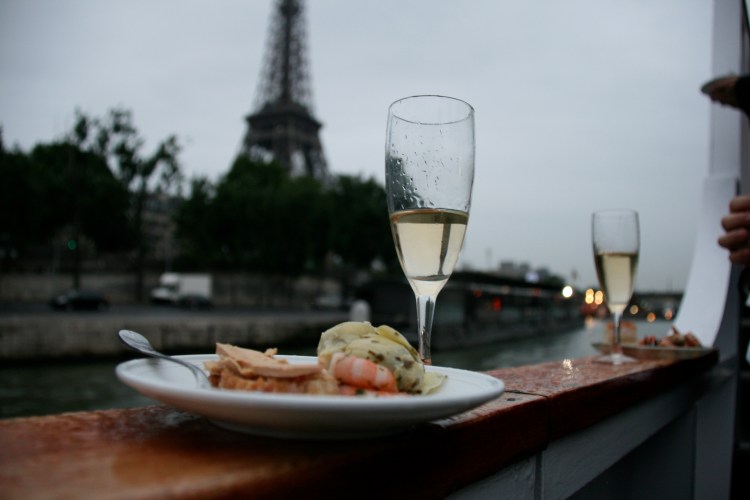
I sit down on the bed and wonder if I should cry. I am just as I was before, that girl who felt suddenly as if her only physical link to history and nobility had disappeared. And I have to remind myself that things have changed slightly — I have a job, I have a house, I have a posh hotel room to sleep in rather than a $12 hostel, and yes, I even have more jewelry. I take a photo of the Eiffel tower to appease myself. This, too, can be a souvenir.

Doug Wilson, as he was

The first time I encountered Doug Wilson was in the fall of 2000, in the basement of someone’s house. Wilson was reading an excerpt from a humorous book to a collection of admiring college students. It may have been written by P.G. Wodehouse; I frankly do not remember. I was 19 years old and was paying more attention to the other college students.

Over the next few years, I ran into him, on a public level, fairly often. He was generally known to be controversial, but, you know, quite the philosopher. I read his books and attended his talks, and found them to be less than intellectually brilliant, but I didn’t say much about this.

In 2003, the campus and town at large exploded with the Southern Slavery As It Was controversy. I was fairly high on the food chain at the school paper at the time, and I felt it was my job to be as neutral about the whole thing as possible. I knew people who just couldn’t understand why anyone would say Wilson was a racist when he was such good friends with black people; had even dated one once. I knew people who were ready to have a coronary after reading Wilson’s booklet and his less-than-humble follow-ups to it. I wrote an opinion piece urging everyone to try to get along and be nice to each other following a minor outbreak of vandalism against people who attended Wilson’s church. I went to a jam-packed CRF meeting in which Wilson tried to answer people’s questions on the subject. I took profuse notes, and, along with another girl, covered the contents of Wilson’s speech in the school paper. Wilson was much milder in person than he is on his blog — there were no insults. I am now really curious what the article said specifically, because I didn’t save a copy and the online archives have been pulled down. Apparently, someone on Wilson’s side thought it was accurate enough that we got public accolades.

In general, Wilson told everyone at the meeting that his intent was not to say slavery is good or preferred, but that instead he wanted to address a controversial aspect of the Bible. Because the Bible is not anti-slavery, and even lays out rules that say slaves need to obey their masters, Wilson needed to prove that slavery is not evil per se. Now, Wilson said, it is indeed evil to think that one race is superior to another, or even that masters are superior to their slaves. That is not true and it is not Biblical.

As far as I remember, Wilson didn’t do much to address his methods of scholarship or some of the booklet’s more questionable claims, such as that in the South before emancipation, the lives of blacks were better than they have ever been after.

What I do remember was coming away from it all thinking that Wilson wasn’t a racist, insofar that it was true that he didn’t think skin color determined what you were worth. What determined your worth was, first, your practice of religion, and second, your practice of culture. Actually, in his mind, these were almost the same thing, all tied up in a tidy bow of beefsteak, red wine, dark beer, pretty women in modest but fashionable garb, manly men in khakis, and happy evenings spent reading P.G. Wodehouse or singing hymns in four-part harmony. Wilson wasn’t a racist. He was a xenophobe, because he thought his culture was superior to all others. He categorically rejected everything else as worthless, from egalitarian Christianity to liberal high society to Dutch Armeniansm. Reformed patriarchal Christian culture prevented the world’s ills, and, yes, even transformed slavery into a system where savages could be taught the true gospel. I half-admired the man for following his doctrines to their logical conclusions.

Towards the end of my on-again off-again years in Moscow, it came to my attention that New Saint Andrews had been plied with its infamous zoning complaint. I thought this was dumb, not because zoning was dumb, but because I knew enough about the people who had filed it, ex-members of Wilson’s church, to suspect that at least some of those involved were doing it for the wrong reasons. Personal vendettas are something I dislike as a rule, so I encouraged the principle instigator to calm down and find a better way of dealing with his hatred for Wilson — or rather, not Wilson, but Wilson’s arrogance, as he parsed it out. He listened, the zoning complaint trailed off into a requirement for more parking spaces, and Wilson was apologized to personally. Wilson wanted the instigator to write a letter to editor, to be published in the Moscow-Pullman Daily News, but this didn’t happen. I thought it was uncouth that Wilson deemed public recantation necessary for a personal grudge, because in every way other than his motive, the instigator was correct: New Saint Andrews was violating city code, and its use of downtown parking was a problem.

All of this is to note that any critique of Wilson is founded in many years of measured, and largely peaceful, observation. There have been any number of controversies surrounding the man, which I don’t think is entirely accidental. I think Wilson thrives in an environment of controversy. As I’ve mentioned before, controversy improves your ratings; in Wilson’s case, it’s practically his entire buisness model. Certainly, if Wilson didn’t like the attention, he wouldn’t consistently use such inflammatory language. His line of argument over the many years I have been observing him usually go something like this:

  1. Wilson says or does something that seems dishonest, sexist, racist, or illogical.
  2. Someone publicly objects.
  3. Wilson responds by saying the person is too dumb or delicate to understand. Or else the person is maliciously intent on being a liar by twisting Wilson’s words/actions.
  4. Someone points out that this is an ad hominem, not an actual logical refutation of the objection.
  5. Wilson, or one of his fans, steps in to ask why ad hominems should not be used, since they are used in the Bible.
  6. Someone replies that this is a very strange interpretation of Christianity.
  7. Wilson begins quoting Bible verses to prove that it isn’t. Wilson’s favorite retort seems to be that he is answering “a fool according to his folly.”
  8. The debate is thus completely re-cast to be about the Serrated Edge rather than the original thing that Wilson did or said. This will put Wilson on familiar ground and allow him ample room to show off his insult-hurling skillz.

Wilson usually claims that his approach is “satirical,” which proves nothing so much as that he doesn’t really understand the meaning of “satirical” any more than he understands Jesus’ treatment of the poor and the outcast. This is probably the most-quoted passage in The Serrated Edge, but I’ll quote it anyway just to enlighten my audience on how extreme Wilson’s view of Biblical “satire” is: “Jesus was not above using ethnic humor to make His point either. . . .This woman was not a Jew, and the Jews had problems with such people, considering them beneath contempt — in a word, dogs. Put in terms that we might be more familiar with, Jesus was white, and the disciples were white, and this black woman comes up seeking healing for her daughter. . . She comes up and beseeches Christ for healing. It’s not right, He says, to give perfectly good white folk food to ‘ni__ers.’ . . . If this understanding is right, then Jesus was using a racial insult to make a point. If it is not correct, then He was simply using a racial insult” (Wilson 43-44).

Following a quote like that, it’s hard to come up with anything that would even register as satire. But just to put you in a better mood, here’s a quick attempt at satire of Wilson’s own attempt at satire:

“It seems there’s been another stink raised about Wilson’s choice of words. Over at The Evil Yet Strikingly Ugly Feminist’s Blog — you know, the one with the appalling lavender background and the extra-black bold font to make sure we know she’s serious — Ms. Evil Yet Strikingly Ugly Feminist has gotten her granny panties in a twist and decided to see how many lies she can possibly fit into one sentence. Turns out, it’s a lot, especially if you like run-ons. We all know she’s lying, of course, by how black that extra-bold font is. Black is the color of evil, Ms. Evil. Perhaps you need to go back to Sunday School and re-learn that fact. But that would mean that you would need to get up off your couch, where you have been writing tripe like this for the past decade, supported by your drop-in lovers and welfare checks, and seriously examine your seared conscience.”

I should go on for pages in this vein, but I don’t have Wilson’s verve for creating and destroying straw men.

Writing styles and logical fails of a One-Woman Man

I’m not the first to comment on this, nor will I likely be the last. Over at The Gospel Coalition, there’s a quote from Doug Wilson that has resulted in much discussion trying to parse out what he intended, what he didn’t mean, and how anyone who dares to suggest this isn’t true or biblical must be a feminist in need of smelling salts. Sometime during the course of this discussion, someone saw fit to add a trigger warning to the top of the original blog post noting that the language of this quote might be disturbing for people who have been sexually abused. Doug himself maintains that Fidelity: What it Means to be a One-Woman Man, from which this quote originates, had its own built-in trigger warning, when, at the front of the book, Wilson says that the book should only be read by women if it is delivered into their hands by their own husbands.

First of all, I’ve read the book. I read it in college, plucking it off the shelf of a female housemate who went to his church. My biggest impression at the time was that Wilson seemed to know all about what constituted Biblical sexual practice and what didn’t based on nothing more than some shady conjecture. For instance, lingerie is not Biblical, because it is the garb of prostitutes (Wilson 142). Also, no action during menstruation, because the Old Testament forbids it. Never mind that the Old Testament actually prohibits menstruating women from touching anyone or anything without uncleanness, so the line Wilson draws is rather arbitrary.

The abridged quote in question, though, is this: “When we quarrel with the way the world is, we find that the world has ways of getting back at us. In other words, however we try, the sexual act cannot be made into an egalitarian pleasuring party. A man penetrates, conquers, colonizes, plants. A woman receives, surrenders, accepts. This is of course offensive to all egalitarians, and so our culture has rebelled against the concept of authority and submission in marriage. This means that we have sought to suppress the concepts of authority and submission as they relate to the marriage bed.

But we cannot make gravity disappear just because we dislike it, and in the same way we find that our banished authority and submission comes back to us in pathological forms. This is what lies behind sexual ‘bondage and submission games,’ along with very common rape fantasies. Men dream of being rapists, and women find themselves wistfully reading novels in which someone ravishes the ‘soon to be made willing’ heroine. . .  True authority and true submission are therefore an erotic necessity” (Wilson 86-87).

I find it weird that Wilson insists “however we try, the sexual act cannot be made into an egalitarian pleasuring party.” Especially in a book that is supposed to be directed to men about their sexual relationship with their wives. Wilson tells men how sex is supposed to look: they’re supposed to colonize and conquer. Women are supposed to surrender and accept. If they’re truly feminine, that is. Wilson assures his audience that men dream of being rapists, and women dream of being raped. Wilson insinuates not very subtly that if you follow the Biblical mandate of authority, you won’t have to dream of rape, because you’ll have the true authority to conquer your own wife instead. The fact that this is directed specifically at men with little to no broader sexual experience does not make this suggestion any better.

I’ve heard of a lot of married men in Wilson’s immediate circle complaining that they don’t get enough from their wives, and one thing this book mentions in that line is that you should not require your wife to give in when she doesn’t want to. I remember being assured by someone extremely close to Wilson that it was impossible for me, as a woman, to have urges comparable to that of men. This proved to be untrue, and after a quick survey of some of my happily married friends, even in Wilson’s own church, I realized I was not a bizarre species. Although I’m pretty sure none of these women are telling that to their pastor, or suggesting ways in which the men of the congregation might improve their luck. Hint: it has nothing to do with “colonizing,” and does, in fact, look a lot more like an “egalitarian pleasuring party,” not to put too fine a point on it.

I say this because I think Wilson’s attempt at biological commentary is actually quite skewed, and since it’s the whole basis for his argument, that skews everything else.

Premise 1: Men penetrate. Premise 2: Women accept penetration. Conclusion: Female submission falls within the natural order of things.

Or we could look at it a different way. Premise 1: Women surround to the point of momentarily obliterating a man’s natural shape. Premise 2: Men enjoy this. Conclusion: Females naturally insulate men from the outside world (Note: since women carry both genders in their wombs, this has more than one biological argument).

Or we could look at it a third way. Premise 1: Women do, and enjoy, a number of things. Premise 2: As do men. Conclusion: Human sexuality is naturally more complex than mere impregnation.

As evidenced by his own blog, Wilson seems to think that any woman who finds fault with his point of view is just too fragile and hysterical to be able to make heads or tails of it — because, of course, she’s a feminist. Additionally, in the comments of the original blog post, he says, “Only a person with a poetic ear like three feet of tin foil would maintain that penetrates can only be used of a Nazi invasion of Belgium, or that plants means that a man must treat his woman like dirt, or that conquering can only be done by ravaging Huns, and that colonization can only occur in a Haitian cane break… Anyone who believes that my writing disrespects women either has not read enough of my writing on the subject to say anything whatever about it or, if they still have that view after reading enough pages, they really need to retake their ESL class.”

Well, Wilson, I’ve taught ESL classes on three continents. If you remember, we took an English class together, actually — Old English. You sat in the front row and talked a lot. I sat in the back. And as you may recall from Old English, words are not static and they are not divorced from their surroundings. When we translated passages from Beowulf, we had to choose which shade of meaning to focus on, had to shape our texts to reflect the tight, gleaming poetry of the original. Yes, words are polysemic. Thanks for pointing that out, but that argument changes nothing. Because words are polysemic, you study them as they appear in the immediate surroundings of the text, and in the larger context of the immediate era they were written in.

I’ve read a lot of your writing, so it’s not practice of Wilsonism I lack. I find it prone to sarcastic pseudo-wit, which is not the same thing as real wit, real insight or real satire. Something that sounds pithy is not the same as something that is actually true. If you submitted something to my own magazine, even if I had no idea who you were, I would probably send the article back with a lot of critiques in yellow, assuming I decided it was worth my time at all. If you’re going to be a decent and compelling writer, you have to learn to accept critique of your writing style gracefully. Not insist that none but the man who agrees is qualified to critique your writing style.

What I’ve found egregiously lacking in any of your discussions is backing of the claim. If egalitarianism results in rape and BDSM, then clearly, egalitarians are more likely to engage in BDSM and rape than complementarians or patriarchal types. Ok, Wilson, interesting theory. Now back it up in some way that doesn’t start and end with “because I think so.” As I’ve already discussed, I personally suspect the opposite based on the evidence.

This matters, Wilson, because I’ve just gotten off the phone with a woman who has been left destitute, at least for the moment, because she has abandoned her sexually aberrant husband, for whom she has raised children and kept house for a decade. He deeply believes that she should accept his need for sexual conquest, forgive him when he goes too far, and get on with life. During their marriage counseling, they studied your books. I doubt you would agree with his personal method of conquest, but the fact is, he has been heavily enabled by theology like yours. You may not like it, but that is the truth.

Johanna’s wedding

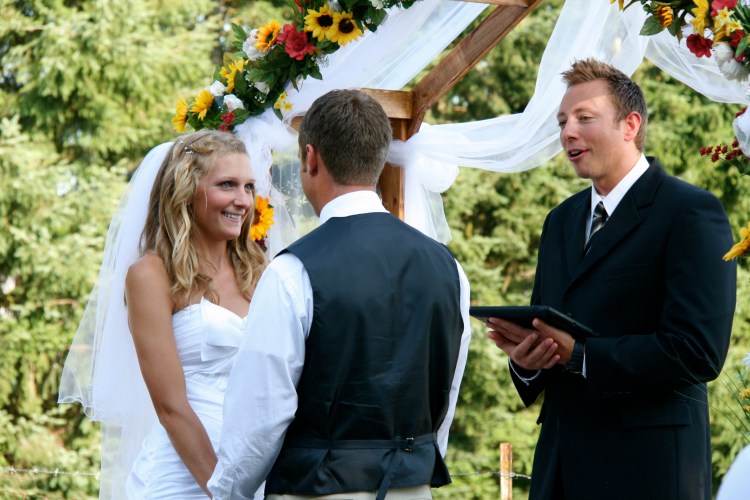
Back when I was one, I made the acquaintance of Leah, who is on the far right. This was in Oklahoma, where the summers lay thick in the air, suggesting, oppressively, that our parents should go West. Leah was the first of five; I was the first of five. After both families packed up and re-organized in the Willamette Valley, we saw each other frequently. And then we ran wild: Leah and I, Shannon and Bess, Laura and Samuel, Johanna and Daniel, and then, after they were born, Joseph and Isaiah. On the Ewers’ property, we played in the river, the fields, the barns; we milked the goats, rode the horses, ran with the dogs, fed the rabbits, pet the cats. Two decades later, Johanna got married in our old stomping grounds.
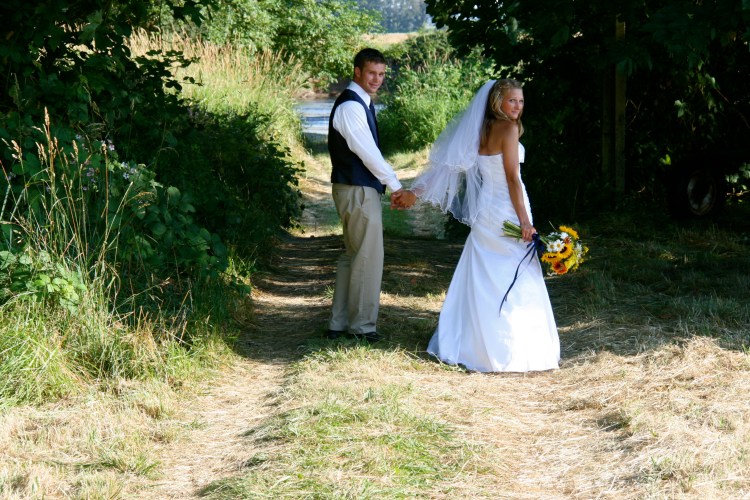
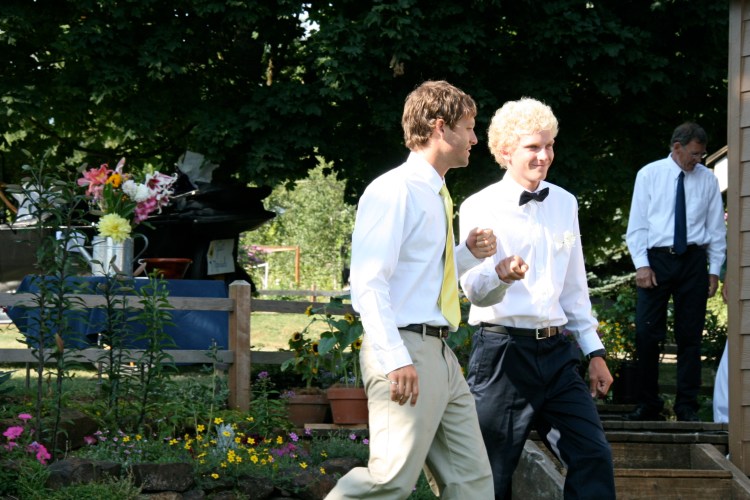
Joseph was Johanna’s Man of Honor. Here he is about to walk down the aisle with Andy, the Best Man and Shannon’s husband.

There were a grand total of five photographers — the curse of family and friends with semi-expensive digital SLRs. None of us got paid, but I’m sure all of us got some good shots.